Common Law Admission Test may not select students with right ethos: CJI Chandrachud
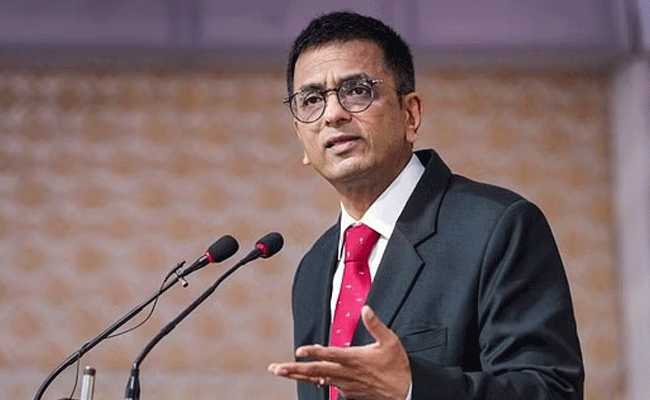
Panaji (PTI): Chief Justice of India D Y Chandrachud has said the current model of selection of students for National Law Universities, which involves cracking the Common Law Admission Test (CLAT), may not result in the selection of those with the "right ethos".
He was speaking on Saturday after inaugurating the first academic session of the India International University of Legal Education and Research (IIULER) in Goa, an initiative of the Bar Council of India Trust-PEARL FIRST (BCIT-PF).
The varsity should be a centre for "cutting- edge research," Justice Chandrachud said, adding that IIULER should have a system which makes its students' body more inclusive.
Entrance tests like the CLAT do not necessarily allow entry to all the deserving candidates, he added.
"One of the problems that the National Law Universities have faced is perhaps the model which we use to select students does not always promote value-based education because we have a common law entrance examination and we test the students' ability to crack the CLAT," the CJI said.
"Cracking the CLAT does not necessarily result in students who have the right ethos to perceive a career in law....I appeal to the vice chancellor and faculty to place importance on value-based legal education for the students from diverse background," he said.
Quality education requires resources, but it should not be so designed as to shut out students who can not pay for it, the CJI said.
He also urged the first-batch students to be always inquisitive.
Apart from the CJI, who is an ex-officio visitor of the institute, Supreme Court judge Justice P S Narasimha, who is the chancellor of the university, SC judge Justice B R Gavai, Attorney General R Venkataramani and Bombay High Court's Chief Justice Dipankar Dutta were also present.
Prof Srivdhya Ragvan, the vice-chancellor of the university, said India has the potential to disrupt the global legal sector the same way it did in the Information Technology.
Justice Narasimha said the county lacks high-standard legal writing and qualitative standard law books.
He stressed on the need to establish institutions of excellence with focus on research to provide data-based opinions on various legal subjects.
Let the Truth be known. If you read VB and like VB, please be a VB Supporter and Help us deliver the Truth to one and all.
Congress using hijab issue to pacify minority anger, alleges Karnataka LoP R Ashoka
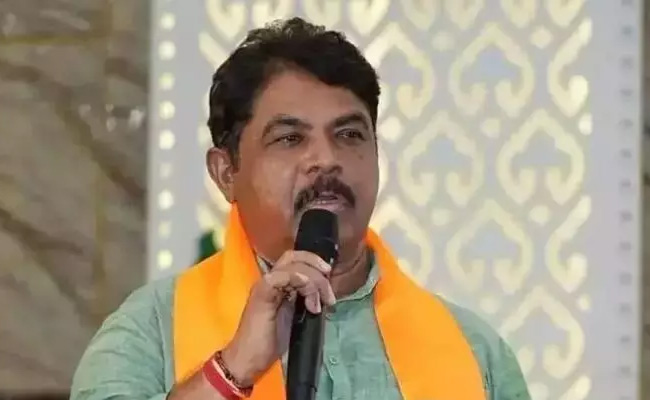
Bengaluru: Leader of Opposition in the Assembly R. Ashoka has accused the Congress government of using the hijab issue to placate what he described as discontent among minority voters after the Davanagere by-election.
In a post on X on Wednesday, Ashoka alleged that the state government, instead of addressing issues such as price rise, corruption, farmers’ distress and law and order, was attempting to retain its minority vote base by reviving the hijab issue.
Referring to the 2022 dress code introduced by the BJP government, which prohibited hijab in schools and colleges, Ashoka said the Karnataka High Court had upheld the policy and emphasised the importance of discipline in educational institutions.
He questioned the Congress government’s move to revisit the issue and asked whether setting aside the court-backed policy to benefit one community could be described as secularism.
Ashoka further alleged that while the government was willing to permit hijab, it continued to prohibit saffron shawls.
He accused the government of dividing students on religious lines rather than treating schools and colleges as spaces of equality.
Drawing a comparison with Mamata Banerjee’s government in West Bengal, Ashoka claimed that excessive appeasement politics had harmed the state and warned that the Congress in Karnataka could face a similar political response.
He said voters in Karnataka would teach the Congress a lesson for what he termed “vote-bank politics” and for compromising constitutional and judicial principles.