Complaint against former IPS officer Sanjiv Bhatt set to be withdrawn, 30 years after it was filed
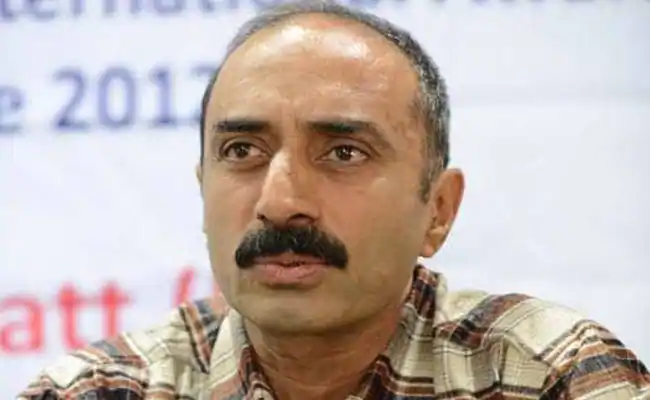
Ahmedabad: The complainant in the over 30-year-old case of custodial torture against former IPS officer Sanjiv Bhatt and other cops in Jamnagar, on Tuesday informed the Gujarat High Court that he wants to withdraw the complaint.
Justice Nikhil Kariel, who has been hearing the quashing petition for over a week now, however, asked the complainant Mahesh Chitroda to file an affidavit in the case and posted the further hearing on March 31, according to a report published in Times Of India.
The judge asked the complainant to file an affidavit through his lawyers to let something come on record. He added that so much time has been invested in this matter which could’ve been used for constructive work.
“Let something come on record. We have invested so much time in this matter. So much constructive work could have been done. Since there is a flip-flop in this case, let us wait for an affidavit to be filed,” the judge told the complainant.
Bhatt was sentenced to life imprisonment in light of the complaint lodged by Chitroda, Ravjibhai Harjibhai, and Chetan Jani after the alleged custodial death of Prabhudas Vaishnavi on 30 October 1990 in Jamkhambhaliya police station.
At the time of the incident, Bhatt was posted as the Additional Superintendent of Police in Jamnagar, where the police had arrested 133 persons over rioting including Vaishnani and the three complainants.
Reports said that after the private complaints lodged by Chitroda, Ravjibhai, and Jani regarding the custodial torture, the court had issued summons against the police officers including Bhatt in 1992.
Police officers Pravin Zala and Bhatt were reported to have filed quashing petitions to the court objecting to the complainants’ claims in the year 1996 and 1999 respectively.
Reports said that the high court had quashed two complaints by Ravjibhai and Jani while arguments for quashing Chitroda’s complaints were in process.
Advocate V H Patel informed the court about the complainant’s withdrawal of the complaint during the argument by Bhatt’s advocate Somnath Vats and the public prosecutor which was later acknowledged by prosecutor Mitesh Amin.
Let the Truth be known. If you read VB and like VB, please be a VB Supporter and Help us deliver the Truth to one and all.
TN seeks duty-free cotton imports to support textile sector: CM Vijay writes to PM
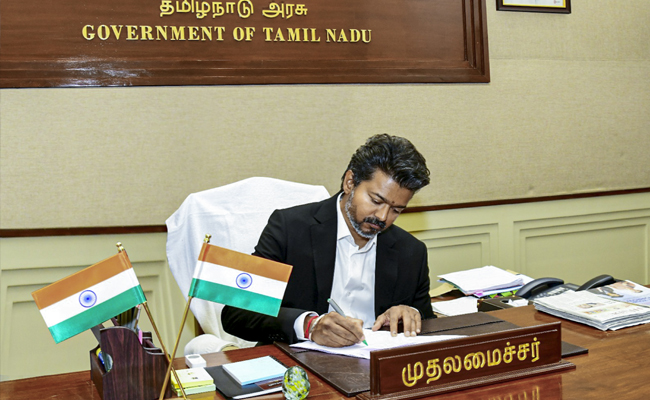
Chennai (PTI): Tamil Nadu Chief Minister C Joseph Vijay on Thursday urged Prime Minister Narendra Modi to remove the import duty on cotton.
In his first letter to Modi after taking over as chief minister of the state, he said Tamil Nadu is the country’s largest textile and apparel exporting state.
Lakhs of people are dependent on this sector for both direct and indirect employment, especially women from rural and semi-urban backgrounds, Vijay pointed out.
Stating that the industry is facing a severe crisis due to an increase in cotton prices and consequently yarn prices, he said, “I understand this is caused primarily due to a shortage in cotton production and increased trading activity in the country.”
Pointing out that the price of cotton has increased from Rs 54,700 to Rs 67,700 per candy—an increase of 25 per cent over the last two months—while yarn prices have increased from Rs 301 to Rs 330 per kg, he said, “In this situation, the continued supply of raw material can be ensured only through imports.”
However, there is an import duty of 11 per cent on cotton, he said, adding that in such a situation, permitting duty-free cotton imports will help the industry meet increasing export commitments and remain globally competitive.
Vijay said that after agriculture, the textile and apparel sector is one of the largest employment-generating sectors.
“There is a significant responsibility on the government to safeguard the employment of lakhs of people and ensure the sustainability of the textile value chain," he said.
“Hence, I request your intervention to remove the import duty on cotton from the existing 11 per cent to 0 per cent to ensure the availability of raw material. This measure will enable the textile and apparel industry to remain globally competitive, enhance exports, and protect jobs,” he added.