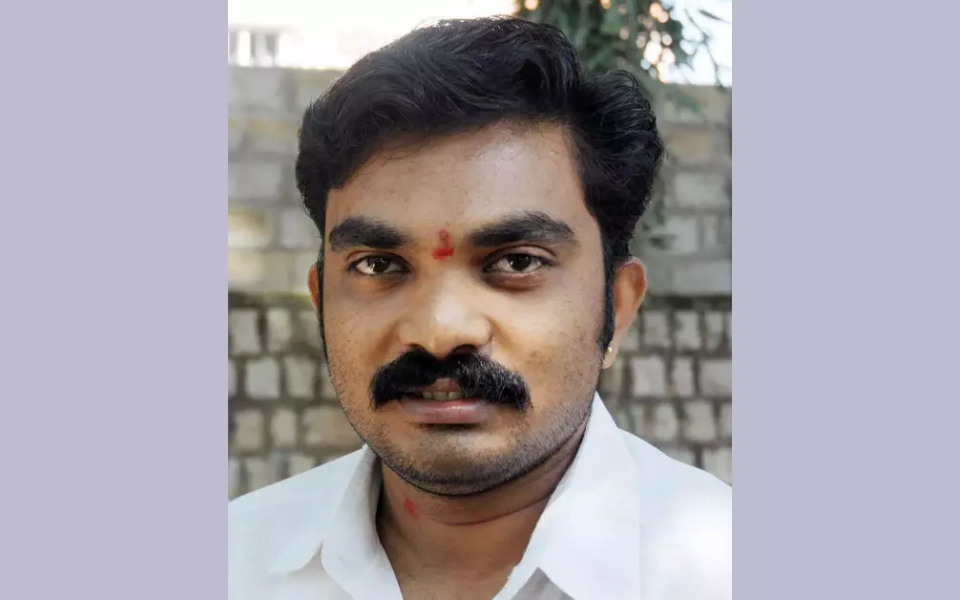
Comprehensive reflection on Prof. Muzaffar Assadi's life, works needed: Dinesh Amin Mattu
Condolence meeting held in memory of political science Professor Muzaffar Assadi
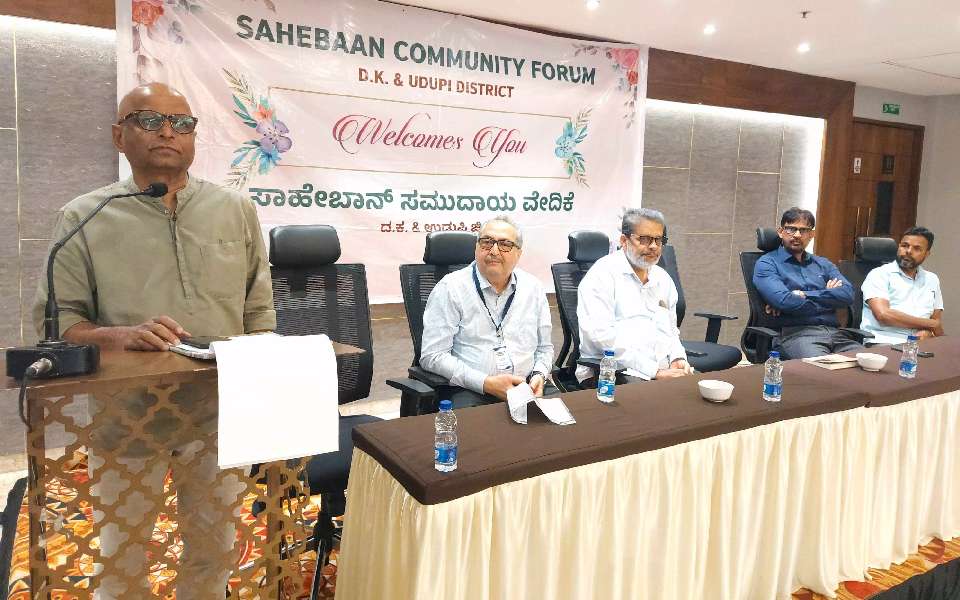
Udupi: Muzaffar Assadi, a former political science professor known for his extensive studies on topics like the Lingayat separate religion, tribal issues, and farmers' movements, deserves a detailed reflection and discourse on his life and writings. His books, life, and thoughts require a holistic study, and the writings by his students and colleagues should be compiled into a book to preserve his memory, said senior journalist and thinker Dinesh Amin Mattu.

Speaking at a condolence meeting organised by an Samudaya Vedike of Dakshina Kannada and Udupi districts on Saturday at the Manipal Inn Hotel, Udupi, Mattu said, "While many professors limit themselves to classroom teaching, some engage in research and societal thinking, while a few go a step further by actively participating in protests on the streets. Muzaffar Assadi belonged to this latter category."
Participating in international academic discussions and presenting papers, Assadi also actively protested in Bengaluru, Mysuru, and Mangaluru. He wasn’t the kind of professor confined to an ivory tower but was someone who consistently cared about society and worked towards its betterment, Mattu added.

Assadi shared knowledge freely
"This country’s tradition has often been to withhold knowledge, creating barriers for backward communities. Assadi, however, was an exception—he shared his knowledge freely. His concerns extended beyond the Muslim community to society as a whole. Throughout his life, he worked tirelessly for those deprived of opportunities and representation,” Mattu remarked.

Referring to the discussions around Assadi potentially becoming a Vice-Chancellor, Mattu expressed regret, stating, "Even though he was deserving of the position, political pressures often led to his name being withdrawn whenever it was proposed to the Governor. This reflects the very environment Assadi sought to change, of which he ultimately became a victim."
On Muslim reservations, Mattu noted that Assadi had conducted extensive research and prepared reports. "If someone questions the need for reservations for Muslims, Assadi’s books provide ample evidence and justification. This is a significant loss, as his work in this area remains unparalleled in the country, and filling the void left by him will be a daunting task," Mattu lamented.

Mattu further elaborated on Assadi’s work, stating, "He dissected the layers of communalism and capitalism, offering insights into understanding and addressing their challenges. Assadi often stressed that to find solutions, one must first comprehend these issues. He explained how communalism and capitalism are interlinked and how the 1991 economic reforms and the 1992 Babri Masjid demolition changed India. These two phenomena have victimised Dalits, backward classes, and minorities, while benefiting the upper classes and castes. Assadi’s intellect and work in this domain were invaluable."
He also credited Afroz Assadi, who organised the event with enthusiasm, travelling from England to ensure the success of this condolence meeting. "Afroz should take the lead in compiling and publishing writings on Muzaffar Assadi’s work," Mattu urged.

Tribute by colleagues and family
Imad Assadi and Riyaz Ahmed, relatives of Muzaffar Assadi, and his college friend Rev. Francis Kotiyan also spoke during the event.
Emotional tribute by Rev. Francis
Rev. Francis Kotiyan, visibly moved, shared, "Assadi and I studied together from pre-university to our degree days. I even stayed at his house, where I received immense support. His passing brings great sorrow. Assadi harboured a social mindset and wished for the welfare of people from all religions. However, political pressures robbed him of the Vice-Chancellor position, which is deeply disappointing. His memory will remain with us forever."
Sahebaan Samudaya Vedike President Afroz Assadi welcomed the gathering, while Secretary Iqbal Manna delivered the vote of thanks. The event also saw the presence of Jafrulla, secretary of the Udupi Jilla Muslim Okkoota, Mustaq Ahmed Belve, president of the Namma Naada Okoota, Udupi, and businessman Shabbir Ahmed.
Let the Truth be known. If you read VB and like VB, please be a VB Supporter and Help us deliver the Truth to one and all.
Lakhimpur Kheri violence case: SC expresses disappointment over non-production of witnesses in trial
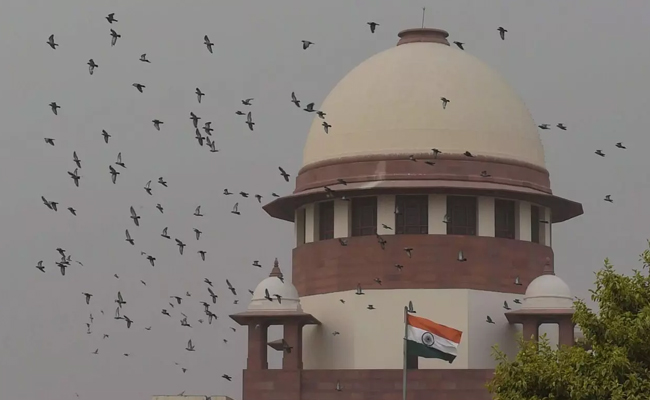
New Delhi (PTI): The Supreme Court on Friday expressed disappointment over the non-production of witnesses in the ongoing trial against Ashish Mishra, son of former Union minister Ajay Mishra, and others in the 2021 Lakhimpur Kheri violence case.
A bench of Chief Justice Surya Kant and Justice Joymalya Bagchi said the status report filed before it by the Uttar Pradesh government has not assigned any reason whatsoever for the non-production of witnesses.
It noted that no witnesses have been examined in the trial for the last two months.
"We direct the presiding judge to take lawful measures to secure the presence of witnesses," the bench said.
It asked the trial judge to make an endeavour to conclude the trial in a time-bound manner, and also to file a status report before it.
The trials in two cases related to the incident are going on before a court in Uttar Pradesh.
The bench noted that in the first case, out of 131 witnesses to be examined, 44 have been examined, 15 have been discharged and 72 are still to be produced.
In the second FIR, out of 35 witnesses, 26 have been examined and nine were left, it said.
Senior advocate Siddharth Dave, appearing for Ashish Mishra, said that as per the latest status report filed by Uttar Pradesh, 44 witnesses have been examined so far in the first FIR.
"No witnesses have been examined in the last two months," Dave said.
He argued that the last status report filed by the state in March also said that 44 witnesses had been examined.
"What have you done from March till today?" the bench asked the counsel appearing for Uttar Pradesh.
The state's counsel said that 3-4 witnesses were summoned for the recording of their deposition during the trial.
The bench said at least 7-8 witnesses should be summoned instead of three or four for a day, so that even if some of them do not turn up, the trial court could proceed with the recording of statements of those appearing before it.
The top court also wondered how official witnesses can remain absent during the trial.
"We are disappointed to note that the so-called status report does not assign any reason whatsoever for non-production of witnesses...," the bench said.
Advocate Prashant Bhushan, appearing for the relatives of the farmers who were allegedly mowed down in the incident, said the apex court will have to do something regarding the manner in which the trial was going on.
The bench noted that besides the two FIRs, another FIR was registered in October last year concerning alleged witness intimidation.
It said that, as per the state's status report, the chargesheet was filed against the main accused in that case.
The bench noted that the status report reveals that, as far as Ashish Mishra is concerned, his alleged role in the third case is still being investigated.
The top court directed the investigating officer of the third case to conclude the pending probe and ensure that the appropriate report is filed before the concerned court within four weeks.
The bench posted the next hearing in the Lakhimpur Kheri violence case for July.
On October 3, 2021, eight people, including four farmers, were killed in Tikunia in Lakhimpur Kheri district during a protest by farmers against Deputy Chief Minister Keshav Prasad Maurya's visit to the area.
Four farmers were mowed down by a sports utility vehicle. A driver and two BJP workers were then allegedly lynched by angry farmers. A journalist also died in the violence.
In one of the cases, the trial court in December 2023 framed charges against Mishra and 12 others for alleged murder, criminal conspiracy and under other penal laws in the case of the farmers' deaths, paving the way for the trial.