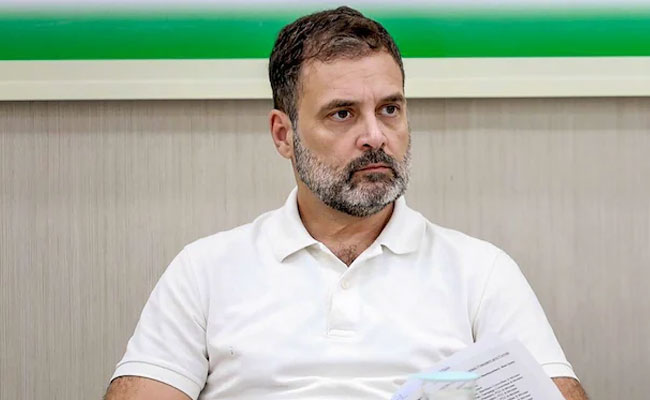
Condition of Mumbai roads won't let vehicles exceed 80 kmph speed limit: High Court
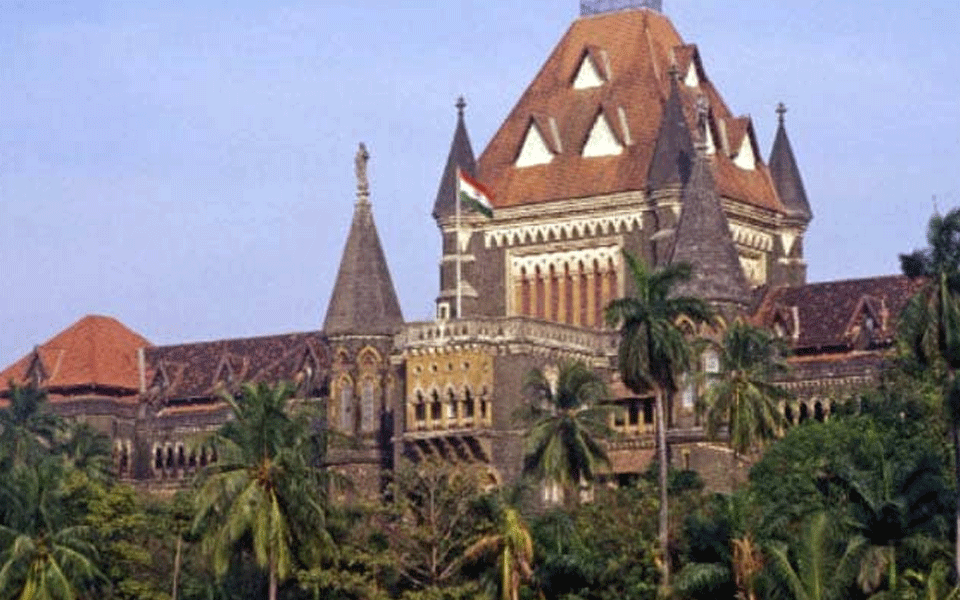
Mumbai: The condition of roads in Mumbai is such that no person would be able to drive his vehicle above the 80 kmph speed limit, the Bombay High Court observed while hearing a petition for strict implementation of speed governor norms.
A division bench of Chief Justice Pradeep Nandrajog and Justice Bharati Dangre heard a petition last week filed by a city-based NGO claiming that the provisions made for installation of speed governors in vehicles are not being strictly implemented.
A speed governor is a device used to measure and regulate the speed of an engine. The plea claimed that several vehicles, including school buses, in the city violate the prescribed speed limit. The bench, however, noted that the speed limit was infructuous.
"In a city like Mumbai, which road remains where a vehicle can go above the 80 km speed? The city has solved the problems and issues raised in this petition by its own," Chief Justice Nandrajog said.
The bench noted that with the present condition of roads in the city, the petitioner has raised a "non-existent problem". The court posted the petition for further hearing on November 14.
The Maharashtra government, in May 2017, directed for fitting the speed governors in black and yellow taxis, mobile app-based cabs and tourist taxis, small tempos and pick-up vans weighing less than 3,500 kg with a prescribed speed limit at 80 kmph (kilometre per hour).
Meanwhile, the high court referred to the Yamuna Expressway while pointing out imposition of speed limit.
"Authorities construct freeways and highways. In the beginning they say that one can cover the distance from one end of the city to the other in few minutes, but then they impose speed limits on the same road.
"When the Yamuna Expressway was constructed, it was said that people could travel from Delhi to Agra in less than two hours. But there is a speed limit of 62 kmph on the highway," the chief justice said.
Let the Truth be known. If you read VB and like VB, please be a VB Supporter and Help us deliver the Truth to one and all.
Madras HC strikes down TN order limiting maternity leave for third child
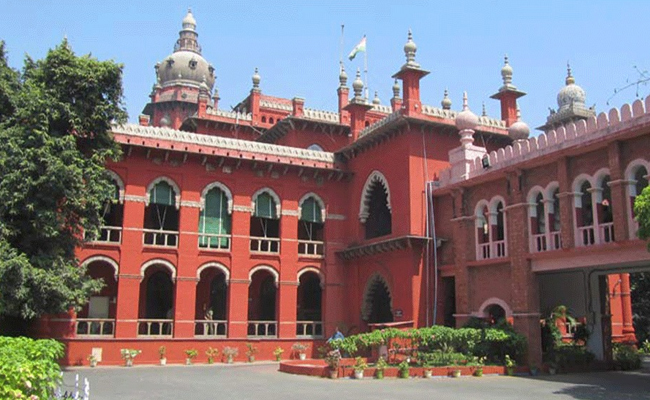
Chennai: The Madras High Court has set aside a Tamil Nadu government order restricting maternity leave for a third pregnancy to 12 weeks, holding the move to be contrary to established legal principles.
A division bench comprising Justices R Suresh Kumar and N Senthil Kumar ruled that there was no justification to treat third pregnancies differently from the first two, observing that the physical and medical requirements of childbirth remain the same irrespective of the number of pregnancies, as reported by The News Minute.
According to a report published by Live Law, the court was hearing a petition filed by Shayee Nisha, a staff member of the district judiciary in Villupuram, whose request for maternity leave from February 2026 to February 2027 had been curtailed to three months by authorities citing the March 13, 2026 government order.
Quashing the decision of the Principal District Judge and related directions asking her to resume duty, the bench directed that she be granted maternity leave on par with that provided for earlier pregnancies, allowing up to 365 days.
The court noted that both the Supreme Court of India and earlier rulings of the High Court had consistently held that maternity benefits cannot be denied for a third child. Holding the restriction to be unsustainable, the court directed authorities to process maternity leave applications without discrimination based on the number of pregnancies.
It also pointed out that a similar issue had been addressed by a division bench earlier this year, which had disapproved denial of maternity leave in such cases and directed that its ruling be circulated among judicial officers. Despite this, the state issued the impugned order, the bench observed.