Cong did nothing for backward classes in 70 years, it also opposed reservation for them: Scindia
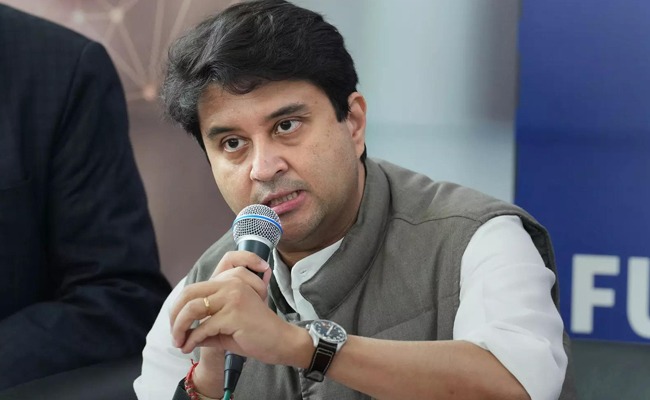
Gwalior (MP)(PTI): Union minister Jyotiraditya Scindia has hit out at the Congress, accusing it of not doing anything for backward classes during the 70 years of its rule, and alleged that it also opposed reservation for people from this community.
The Civil Aviation Minister made the allegation while talking to reporters in Gwalior on Friday.
His remark comes in the wake of the 'Jitni abaadi, utna haq" (rights proportionate to the population) pitch made by Congress leader Rahul Gandhi following the Bihar government's caste survey report, which revealed that the Extremely Backward Classes and the Other Backward Classes constitute 63 per cent of the state's population.
Replying to a question about Bihar's caste survey and the Congress's reaction to it, Scindia said, "This party (Congress) did not do anything for the backward classes in 70 years."
"When the report of a commission (on backward classes) was submitted during the tenure of prime minister Morarji Desai, the Congress opposed it. When the government led by V P Singh implemented reservation for backward classes, the Congress opposed that as well," Scindia said.
But Prime Minister Narendra Modi has been working for the Scheduled Castes, Scheduled Tribes and backward classes, and 60 per cent members in his cabinet belong to these communities, he added.
It is the government led by PM Modi that gave 27 per cent reservation to the OBCs, he said.
"The Congress is trying to rake up a new issue at the time of elections, but it never did anything for these communities during its long rule," Scindia, who was earlier with the grand old party but joined the Bharatiya Janata Party (BJP) in 2020, said.
The Union minister, expressed confidence that the BJP would form a government in Madhya Pradesh after the assembly elections due to be held soon.
Let the Truth be known. If you read VB and like VB, please be a VB Supporter and Help us deliver the Truth to one and all.
National Synodal Assembly 2026 begins in Bengaluru with over 220 delegates
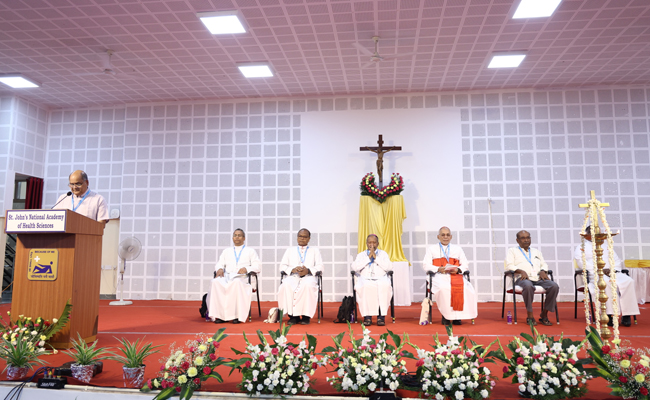
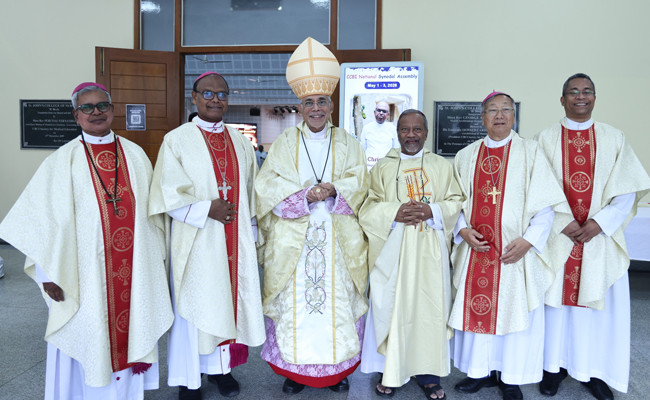
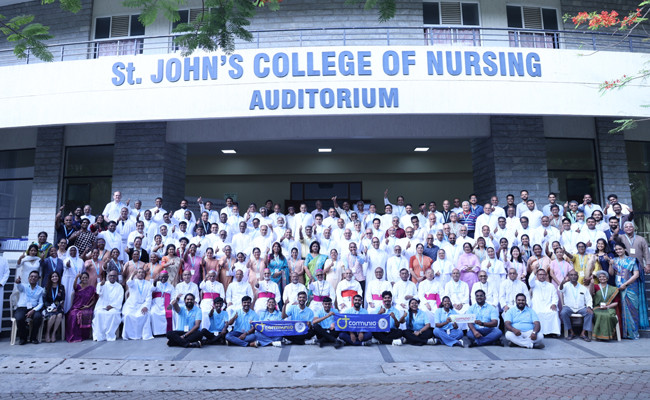
Bengaluru: The Conference of Catholic Bishops of India (CCBI) on May 1 inaugurated its National Synodal Assembly 2026 at St. John’s Medical College, bringing together more than 220 delegates from across the country under the theme Synodal Pilgrims of Hope.
The assembly is part of the global synodal process initiated in 2021 by Pope Francis, which calls for greater participation, dialogue and shared responsibility within the Church. In India, the process has involved consultations at diocesan, regional and national levels.
Participants at the assembly include two Cardinals, 25 Bishops, 65 priests, more than 20 women religious, and over 100 lay faithful, including youth and women leaders.
The gathering began with a Eucharistic celebration led by Filipe Neri Ferrão. In his homily, he described the assembly as a moment of grace and discernment and called on delegates to walk together in prayer, listening and missionary commitment.
He spoke about the importance of the Risen Christ in the mission of the Church and urged the faithful to be witnesses of the Gospel. Referring to the conversion of St Paul, he said every baptised person has a role in spreading the message of Christ. He also highlighted the example of St Joseph the Worker, stressing the dignity of labour and the call to holiness in everyday life.
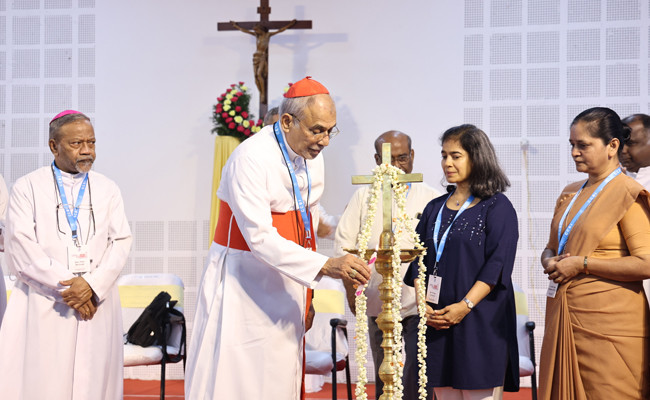
The formal inauguration included the invocation of the Holy Spirit through Veni Creator Spiritus and the lighting of the ceremonial lamp. Deputy Secretary General Fr. Stephen Alathara welcomed the delegates and described the gathering as a spiritual journey.
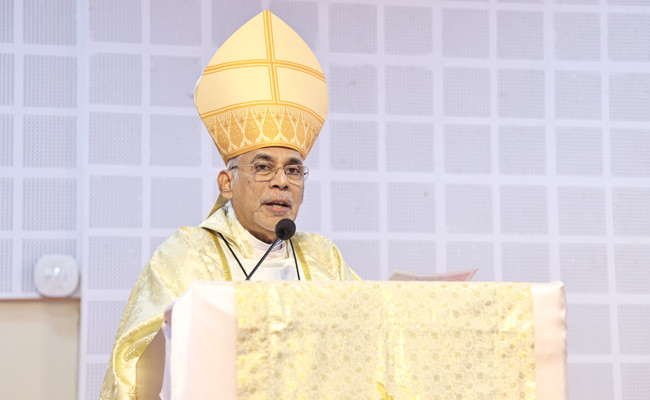
In his presidential address, Cardinal Ferrão referred to the CCBI pastoral plan titled Journeying Towards a Synodal Church: Mission 2033 and called on participants to build on the vision outlined at the 36th Plenary Assembly held in Bhubaneswar in 2025.
Delegates will reflect on four key themes identified from 16 pastoral priorities: interreligious dialogue and peacebuilding, inclusion of the excluded, poverty and integral ecology, and support for children and youth.
The discussions are being conducted through a method of spiritual conversation aimed at encouraging listening, dialogue and collective decision-making. The focus is on translating these discussions into practical actions within the Church.
The assembly also looks ahead to the Jubilee Year 2033, which will mark 2,000 years of the Redemption, and aims to strengthen the Church’s mission in the coming years.
Further consultations are scheduled for September 2026, with the process expected to conclude at the 38th Plenary Assembly of the CCBI in January 2027.
Organisers said the assembly seeks to strengthen unity within the Church and promote participation of all sections, including women and youth, in shaping its future direction.