Cong MLA Jignesh Mevani suspended for creating ruckus in Guj Assembly
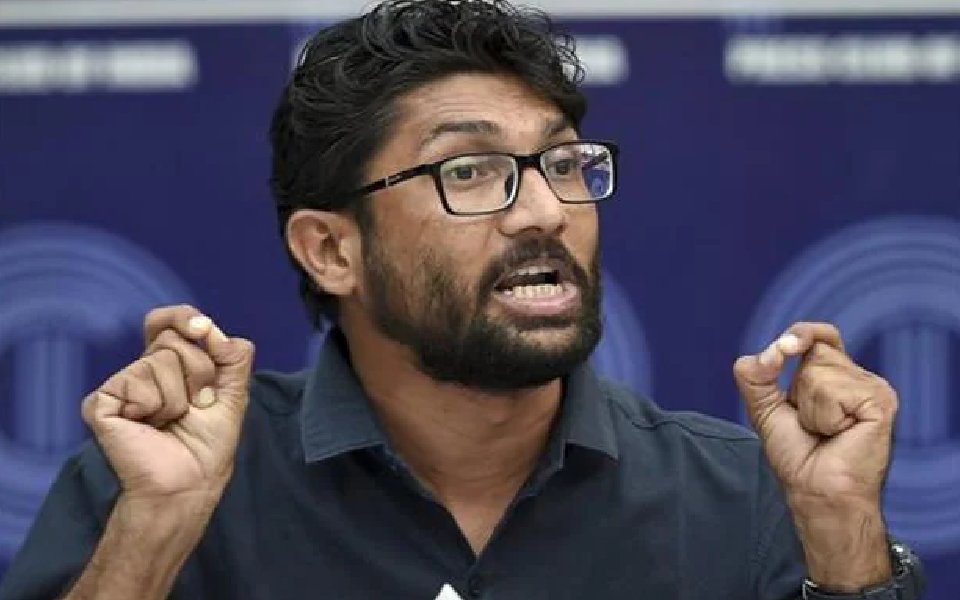
Gandhinagar, Mar 10 (PTI): Congress MLA Jignesh Mevani was suspended from the Gujarat assembly for a day on Monday for creating a ruckus in the well of the House following which he was evicted by marshals.
The drama unfolded after Mevani alleged financial irregularities by some district collectors during the Lok Sabha elections held last year in Gujarat.
Mevani said these irregularities had created an additional burden of Rs 121 crore on the Gujarat government because some officials had spent excessive funds and submitted highly inflated bills for products and services they used during the 2024 general elections.
Responding to Mevani's allegations, Parliamentary and Legislative Affairs Minister Rushikesh Patel said Lok Sabha elections were conducted by the Election Commission and the state government had no role in appointing or supervising officials.
Speaking on the budgetary allocations for the General Administration Department, Mevani said the office of the Chief Electoral Officer (CEO), Gujarat, had issued a notice to collectors of five districts, telling them that the expenses they incurred during Lok Sabha elections were "not convincing".
These notices were issued to the then collectors of Porbandar, Jamnagar, Dahod, Bharuch and Gir Somnath districts.
Mevani said the then district collector (cum Returning Officer) of Porbandar floated a tender of Rs 20 lakh for erecting a temporary canopy outside polling booths.
"The appointed agency, however, submitted a bill of Rs 2.56 crore after finishing the work. The collector even agreed to approve that bill," he claimed.
According to Mevani, when a query was raised from Gandhinagar, the agency reduced the bill amount to Rs 57 lakh, nearly three times the tender amount. "Yet, the collector was ready to pay," he added.
Mevani claimed he possessed related documents and alleged that officials engaged in the election ate dry fruits of Rs 16,000 in a few days and that bill was also sent for approval by the collector.
"Officials ate chicken of Rs 30,000 and the Porbandar collector added the salary of a restaurant's cook to that bill. For a siren to be mounted on a vehicle, which is available in the market for Rs 6,000, a bill of Rs 60,000 was submitted," alleged Mevani.
He said an election official in Jamnagar submitted a bill claiming that nearly 90 litres of fuel was used in his vehicle in a single day in an assembly seat.
Mevani wondered if the official travelled 900 kilometres in a day inside the Kalavad assembly seat in Jamnagar.
"The state government must take note of this issue and ensure that no bill is approved without scrutiny. An FIR should be lodged against these officials for submitting fabricated bills and wasting taxpayers' money," said Mevani, who represents the Vadgam seat in Banaskantha.
As Mevani made these claims, minister Rushikesh Patel urged Deputy Speaker Jethabhai Bharwad, who was in the chair, to expunge Mevani's remarks on the elections.
Bharwad, however, didn't give any ruling immediately.
Enraged by Patel's comments, Mevani rushed to the well of the House and launched a sit-in protest, demanding the government's response to his allegations.
As Mevani didn't return to his seat despite repeated requests, the deputy Speaker suspended him for a day and ordered marshals to take Mevani out. Following the ruling, marshals evicted the Congress MLA from the House.
Let the Truth be known. If you read VB and like VB, please be a VB Supporter and Help us deliver the Truth to one and all.
Sujit Nair raises concerns over speculation of DMK-AIADMK understanding to block TVK
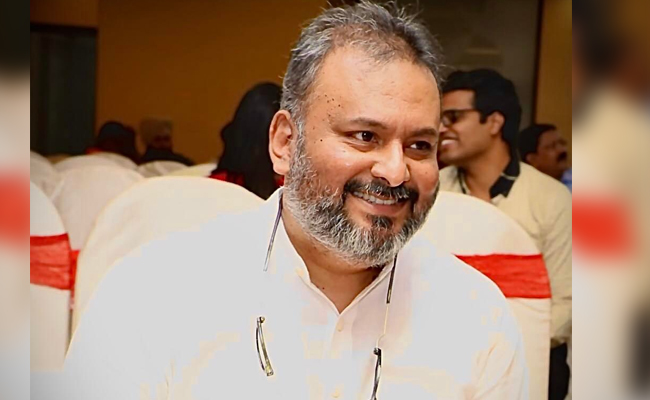
Chennai: Journalist and political commentator Sujit Nair has expressed concern over speculation that the Dravida Munnetra Kazhagam and the All India Anna Dravida Munnetra Kazhagam could explore a post-poll understanding to prevent Vijay-led Tamilaga Vettri Kazhagam from forming the government in Tamil Nadu.
In a social media post, Sujit Nair said the election verdict in Tamil Nadu reflected a clear public demand for political change and argued that the mandate should be respected irrespective of political preferences.
Referring to reports and political discussions surrounding a possible understanding between the DMK and AIADMK, he said he hoped such developments remained only speculative conversations and did not turn into reality.
Nair stated that if such an alliance were to take shape, it would raise serious questions about ideological politics in the country. He said TVK had emerged through a democratic electoral process and that the legitimacy to govern in a parliamentary democracy comes from the people’s verdict.
According to him, attempts to prevent an electoral winner from forming the government through unexpected political arrangements may be constitutionally valid, but many people could view them as politically opportunistic.
He further said that such a move could particularly affect the political image of the DMK, which has historically projected itself around ideology, social justice and opposition politics. Nair said that in ideological terms, the DMK appeared closer to TVK than to the AIADMK, and joining hands with its long-time political rival only to remain in power could weaken its broader political narrative.
He added that the same questions would apply to the AIADMK as well, as the party had spent decades positioning itself against the DMK and such an arrangement could create discomfort among its cadre and supporters.
Drawing a comparison with Maharashtra politics in 2019, Nair said he had expressed similar views when the Shiv Sena formed an alliance with the Indian National Congress and the Nationalist Congress Party after the Assembly elections.
He said post-poll alliances between long-standing political rivals often create a public perception that ideology and electoral mandates become secondary when political power equations come into play.
Nair also said such developments increase public cynicism towards politics and reinforce the belief among voters that ideology is often sidelined after elections.
He maintained that the Tamil Nadu verdict was emphatic and said respecting both the spirit and substance of the mandate was important for the credibility of democratic politics.