Congress leader Priyanka Chaturvedi questions Modi govt
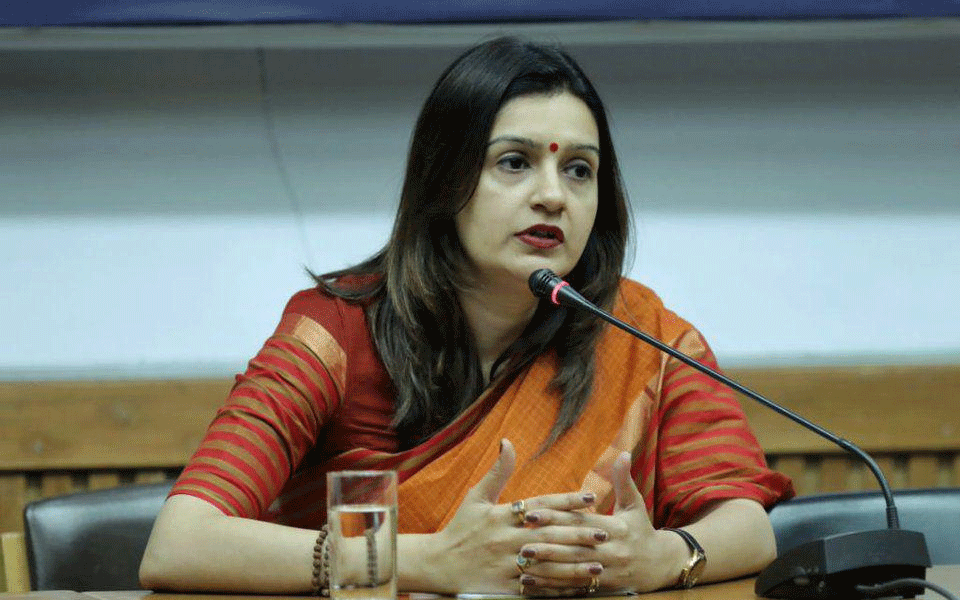
Mathura sep 02: The Congress has asked the Narendra Modi government why it inked a deal with France's Dassault Aviation to buy just 36 aircraft when 126 fighter jets were required.
The party's national spokesperson, Priyanka Chaturvedi, asked if there's any urgency, why the government did not ask the French company to supply all the aircraft in one go. "The first lot of the aircraft will be supplied in 2019 and the rest in 2022. If there is any urgency, the whole lot should have been supplied by 2019," she said on Saturday.
Chaturvedi asked why the government is "afraid of a Joint Parliamentary Committee (JPC) probe into the deal, if it's fair". "A total of 126 aircraft were required, but the NDA government signed a pact for only 36 aircraft. This is strange," she said.
"How the cost per plane soared from Rs 526 crore to Rs 1,670 crore?", Chaturvedi asked.
The Congress leader said though the deal could not materialise during the UPA government's tenure, but it ensured transparency in all matters related to it.
Union minister Arun Jaitley had earlier said the fully weaponised fighter jets which his government is buying are 20 percent cheaper than the ones offered under the previous UPA regime. In 2015, then defence minister Manohar Parrikar had said that the government had decided to buy only 36 Rafale fighter jets scrapping the earlier plan to acquire 126 of the French aircraft on grounds of huge cost.
Courtesy: firstpost.com
Let the Truth be known. If you read VB and like VB, please be a VB Supporter and Help us deliver the Truth to one and all.
Put petty politics aside; it's not about one party, but India: Rahul on TMC's loss in polls
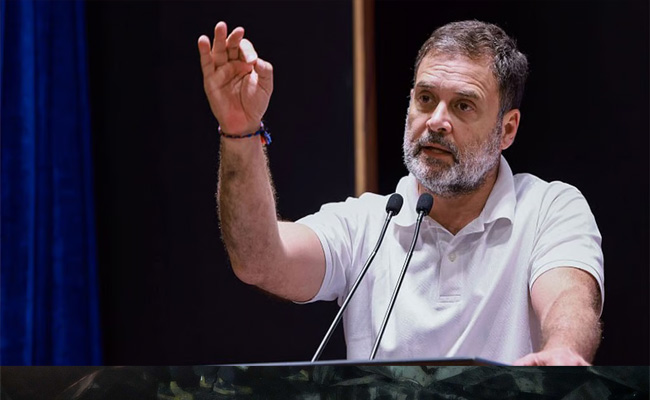
New Delhi (PTI): Congress leader Rahul Gandhi on Tuesday termed the BJP's victory in Bengal and Assam assembly polls a "theft" of the mandate, and a big step forward in the saffron party's mission to "destroy" Indian democracy.
Gandhi also came out in support of the TMC, which has been trounced by the BJP in the polls, and urged those gloating over the loss of Mamata Banerjee's party to put petty politics aside.
"Some in the Congress, and others, are gloating about TMC's loss.They need to understand this clearly - the theft of Assam and Bengal's mandate is a big step forward by the BJP in its mission to destroy Indian democracy," Gandhi said in a post on X.
"Put petty politics aside. This is not about one party or another. This is about India," he said in his post.
The BJP ousted Trinamool Congress from power in Bengal and captured power for the third time in a row in Assam in results of assembly polls declared on Monday.