Congress' narrow minds can't celebrate army's valour: Modi

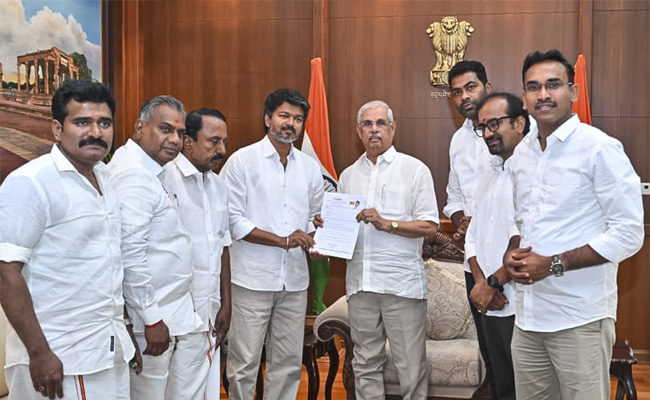
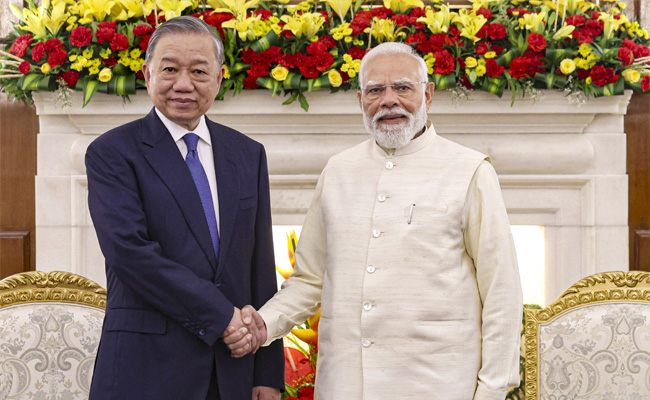
New Delhi, Sep 29 : In a bitter attack on the Congress, Prime Minister Narendra Modi on Saturday said that the partys "chhoti soch" (narrow mindedness) was stopping it from seeing any merit in celebrating the 2016 cross-LoC surgical strikes on terrorist launch pads.
"We all know the attitude of the Congress on surgical strikes. They keep raising questions over surgical strikes even today, opposing the government and opposing the nation's armed forces? Also doubting the armed forces' valour and courage?" he said while addressing the BJP workers in Rajasthan's Chittorgarh through video conferencing.
"In their bid to oppose the government, they began opposing the nation. This antagonism has become the character of the Congress party," he added.
Responding to a question by a BJP worker, Modi said that the opposition had even questioned the utility of the Pokhran-II nuclear tests and the Congress party did not even see any merit in observing the Kargil Vijay Diwas.
"The Congress does not observe the Kargil Vijay Diwas even today. One of their leaders said they could not see any reason to celebrate the Kargil victory as the war was fought on India's land, that this victory is meaningless. They said it was an NDA-era war and so NDA could celebrate it. Such narrow mindedness, lowly thinking," Modi said.
He also attacked Congress President Rahul Gandhi for meeting the Chinese Ambassador at the height of the 73-day Doklam stand-off with that nation last year.
"The Congress President, without taking anyone into confidence, met the Chinese ambassador during Doklam episode. If the Congress President wanted to know something on Doklam, he could have asked the External Affairs Minister. But, he was more interested in knowing the Chinese perspective," he said.
The government is observing the second anniversary of the surgical strikes -- conducted by the special forces on the intervening night of September 28-29 in 2016 -- as a three-day ‘Parakram Parv' at 53 locations in 51 cities across India.
Let the Truth be known. If you read VB and like VB, please be a VB Supporter and Help us deliver the Truth to one and all.
SC refuses to adjourn hearing on pleas against EC law, says this matter is more important
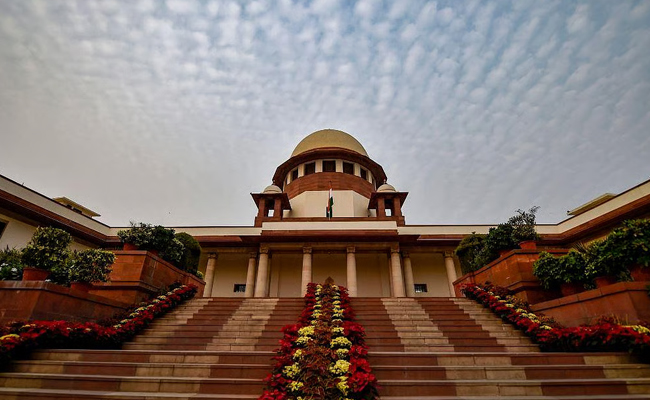
New Delhi (PTI): The Supreme Court on Wednesday refused to accede to the Centre's request to adjourn the hearing on pleas challenging the constitutional validity of a 2023 law that removed the CJI from a committee responsible for appointing the chief election commissioner and the deputies, saying the matter is "more important" than the Sabarimala case.
A nine-judge constitution bench headed by Chief Justice Surya Kant is currently hearing petitions regarding discrimination against women at religious sites, including the Sabarimala temple in Kerala, as well as the scope of religious freedom across various faiths.
A bench comprising justices Dipankar Datta and Satish Chandra Sharma turned down the request by Solicitor General Tushar Mehta, appearing for the Centre, to adjourn the hearing on the ground that he was currently occupied before a nine-judge bench in the Sabarimala reference case.
Referring to the gravity of the current challenge to the Chief Election Commissioner and Other Election Commissioners (Appointment, Conditions of Service and Term of Office) Act, 2023, Justice Datta said, "This matter is more important than any other matter."
"Let your (solicitor general's) associates take notes today. Let the petitioners start. All matters are important. We read in the newspapers that there is an observation that the PIL in Sabarimala should not have been entertained by the court. So, with due respect to the judges, nine judges are occupied in a matter where there is an observation that it should not have been entertained in the first place," Justice Datta said.
ALSO READ: Girl mauled to death by stray dogs in Punjab's Hoshiarpur
The bench then directed the petitioners to conclude their arguments by Thursday, allowing the Centre to present its submissions on a subsequent date. The bench then proceeded with the hearing which is underway.
Earlier on March 20, CJI Surya Kant recused himself from hearing the petitions. "I will be accused of conflict of interest. There is a conflict of interest," the CJI had said. The law, enacted by Parliament in December 2023, came months after a landmark verdict by which the apex court directed that election commissioners be appointed by a committee comprising the prime minister, the leader of the Opposition, and the chief justice of India.
The bench had said that the system will remain in force till a law is enacted.
Under the 2023 Act, the selection committee consists of the prime minister, a Union minister nominated by the prime minister and the leader of Opposition (or leader of the largest opposition party in the Lok Sabha).
The PILs said the exclusion of the CJI from the panel undermines the independence of the appointment process.
The law has been challenged by multiple petitioners, including Congress leader Jaya Thakur and the Association for Democratic Reforms.
Earlier, the Centre defended in the Supreme Court the appointment of two new election commissioners under the 2023 law that excludes the chief justice of India from the selection committee, saying the independence of the Election Commission does not arise from the presence of a judicial member on the committee.
In an affidavit filed in the apex court, the Union law ministry rejected the petitioner's claim that the two election commissioners were hastily appointed on March 14, 2024, to "pre-empt" the orders of the top court the next day, when the matters challenging the 2023 law were listed for hearing on interim relief.
The apex court also refused to stay the appointment of new election commissioners under the 2023 law.
A five-judge constitution bench had in March 2023 ruled that the chief election commissioner and election commissioners shall be appointed on the advice of a committee comprising the prime minister, the leader of the Opposition in the Lok Sabha and the chief justice of India.