Congress says PM should talk to farmers; Rahul Gandhi hits out at govt
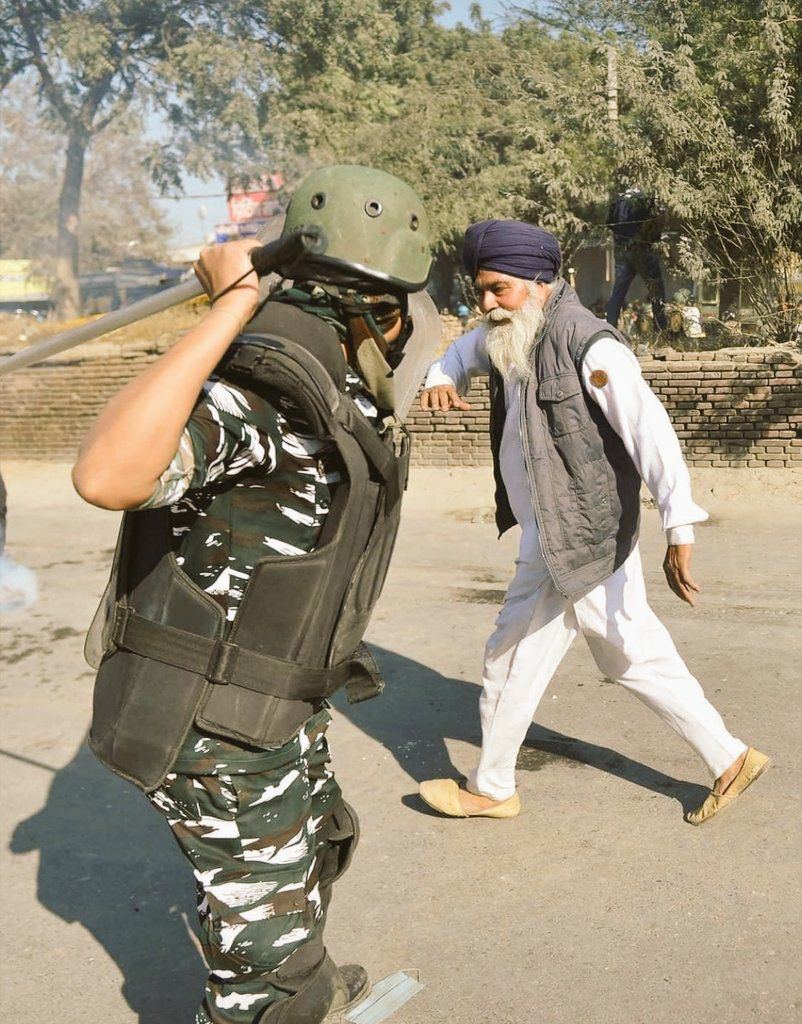
New Delhi, Nov 28: Congress leader Rahul Gandhi on Saturday alleged that a soldier was pitted against an old farmer due to Prime Minister Narendra Modi's "arrogance".
The Congress also said it would have been better if the prime minister talked to the protesting farmers instead of getting "himself photographed in corporate offices".
"This is a very sad photo. Our slogan was 'Jai Jawan, Jai Kisan', but today a soldier is standing against the farmer due to PM Modi's arrogance. This is very dangerous," he said in a tweet in Hindi along with the picture of a soldier showing a baton to an old farmer.
The former Congress chief justified the farmer agitation saying raising voice against injustice is a duty and not a crime.
He said by booking the farmers in fake FIRs, the Modi government cannot deter their strong resolve against the new farm laws.
"Raising voice against injustice is a duty, not a crime. The Modi government cannot change the strong resolve of farmers by booking them in fake FIRs with the help of the police. This fight will continue till the anti-agriculture black laws are withdrawn. For us, 'Jai Kisan' was, is and will continue to remain," he said in another tweet in Hindi.
Farmers from Punjab and Haryana continued their protests against the new farm laws, with many of them blocking traffic on the national highway after the police stopped them from their 'Chalo Delhi' march.
Congress chief spokesperson Randeep Surjewala accused Modi of getting pictures clicked in corporate offices while farmers are protesting on Delhi roads.
"Wish the PM talks to farmers on the road instead of flying in the aircraft," he said in a tweet, after Modi visited a company in Ahmedabad which is engaged in the COVID-19 vaccine research.
Another spokesperson Abhishek Singhvi claimed whoever protests against the Modi government is "deemed a terrorist".
"Poor farmers from Punjab pointing out genuine grievances have been labelled khalistani. Why doesn't Modi come out and address the Annadata however, only demands of them during elections," he tweeted.
Party leader Priyanka Gandhi Vadra also tweeted similar pictures of farmers being prevented by the police from marching towards Delhi, where they wish to hold a protest against the new farm laws.
She said it is right if the government frames laws against farmers, but it is wrong when farmers wish to make their voice heard in Delhi.
"Look at the state of affairs in the BJP government. When super rich friends of the BJP come to Delhi, a red carpet is laid to welcome them, but the roads are being dug up when farmers wish to enter Delhi," she said in a tweet in Hindi.
Thousands of farmers protesting the Centre's new agri laws stayed put at the Singhu and Tikri border points for the third consecutive day on Saturday amid heavy police presence even after being offered a north Delhi ground to hold peaceful demonstrations.
Numbers swelled at the Singhu border point as farmers gathered there were joined by more counterparts from Punjab and Haryana and they refused to move towards the Sant Nirankari Ground, one of the biggest in the national capital.
बड़ी ही दुखद फ़ोटो है। हमारा नारा तो ‘जय जवान जय किसान’ का था लेकिन आज PM मोदी के अहंकार ने जवान को किसान के ख़िलाफ़ खड़ा कर दिया।
— Rahul Gandhi (@RahulGandhi) November 28, 2020
यह बहुत ख़तरनाक है। pic.twitter.com/1pArTEECsU
Let the Truth be known. If you read VB and like VB, please be a VB Supporter and Help us deliver the Truth to one and all.
4 workers die after being buried under coal slurry in Jharkhand's Dhanbad
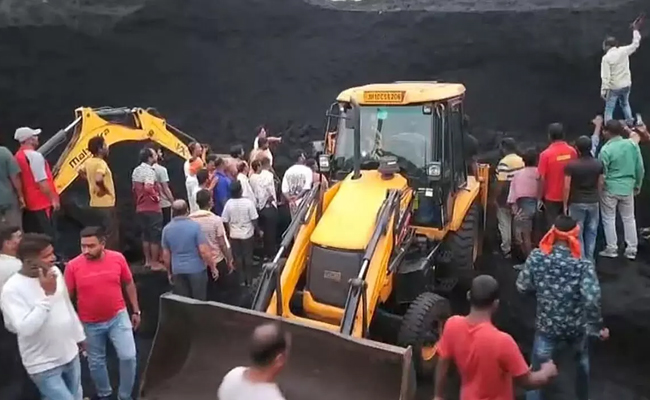
Dhanbad (Jharkhand) (PTI): At least four workers died after being buried under coal slurry in Jharkhand's Dhanbad district on Saturday, a police official said.
The incident took place at Moonidih coal washery in the command area of Bharat Coking Coal Limited (BCCL).
"Bodies of all four workers were dug out of debris during a rescue operation," Putki police station in-charge Waqar Hussain told PTI.
The incident took place when coal slurry was being loaded into trucks by workers, during which a large chunk of slurry fell and trapped several workers underneath, officials said.
The deceased have been identified as Manik Bauri, Dinesh Bauri, Deepak Bauri, and Hemlal Gope.
Meanwhile, the family members of the deceased and local villagers placed the bodies in front of the washery gate and began a protest.
They demanded compensation, jobs for dependents and action against those responsible for the incident.
Police and administration officials are trying to pacify the protesters, an official said.