Congress still in driver's seat in MP; in touch with parties for 'possible alliance': Scindia
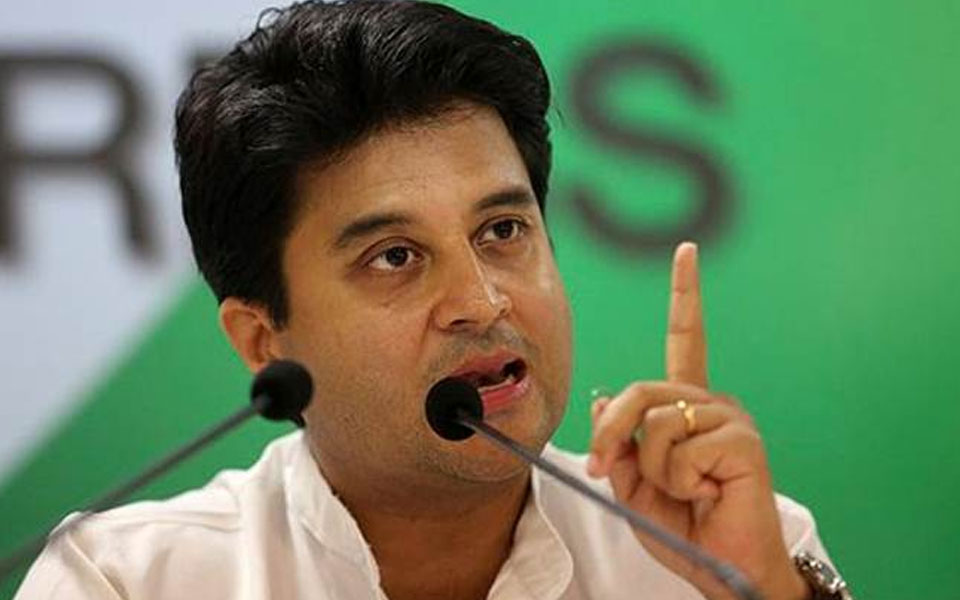
New Delhi, Oct 14 : Unfazed by the BSP's decision to not align with the Congress in Madhya Pradesh, senior leader Jyotiraditya Scindia said Sunday the party is "still in the driver's seat" and in touch with all "possible partners" in the poll-bound state.
Scindia, who is spearheading the Congress campaign in Madhya Pradesh, also said the entire state leadership and party cadre was "working cohesively" to chart out the party's plan to dislodge the BJP government after "14 years of misrule".
Asked if the BSP could cut into the Congress' vote share, he told PTI in an interview that: "I don't think so. Obviously, the alliance would have had its own benefits, but as things stand today, support for the Congress is running deep in Madhya Pradesh. The workers are motivated and the people are looking to us for change. So, we are definitely still in the driver's seat."
Replying to a query about a possible tie-up with the Samajwadi Party and the Gondwana Gantantra Party after Bahujan Samaj Party's decision to not align with the Congress in the state, Scindia said, "We are in touch with all possible partners -- our ultimate goal is to beat the Bharatiya Janata Party. We are not currently ruling out the possibility of an alliance."
His remarks come days after BSP chief Mayawati announced her party will not forge an alliance with the Congress "at any cost" for the upcoming Assembly polls in Rajasthan and Madhya Pradesh.
However, he said the general election next year will be a "different ball game altogether" and if state alliances don't work out, the possibilities still exist for a coalition in 2019.
Scindia said the party's "driving mantra" is 'Waqt hai badlaav ka' (It is time for change), and added that this is "not a slogan, this is a reality, a commitment to change".
"We are not fighting this election on the Modi or Shivraj factor but the 'people factor'. The people of Madhya Pradesh have suffered from the BJP rule for 14 years. Everywhere we look, the people are exasperated and angry," the MP from Guna said.
Talking about the issues that the Congress will raise during the campaign, Scindia said the party will take the fight to the streets. "We are focusing on some key issues -- farmer distress across the state, complete breakdown of law and order, especially rising cases of crimes against women, unemployment, and massive corruption, be it Vyapam, e-tender or sand-mining."
The state will go to polls on November 28 and counting of votes will be held on December 11.
Asked what was different internally in the Congress organisation as compared to the past three elections and whether differences between senior leaders had been sorted, Scindia said the party was united and there were regular meetings on key matters, including on overhauling the organisation, reviving and rejuvenating party cadres and strengthening the system at the district and block level.
"We understand that to fight the BJP, we will have to go down to the booth level and fight. Under Congress President Rahul Gandhi's uniting leadership, we are working as a single INC unit, coming together under the umbrella of a common vision and mission for the development of Madhya Pradesh," the 47-year-old leader said.
On opinion polls putting the Congress marginally ahead of the BJP in Madhya Pradesh, Scindia said he believes his party is "in the lead".
The people are now looking to the Congress for change and are hopeful that the party will bring a wave of development, progress and honesty, the former Union minister said.
Asked if the Congress was bargaining hard as a result of which state-level alliances were failing and damaging prospects of a grand alliance in 2019, Scindia said the party was trying to build reasonable alliances that were mutually beneficial for all involved actors, and one that will be able to give the BJP a strong fight.
"For example, in Madhya Pradesh, there was clearly a mismatch between the BSP's vote share and the seats they were demanding obviously, that would not be strategically-beneficial for us. So, it is not about bargaining hard for the sake of debate, it is about reaching the most effective agreement," he said.
Let the Truth be known. If you read VB and like VB, please be a VB Supporter and Help us deliver the Truth to one and all.
Sujit Nair raises concerns over speculation of DMK-AIADMK understanding to block TVK
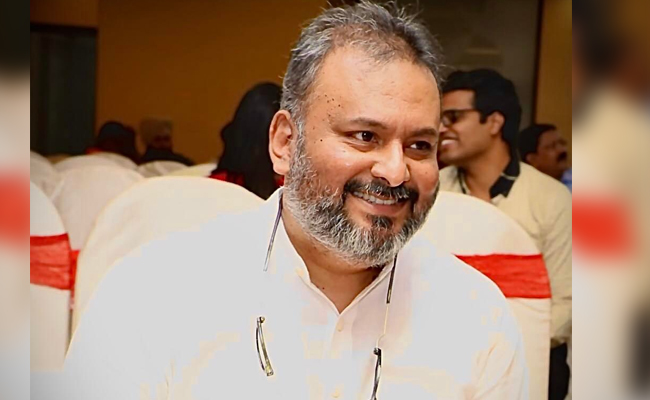
Chennai: Journalist and political commentator Sujit Nair has expressed concern over speculation that the Dravida Munnetra Kazhagam and the All India Anna Dravida Munnetra Kazhagam could explore a post-poll understanding to prevent Vijay-led Tamilaga Vettri Kazhagam from forming the government in Tamil Nadu.
In a social media post, Sujit Nair said the election verdict in Tamil Nadu reflected a clear public demand for political change and argued that the mandate should be respected irrespective of political preferences.
Referring to reports and political discussions surrounding a possible understanding between the DMK and AIADMK, he said he hoped such developments remained only speculative conversations and did not turn into reality.
Nair stated that if such an alliance were to take shape, it would raise serious questions about ideological politics in the country. He said TVK had emerged through a democratic electoral process and that the legitimacy to govern in a parliamentary democracy comes from the people’s verdict.
According to him, attempts to prevent an electoral winner from forming the government through unexpected political arrangements may be constitutionally valid, but many people could view them as politically opportunistic.
He further said that such a move could particularly affect the political image of the DMK, which has historically projected itself around ideology, social justice and opposition politics. Nair said that in ideological terms, the DMK appeared closer to TVK than to the AIADMK, and joining hands with its long-time political rival only to remain in power could weaken its broader political narrative.
He added that the same questions would apply to the AIADMK as well, as the party had spent decades positioning itself against the DMK and such an arrangement could create discomfort among its cadre and supporters.
Drawing a comparison with Maharashtra politics in 2019, Nair said he had expressed similar views when the Shiv Sena formed an alliance with the Indian National Congress and the Nationalist Congress Party after the Assembly elections.
He said post-poll alliances between long-standing political rivals often create a public perception that ideology and electoral mandates become secondary when political power equations come into play.
Nair also said such developments increase public cynicism towards politics and reinforce the belief among voters that ideology is often sidelined after elections.
He maintained that the Tamil Nadu verdict was emphatic and said respecting both the spirit and substance of the mandate was important for the credibility of democratic politics.