Congress wins Danilimda despite splitting votes with AAP
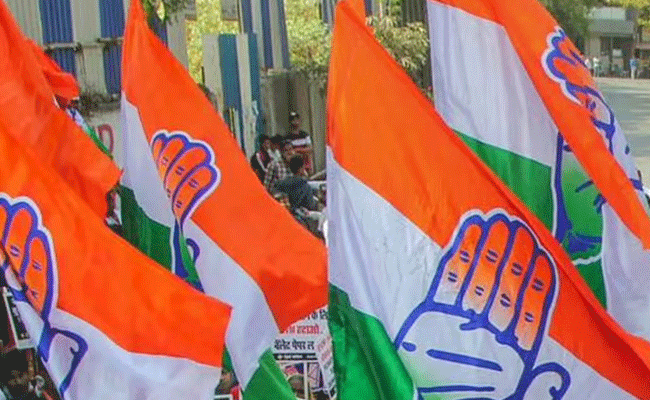
Danilimda (Guj) (PTI): The Congress party on Thursday won the Muslim and Dalit-dominated Danilimda assembly segment in Ahmedabad city, despite the AAP and AIMIM cutting into its votes and the BJP putting up a strong fight.
Sitting Congress MLA Shailesh Parmar won by defeating his nearest rival, BJP's Nareshbhai Vyas, by a margin of 13,525 votes.
Parmar polled 68,906 votes compared to 55381 votes cast in favour of Vyas. AAP candidate Soma Kapadia polled 22,934 votes, while AIMIM's Kaushika Parmar garnered 2,464 votes, according to provisional data of the Election Commission.
Danilimda emerged as a high-profile seat as the BJP and the Congress locked themselves into a prestige fight, with the saffron camp pulling out all stops to wrest the seat that it has never won since it came into existence in 2012 following delimitation.
Despite a three-cornered contest that followed the AAP's entry into the fray, the Congress managed to win Danilimda, which a Scheduled Caste (SC)-reserved urban assembly seat. It has around 2,65,000 registered voters, of whom a third each are Muslims and Dalits. The remaining are from Patel and Kshatriya communities.
Shailesh Parmar, who is also the Congress party's deputy leader in the outgoing Gujarat assembly, has been winning the seat since 2012. In 2012 and 2017, he had won by a margin of around 32,000 votes and 14,000 votes respectively.
Let the Truth be known. If you read VB and like VB, please be a VB Supporter and Help us deliver the Truth to one and all.
Congress using hijab issue to pacify minority anger, alleges Karnataka LoP R Ashoka
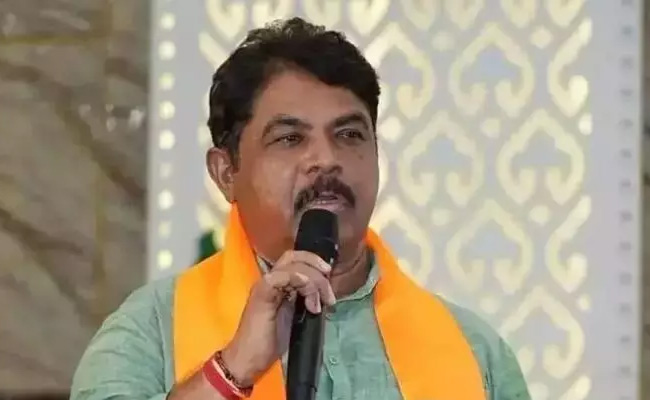
Bengaluru: Leader of Opposition in the Assembly R. Ashoka has accused the Congress government of using the hijab issue to placate what he described as discontent among minority voters after the Davanagere by-election.
In a post on X on Wednesday, Ashoka alleged that the state government, instead of addressing issues such as price rise, corruption, farmers’ distress and law and order, was attempting to retain its minority vote base by reviving the hijab issue.
Referring to the 2022 dress code introduced by the BJP government, which prohibited hijab in schools and colleges, Ashoka said the Karnataka High Court had upheld the policy and emphasised the importance of discipline in educational institutions.
He questioned the Congress government’s move to revisit the issue and asked whether setting aside the court-backed policy to benefit one community could be described as secularism.
Ashoka further alleged that while the government was willing to permit hijab, it continued to prohibit saffron shawls.
He accused the government of dividing students on religious lines rather than treating schools and colleges as spaces of equality.
Drawing a comparison with Mamata Banerjee’s government in West Bengal, Ashoka claimed that excessive appeasement politics had harmed the state and warned that the Congress in Karnataka could face a similar political response.
He said voters in Karnataka would teach the Congress a lesson for what he termed “vote-bank politics” and for compromising constitutional and judicial principles.