Conspiracy to frame CJI: Justice Patnaik calls for more info from CBI, IB and Delhi Police
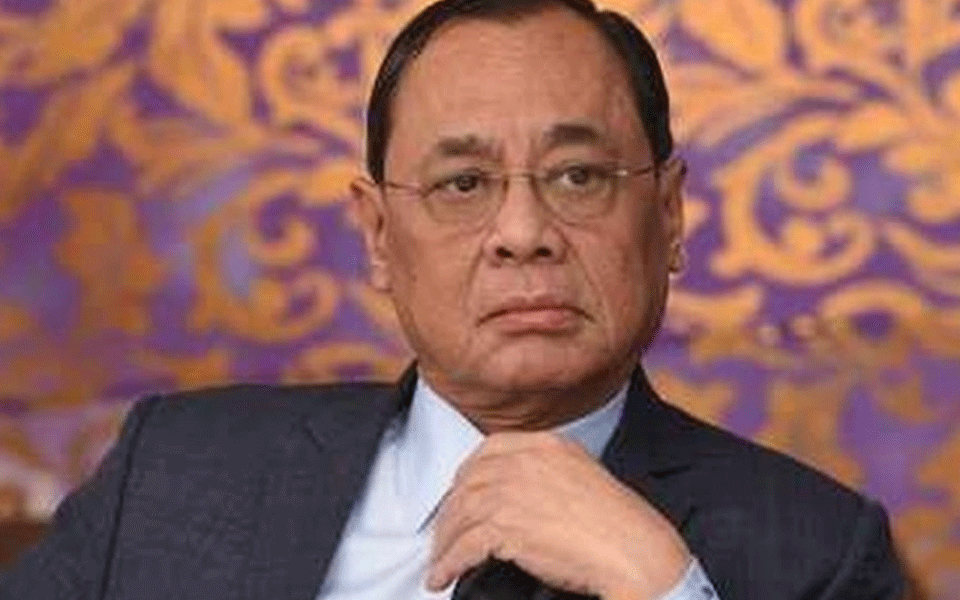
New Delhi: Former Supreme Court judge A K Patnaik Monday said he has called for some more information from the intelligence agencies - CBI, IB - and Delhi Police to find the truth behind the allegations of "larger conspiracy" to frame the Chief Justice of India Ranjan Gogoi.
Justice Patnaik was appointed by the Supreme Court to hold an inquiry into the sensational allegations including the fixing of benches after a lawyer claimed that a larger conspiracy was at work in the apex court.
Utsav Singh Bains had made the allegations when the apex court was hearing the sexual harassment charges against the CJI in which the three-member in-house inquiry committee did not find any substance.
When contacted, Justice Patnaik told PTI over phone from Cuttack, Odisha, that the inquiry will take some more time as he has to peruse more documents to find out the truth.
While ruling out the possibility of submitting the report by July, the retired apex court judge said he has gone through the documents already supplied to him but to find clues he needs more documents.
Justice Patnaik said he is on vacation at his home town and will recommence the work of inquiry on coming back to Delhi in July.
"I will have to call for some more material from all the three -- CBI, IB and Delhi Police Commissioner -- as after going through the material received by them, I think some more material is required.
"I have to find out what clues I am getting. whether there is any confirmation about it or not. If there is no confirmation then I will have to take a different view. If more material is coming in, I will have to pursue it (the matter)."
However, he refused to make any comment on the prima-facie view he holds about the allegations. "I have called for some material from the CBI, IB and the Commissioner of Police, Delhi. They have sent the materials and I have gone through them."
"I can't disclose everything to media. I am supposed to submit the report in a sealed cover. If I start disclosing everything, all the witnesses will be removed," he said.
"We have to find the truth. Unless I find out what is the truth, I can't give the report. The report will take some time," he said, adding that there was a need for giving more time to complete the task and no time frame can be given for it.
While appointing Justice Patnaik on April 25 to hold an inquiry into the allegations of Bains, the apex court had made it clear that the probe by him shall not be with respect to the "alleged misbehaviour" involving the CJI.
The top court had said that outcome of inquiry by Justice Patnaik "shall not affect the in-house procedure/ inquiry which was pending in the administrative side".
An in-house inquiry committee comprising senior most judge Justice S A Bobde and two women judges of the apex court -- Justices Indu Malhotra and Indira Banerjee -- on May 6, gave clean chit to the CJI on the allegations of sexual harassment levelled by the former woman employee of the Supreme Court.
Let the Truth be known. If you read VB and like VB, please be a VB Supporter and Help us deliver the Truth to one and all.
Family of injured driver in murder of Suvendu's aide seeks exemplary punishment
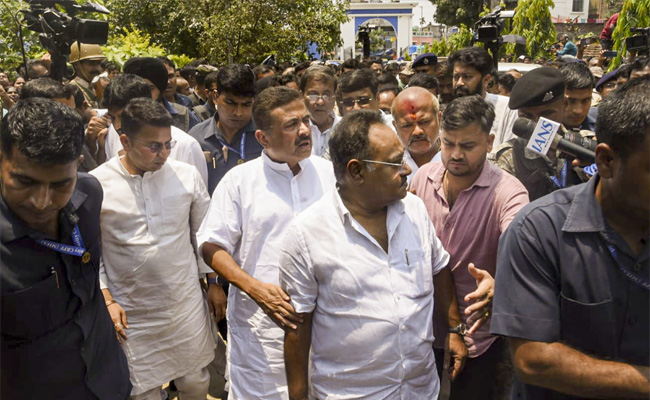
Kolkata (PTI): The family of Buddhabeb Bera, the driver injured in the shooting that killed BJP leader Suvendu Adhikari's close aide Chandranath Rath, demanded exemplary punishment for those responsible and urged the new government to ensure such incidents do not happen in West Bengal.
Rath was shot dead in Madhyamgram near Kolkata on Wednesday night, triggering a political storm in the state. Bera, who was driving the vehicle at the time of the attack, sustained gunshot wounds and is currently undergoing treatment at a private hospital.
Family members said they learned about the incident through television and immediately left for Kolkata.
ALSO READ: Trump says EU has until July 4 to approve last year's trade deal or it will face higher tariffs
"We came to know from TV reports that my nephew had been shot. We still do not know who carried out the attack or why it happened," Buddhabeb's uncle Biswajit Bera said.
"Our only wish now is that he recovers and returns home safely," he added.
Buddhabeb, 25, hails from Majnaberia village in the Chandipur police station area in Purba Medinipur district.
According to family members, he mostly stays in Kolkata for work and visits home occasionally during weekends.
Besides his parents, his younger brother, sister-in-law and several relatives have also travelled to Kolkata following the incident.
Demanding strict action against the perpetrators, the uncle said, "We want the government to conduct a proper investigation and identify those directly involved in the crime. They should be given exemplary punishment so that such incidents do not happen again in West Bengal and no other family has to go through this grief."
A neighbour, Ranjana Ghorai, also sought stringent punishment for those behind the attack.
"In our neighbourhood, we call him Sona. We want exemplary punishment for the people responsible for this incident," she said.
Rath's family members have demanded life imprisonment for the accused, while Adhikari has called for capital punishment for those involved in the killing.