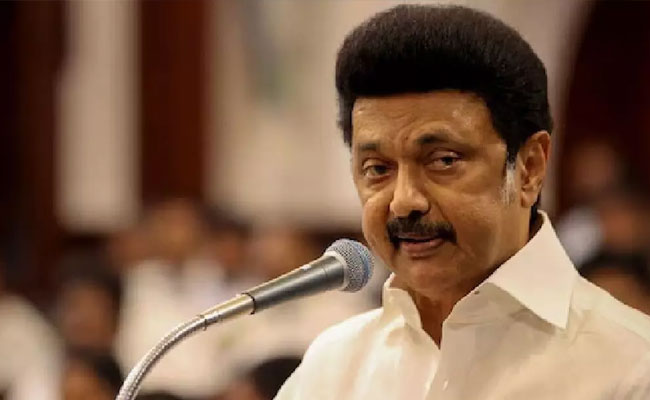
Constitution is quiet revolution empowering marginalised: CJI Gavai
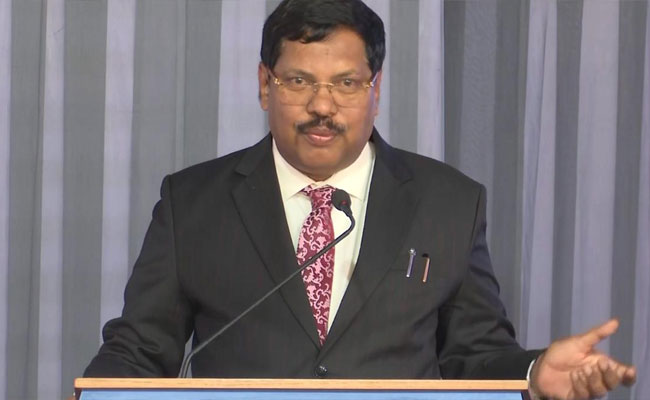
New Delhi (PTI): Chief Justice of India (CJI) B R Gavai has described the Constitution as a "quiet revolution etched in ink" and a transformative force that not only guarantees rights but actively uplifts the historically oppressed.
Speaking at the Oxford Union on the theme 'From Representation to Realisation: Embodying the Constitution's Promise' on Tuesday, the CJI, the second Dalit and the first Buddhist to hold India's highest judicial office, highlighted the positive impact of the Constitution on marginalised communities and gave his example to drive home the point.
"Many decades ago, millions of citizens of India were called 'untouchables'. They were told they were impure. They were told that they did not belong. They were told that they could not speak for themselves. But here we are today, where a person belonging to those very people is speaking openly, as the holder of the highest office in the judiciary of the country," the CJI said.
He said the Constitution told the citizens that "they belong, that they can speak for themselves, and that they have an equal place in every sphere of society and power".
"At the Oxford Union today, I stand before you to say (that) for India's most vulnerable citizens, the Constitution is not merely a legal charter or a political framework, it is a feeling, a lifeline, a quiet revolution etched in ink. In my own journey, from a municipal school to the office of the Chief Justice of India, it has been a guiding force," he said.
He said India's Constitution was not merely a legal framework but a social and moral document crafted amidst deep inequality.
Its drafters, he noted, included representatives from some of the most marginalised communities in India -- Dalits, Adivasis, women, religious minorities, persons with disabilities, and even those formerly labelled "criminal tribes".
"The Constitution is a social document, one that does not avert its gaze from the brutal truths of caste, poverty, exclusion, and injustice. It does not pretend that all are equal in a land scarred by deep inequality. Instead, it dares to intervene, to rewrite the script, to recalibrate power, and to restore dignity," he said.
The CJI said the Constitution carries within it the "heartbeat of those who were never meant to be heard, and the vision of a country where equality is not just promised, but pursued".
"It compels the State not only to protect rights but to actively uplift, to affirm, to repair," he added.
Referring to B R Ambedkar's legacy, the CJI said he was a visionary who transformed his lived experience of caste discrimination into a global understanding of justice.
"He believed that democracy cannot last unless there lies at the base of it social democracy," CJI Gavai said, quoting Ambedkar's historic 1949 Constituent Assembly speech.
The CJI said that Ambedkar saw political representation as a necessary check against entrenched caste hierarchies and arbitrary power, a mechanism to redistribute not just institutional power, but social dignity.
"In an unequal society, he believed, democracy cannot survive unless power is also divided among communities, not just among institutions. Representation, therefore, was a mechanism of redistributing power, not only between the legislature, executive, and judiciary, but among social groups that had been denied a share for centuries," he said.
The CJI highlighted the evolution of affirmative action in India and said initially it was through quotas in legislatures, government jobs, and educational institutions, and later expanded through judicial interpretation and legislative reform.
Referring to landmark Supreme Court judgements, including the Mandal reservation verdict, he said they reaffirmed that affirmative action was not a contradiction of equality but a realisation of its spirit.
"The Constitution imposes a duty of care on the State," CJI Gavai said, invoking constitutional scholar Upendra Baxi, "to achieve equality both in letter and in spirit".
He also referred to the 2014 NALSA judgement recognising transgender rights, the 2020 decision allowing permanent commissions for women in the armed forces, and judicial mandates for reasonable accommodations for persons with disabilities.
The CJI also talked about the 2023 constitutional amendment guaranteeing political reservations for women and the Supreme Court's endorsement of sub-classification within Scheduled Castes to ensure intra-group equity.
"The true beauty of Indian democracy lies in this: even as we commemorate 75 years of the Constitution, we continue to reflect, renew, and reimagine how to deepen and expand the meaning of representation. Just last year, Parliament passed a constitutional amendment to provide political reservations for women in Parliament and state legislatures," he said.
Let the Truth be known. If you read VB and like VB, please be a VB Supporter and Help us deliver the Truth to one and all.
Petrol, diesel price rise in near future not ruled out, say govt sources
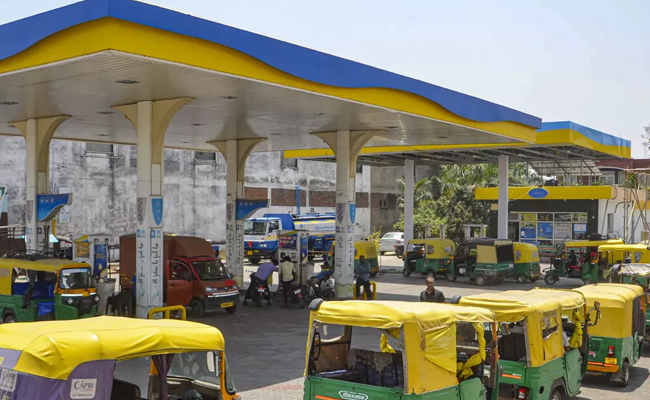
New Delhi (PTI): An increase in petrol and diesel prices in the near future is not ruled out, government sources said on Friday, as losses mount from a four-year-old freeze in retail rates despite the sharp rise in global crude oil prices, PTI reported. International crude oil prices this week climbed to a four-year high of USD 126 per barrel before cooling down slightly, but remained above USD 110 a barrel as ship transits through the Strait of Hormuz remained restricted and US and Iranian leaders traded barbs amid stalled peace talks.
Government sources said the possibility of a petrol and diesel price hike in the near future is not ruled out.
Earlier in the day, Indian Oil Corporation (IOC), making a statement on behalf of the industry, said petrol and diesel price as also domestic LPG rates are not being increased despite a surge in international energy cost. State-owned oil firms hiked prices of commercial LPG, industrial diesel, 5-kg LPG and jet fuel sold to international airlines in keeping with the cost.
Analysts had earlier flagged the possibility of price increases of Rs 25-28 per litre after the end of polling for assembly elections in West Bengal on April 29.
International oil prices spiked after the US and Israel attacked Iran on February 28, and Tehran's sweeping retaliation that effectively shut the Strait of Hormuz -- one of the world's most critical energy arteries, linking the Persian Gulf to global markets and handling roughly a fifth of global oil trade along with significant volumes of liquefied natural gas.
Last week, Sujata Sharma, Joint Secretary, Ministry of Petroleum and Natural Gas, told a news briefing that state-owned fuel retailers were incurring losses of about Rs 20 per litre on petrol and roughly Rs 100 per litre on diesel as pump prices remained frozen for nearly four years despite a surge in global oil prices. Yet there is no plan to increase prices, she had said.
Crude, which was USD 70 per barrel last year, averaged over USD 114 this month. Retail petrol and diesel prices have remained frozen since early April 2022 -- a period during which oil prices rose in some months and fell in other times. When prices fell, state-owned oil firms made handsome profits, which they used to set off losses when rates rose.
Petrol is currently priced at Rs 94.77 a litre in Delhi, and diesel comes for Rs 87.67.