Contract killing, business rivalry among angles being probed in Baba Siddique's killing
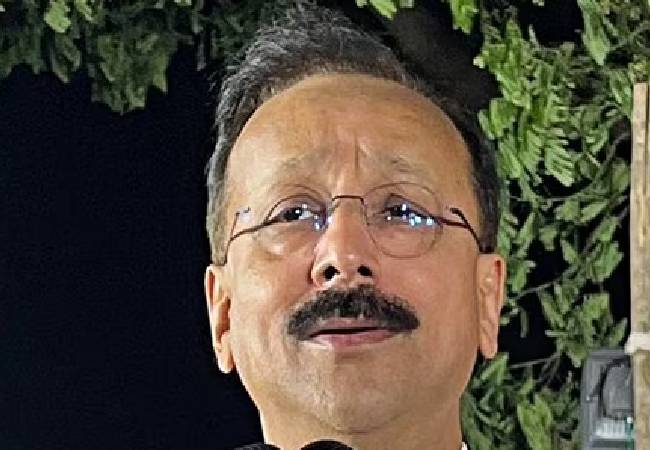
Mumbai (PTI): Police have launched a probe into the killing of former Maharashtra minister Baba Siddique from different angles, including a possible contract killing, business rivalry or threat over a slum rehabilitation project, officials said on Sunday.
The body of NCP leader Siddique (66), who was shot dead by three assailants in Mumbai on Saturday night, was shifted from Lilavati Hospital to Cooper Hospital around 6 am on Sunday for postmortem, an official said.
The shocking incident has prompted the opposition to question the law and order situation in the state where the assembly elections are expected to be held next month.
Baba Siddique was waylaid by three men at Kher Nagar in Mumbai's Bandra area just outside his MLA son Zeeshan Siddique's office and shot at.
He was shifted to the Lilavati Hospital's emergency medical services at 9.30 pm in an unresponsive condition with no pulse, no cardiac activity, no blood pressure, and with a history of gunshot wounds on the chest, officials from the medical facility said.
Siddique had lost a lot of blood and resuscitation was initiated immediately. He was shifted to the ICU where further attempts for revival were made. Despite all resuscitative efforts, doctors were unable to revive him and he was declared dead at 11.27 pm on Saturday, they said.
After the incident, a forensic team visited the crime spot and collected samples and police were checking CCTV footage of the nearby spots to get more information about the attack, a police official said.
The shooters opened four to five rounds of fire from a 9.9 MM pistol which was recovered by police, he said.
During the probe, police found the assailants fired at Siddique when people started bursting firecrackers during a Durga visarjan procession, a police official said.
They got advantage as most of the people did not hear the gunshots sound, the police said.
The case has been handed over to the crime branch for further probe and the police are investigating it from all different angles, including contract killing, business rivalry and threat over a Slum Rehabilitation Authority (SRA) project, the official said.
On the basis of primary information, two of the assailants, hailing from Uttar Pradesh and Haryana, have been taken into custody while another suspect is on the run, as per the police.
Baba Siddique had represented Bandra (West) seat three times in the assembly. A prominent Muslim leader from Mumbai, Siddique was also known be close to several Bollywood stars.
In a condolence message on X, deputy Chief Minister and NCP head Ajit Pawar described the attack as extremely unfortunate and condemnable.
"I was shocked on learning that he died in this incident," Pawar said, adding that he had lost a good friend and colleague.
"We have lost a leader who fought for the minority community and championed secularism," he said, adding that a thorough probe would be conducted into the attack.
Maharashtra Chief Minister Eknath Shinde told reporters after the indent that Mumbai Police Commissioner Vivek Phansalkar had told him that two alleged shooters have been taken into custody.
One of them is from Uttar Pradesh and the other from Haryana, while a third accused fled from the spot, he said.
"This incident is deeply regrettable," Shinde said.
"We have directed the police to ensure no one takes law into their hands under any circumstances. We cannot allow any form of gang war to resurface in our city," he said.
The CM said stringent action will be taken against all those involved in the attack on Siddique.
"It is the duty of the Mumbai Police to maintain law and order. They are mobilising teams to apprehend the third suspect and will take decisive action against all the three individuals involved in this attack," he said.
Shinde reassured the people that the government is committed to ensuring safety and peace in Mumbai.
The assassination of Siddique is the first high-profile political murder in Mumbai in last three decades, which has left poll-bound Maharashtra in a shock.
A Congressman since his student days, Siddique quit the grand old party to join Ajit Pawar's NCP in February this year.
The former minister had a Y-category security.
In the early 90s, Ramdas Nayak and Premkumar Sharma, then sitting BJP MLAs from Bandra and Khetwadi, respectively, were shot dead.
Shiv Sena legislators Vitthal Chavan and Ramesh More were also gunned down in Mumbai in the 90s.
Let the Truth be known. If you read VB and like VB, please be a VB Supporter and Help us deliver the Truth to one and all.
SC refuses to adjourn hearing on pleas against EC law, says this matter is more important
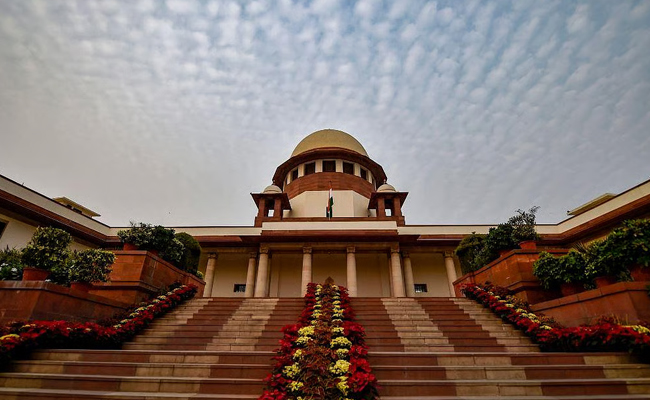
New Delhi (PTI): The Supreme Court on Wednesday refused to accede to the Centre's request to adjourn the hearing on pleas challenging the constitutional validity of a 2023 law that removed the CJI from a committee responsible for appointing the chief election commissioner and the deputies, saying the matter is "more important" than the Sabarimala case.
A nine-judge constitution bench headed by Chief Justice Surya Kant is currently hearing petitions regarding discrimination against women at religious sites, including the Sabarimala temple in Kerala, as well as the scope of religious freedom across various faiths.
A bench comprising justices Dipankar Datta and Satish Chandra Sharma turned down the request by Solicitor General Tushar Mehta, appearing for the Centre, to adjourn the hearing on the ground that he was currently occupied before a nine-judge bench in the Sabarimala reference case.
Referring to the gravity of the current challenge to the Chief Election Commissioner and Other Election Commissioners (Appointment, Conditions of Service and Term of Office) Act, 2023, Justice Datta said, "This matter is more important than any other matter."
"Let your (solicitor general's) associates take notes today. Let the petitioners start. All matters are important. We read in the newspapers that there is an observation that the PIL in Sabarimala should not have been entertained by the court. So, with due respect to the judges, nine judges are occupied in a matter where there is an observation that it should not have been entertained in the first place," Justice Datta said.
ALSO READ: Girl mauled to death by stray dogs in Punjab's Hoshiarpur
The bench then directed the petitioners to conclude their arguments by Thursday, allowing the Centre to present its submissions on a subsequent date. The bench then proceeded with the hearing which is underway.
Earlier on March 20, CJI Surya Kant recused himself from hearing the petitions. "I will be accused of conflict of interest. There is a conflict of interest," the CJI had said. The law, enacted by Parliament in December 2023, came months after a landmark verdict by which the apex court directed that election commissioners be appointed by a committee comprising the prime minister, the leader of the Opposition, and the chief justice of India.
The bench had said that the system will remain in force till a law is enacted.
Under the 2023 Act, the selection committee consists of the prime minister, a Union minister nominated by the prime minister and the leader of Opposition (or leader of the largest opposition party in the Lok Sabha).
The PILs said the exclusion of the CJI from the panel undermines the independence of the appointment process.
The law has been challenged by multiple petitioners, including Congress leader Jaya Thakur and the Association for Democratic Reforms.
Earlier, the Centre defended in the Supreme Court the appointment of two new election commissioners under the 2023 law that excludes the chief justice of India from the selection committee, saying the independence of the Election Commission does not arise from the presence of a judicial member on the committee.
In an affidavit filed in the apex court, the Union law ministry rejected the petitioner's claim that the two election commissioners were hastily appointed on March 14, 2024, to "pre-empt" the orders of the top court the next day, when the matters challenging the 2023 law were listed for hearing on interim relief.
The apex court also refused to stay the appointment of new election commissioners under the 2023 law.
A five-judge constitution bench had in March 2023 ruled that the chief election commissioner and election commissioners shall be appointed on the advice of a committee comprising the prime minister, the leader of the Opposition in the Lok Sabha and the chief justice of India.