Coronavirus: India suspends most visas till April 15
New Delhi: India on Wednesday suspended all visas, except a few categories such as diplomatic and employment, till April 15 in a bid to contain the spread of novel coronavirus, according to an official statement.
The government also "strongly advised" Indians to avoid all non-essential travel abroad.
The suspension will come into effect from 1200 GMT on March 13 at the port of departure.
Visas of all foreigners already in India remain valid.
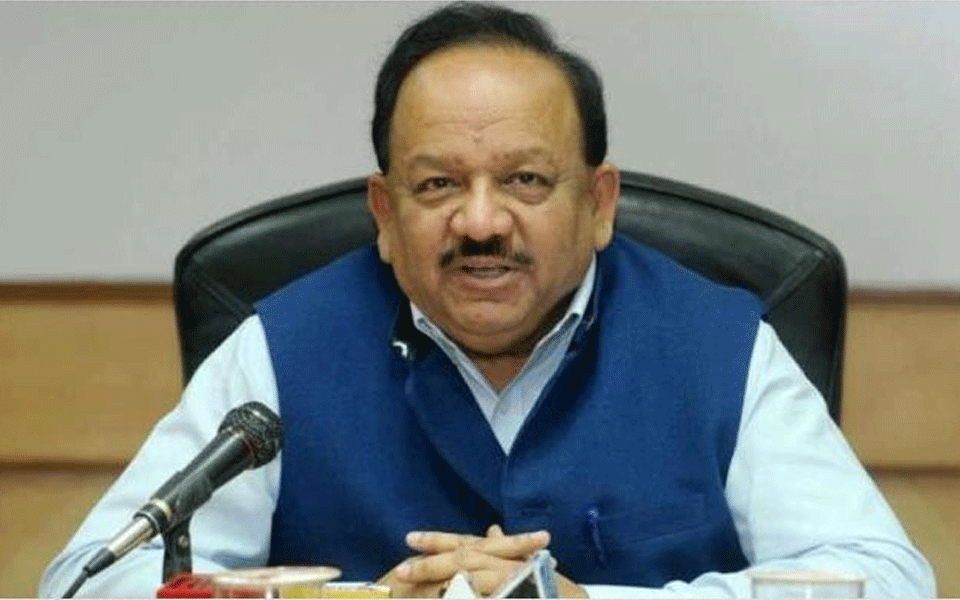
The decisions were taken at a meeting of a group of ministers held here under the chairmanship of Health Minister Harsh Vardhan.
Following the meeting, the Bureau of Immigration in a statement said, "All existing visas issued to nationals of any country, except those issued to diplomats, officials, UN/International organisations, employment and project visas, stand suspended till April 15th, 2020. This will come into effect from 1200 GMT on March 13th, 2020 at the port of departure of any foreigner for onward journey to India."
Visa-free travel facility granted to Overseas Citizenship of India (OCI) card holders is also kept in abeyance till April 15, according to a similar official statement.
Any foreign national who intends to travel to India for compelling reason may contact the nearest Indian Mission, the release said, adding that all incoming travellers, including Indian nationals, arriving from or having visited China, Italy, Iran, Republic of Korea, France, Spain and Germany after February 15 will be quarantined for a minimum period of 14 days.
The government advised the incoming travellers, including Indian nationals, to avoid non-essential travel and told them that they can be quarantined for a minimum of 14 days on their arrival in India.
"Indian nationals are strongly advised to avoid all non-essential travel abroad. On their return, they can be subjected to quarantine for a minimum of 14 days," it said.
International traffic through land borders will be restricted to designated check posts with robust screening facilities. These will be notified separately by the ministry of home affairs, the release said.
Provision for testing primarily for students/compassionate cases in Italy to be made and collection for samples to be organised accordingly.
Those tested negative will be allowed to travel and will be quarantined on arrival in India for 14 days, the press release said.
The second meeting of the group of ministers was attended among others by ministers Hardeep S Puri (Civil Aviation), S Jaishankar (External Affairs), Nityananda Rai (MoS Home), Mansukh Mandaviya (MoS Shipping) and Ashwini Kumar Choubey (MoS Health).
The GOM discussed the recommendations made by the Committee of Secretaries chaired by the Cabinet Secretary and took the latest decisions, the release added.
Let the Truth be known. If you read VB and like VB, please be a VB Supporter and Help us deliver the Truth to one and all.
Sujit Nair raises concerns over speculation of DMK-AIADMK understanding to block TVK
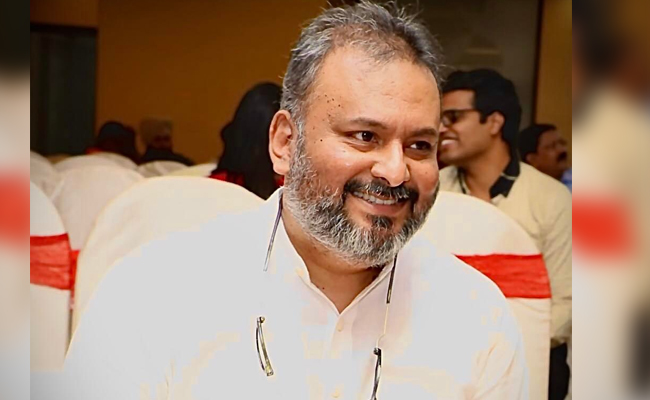
Chennai: Journalist and political commentator Sujit Nair has expressed concern over speculation that the Dravida Munnetra Kazhagam and the All India Anna Dravida Munnetra Kazhagam could explore a post-poll understanding to prevent Vijay-led Tamilaga Vettri Kazhagam from forming the government in Tamil Nadu.
In a social media post, Sujit Nair said the election verdict in Tamil Nadu reflected a clear public demand for political change and argued that the mandate should be respected irrespective of political preferences.
Referring to reports and political discussions surrounding a possible understanding between the DMK and AIADMK, he said he hoped such developments remained only speculative conversations and did not turn into reality.
Nair stated that if such an alliance were to take shape, it would raise serious questions about ideological politics in the country. He said TVK had emerged through a democratic electoral process and that the legitimacy to govern in a parliamentary democracy comes from the people’s verdict.
According to him, attempts to prevent an electoral winner from forming the government through unexpected political arrangements may be constitutionally valid, but many people could view them as politically opportunistic.
He further said that such a move could particularly affect the political image of the DMK, which has historically projected itself around ideology, social justice and opposition politics. Nair said that in ideological terms, the DMK appeared closer to TVK than to the AIADMK, and joining hands with its long-time political rival only to remain in power could weaken its broader political narrative.
He added that the same questions would apply to the AIADMK as well, as the party had spent decades positioning itself against the DMK and such an arrangement could create discomfort among its cadre and supporters.
Drawing a comparison with Maharashtra politics in 2019, Nair said he had expressed similar views when the Shiv Sena formed an alliance with the Indian National Congress and the Nationalist Congress Party after the Assembly elections.
He said post-poll alliances between long-standing political rivals often create a public perception that ideology and electoral mandates become secondary when political power equations come into play.
Nair also said such developments increase public cynicism towards politics and reinforce the belief among voters that ideology is often sidelined after elections.
He maintained that the Tamil Nadu verdict was emphatic and said respecting both the spirit and substance of the mandate was important for the credibility of democratic politics.