Countdown has begun: Rahul slams NDA govt in Bihar after police baton-charges protesters

New Delhi (PTI): Congress leader Rahul Gandhi on Wednesday slammed the NDA government in Bihar after police in Patna baton-charged aspirants staging a sit-in demanding the release of supplementary results of the Teacher Recruitment Exam (TRE-3).
He said that this time the youth of the state will show the government its real place and the countdown has begun.
Chaos erupted outside the BJP office in Patna on Wednesday after the police baton-charged aspirants staging a sit-in demanding the release of TRE-3's supplementary results.
The demonstrators shouted slogans against the Bihar government and the Bihar Public Service Commission (BPSC), which conducted the exam.
Sharing a video of the incident, Gandhi said in a post in Hindi on X, "When we ask for employment, we get lathicharge. Instead of rights, we get atrocities."
"This time, the youth of Bihar will show this 'guNDA' government its real place - the countdown has begun," the Leader of Opposition in the Lok Sabha said.
Patna (Central) SP Diksha told PTI: "Security personnel requested the protesters to vacate the area as it had caused a traffic jam. When the protesters refused to budge, police resorted to baton charges to disperse the aspirants."
The protesters claimed that several people were injured because of the baton charge, which the officials denied.
One of the protesting candidates, Aman Kumar from Patna, told reporters, "Officials of the state education department had assured us that a letter had been sent to BPSC regarding the issue, but nothing has been done so far".
The BPSC conducted TRE-3 in March 2024, and 87,774 posts were announced. However, only around 51,000 candidates have received appointment letters so far.
The authorities had earlier promised a supplementary result, but nothing has happened so far, Kumar claimed.
Let the Truth be known. If you read VB and like VB, please be a VB Supporter and Help us deliver the Truth to one and all.
Uttarakhand Assembly passes censure motion against opposition over women's reservation bill
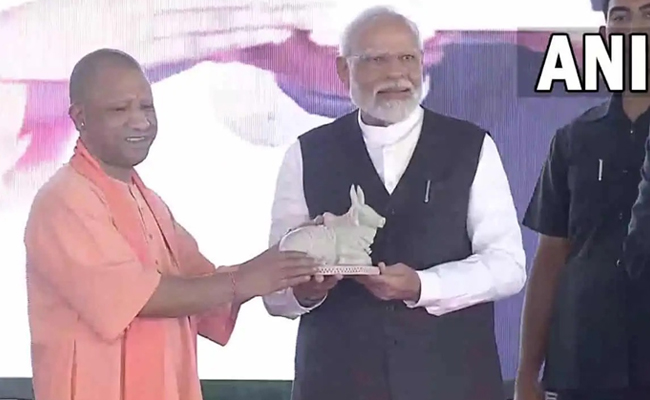
Dehradun (PTI): The Uttarakhand Assembly passed a censure motion against the Congress and other opposition parties on Tuesday for allegedly blocking the passage of the Constitution (131st Amendment) Bill, 2026, in Parliament.
The motion, which expressed the House's formal disapproval of the opposition's conduct, triggered a massive uproar by Congress members, leading to the adjournment of the House sine die.
Parliamentary Affairs Minister Subodh Uniyal moved the censure motion, citing the "uncooperative attitude" of opposition parties toward the bill seeking 33 per cent reservation for women in legislative bodies.
Addressing a special daylong session convened specifically to discuss "Nari Samman -- Rights in Democracy", Chief Minister Pushkar Singh Dhami said the bill's passage would have benefitted every political party.
Dhami noted that after delimitation, the number of Assembly seats in the hill state would have gone up to 105, with 35 reserved for women. He added that the number of Lok Sabha seats from Uttarakhand would have risen from five to seven or eight.
"The opposition fears that if women from ordinary households enter politics, the shops of dynastic politics run by certain parties will shut down," the chief minister claimed.
He compared the opposition's conduct in Parliament to the assembly in Mahabharat where Draupadi was insulted. Dhami further likened the opposition's behaviour to the "arrogance of Ravan".
The chief minister highlighted his government's initiatives, asserting that Uttarakhand was the first state to implement a Uniform Civil Code (UCC) to protect women's rights. He said the UCC freed Muslim women from practices like "halala", "iddat", polygamy and child marriage.
Leader of Opposition Yashpal Arya questioned the technical feasibility of the bill, calling the ruling Bharatiya Janata Party's (BJP) claims of providing reservation by 2029 "misleading".
He argued that the bill is linked to census and delimitation processes. The Congress leader said the 2026 census would conclude by 2027 and the final data publication would take two more years.
"The delimitation process will take another six years. The actual implementation of this bill is not possible before 2034," Arya said, describing the move as a strategy to protect the BJP's "political ground".
The session also saw high drama outside the Assembly gates, where Congress MLA Virendra Jati staged a protest, demanding the payment of "outstanding" dues to farmers by sugar mills.
Jati arrived at the Assembly's main gate with a tractor-trolley loaded with sugarcane and dumped it on the road. The move brought the traffic to a halt, prompting traffic and security personnel to intervene and clear the area.
Women Congress workers also staged a demonstration against the "anti-people policies" of the state government.