Counting of votes for high-stakes civic polls in Maharashtra begins; all eyes on Mumbai
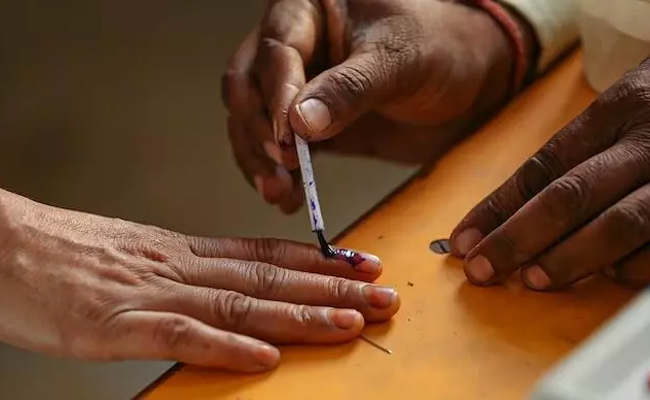
Mumbai (PTI): Counting of votes polled in elections to 29 municipal corporations across Maharashtra began on Friday morning with the spotlight on Mumbai, where the BJP-led Mahayuti bloc is locked in a prestige battle with the reunited Thackeray cousins for control of India's richest civic body.
Polling for 2,869 seats spread across 893 wards in these municipal corporations, including 227 in Mumbai, took place on Thursday. As many as 15,931 candidates are in the fray in the 29 civic corporations, which had 3.48 crore eligible voters.
Around 50 per cent polling was recorded in the 29 municipal corporations, State Election Commissioner Dinesh Waghmare said after the end of voting.
A voter turnout of 52.94 per cent was recorded in the Mumbai civic polls, down from 55.53 per cent in the last elections in 2017, officials said on Friday.
In the Brihanmumbai Municipal Corporation (BMC), whose annual budget is over Rs 74, 400 crore, 1,700 candidates are vying for 227 seats in elections being held after a four-year delay. Except for Mumbai, the other urban bodies have multi-member wards.
These were the first BMC polls since the 2022 split in the Shiv Sena when Eknath Shinde, now Deputy Chief Minister, broke away with a majority of the party's MLAs and allied with the BJP to become the chief minister.
The undivided Shiv Sena held sway over India's richest civic body for 25 years (1997-2022). The BJP-led Mahayuti alliance, which also includes the Shiv Sena, is hoping for a clear majority to rule the civic body.
In a significant political turn of events ahead of the elections, estranged cousins Uddhav and Raj Thackeray, heading Shiv Sena (UBT) and MNS, respectively, reunited last month after two decades in their bid to consolidate Marathi votes even as rival NCP factions forged a local alliance in Pune and Pimpri-Chinchwad.
The Congress, once a formidable political force in Maharashtra, asserted its presence in Mumbai by stepping out of the shadow of its Maha Vikas Aghadi allies - Shiv Sena (UBT) and NCP (SP). The grand old party joined hands with Prakash Ambedkar's Vanchit Bahujan Aghadi (VBA) and the Rashtriya Samaj Paksh in the state capital.
Elections to the 29 municipal corporations were held after a gap of several years, with terms of most of them having ended between 2020 and 2023. Of these, nine fall in the Mumbai Metropolitan Region (MMR), the most urbanised belt in India.
Voting took place in these municipal corporations: Mumbai, Chhatrapati Sambhajinagar, Navi Mumbai, Vasai-Virar, Kalyan-Dombivli, Kolhapur, Nagpur, Solapur, Amravati, Akola, Nashik, Pimpri-Chinchwad, Pune, Ulhasnagar, Thane, Chandrapur, Parbhani, Mira-Bhayandar, Nanded-Waghala, Panvel, Bhiwandi-Nizampur, Latur, Malegaon, Sangli-Miraj-Kupwad, Jalgaon, Ahilyanagar, Dhule, Jalna and Ichalkaranji.
Let the Truth be known. If you read VB and like VB, please be a VB Supporter and Help us deliver the Truth to one and all.
Representative of Iran's Supreme Leader in India calls current situation 'no war, no peace'
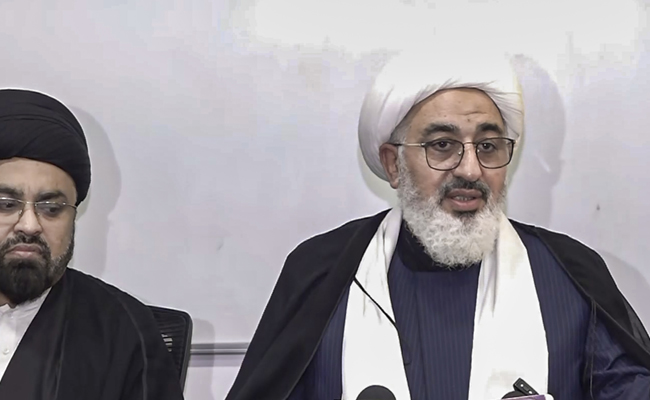
Bengaluru (PTI): Representative of Iran's Supreme Leader in India, Abdul Majeed Hakeem Ilahi on Saturday characterised the ongoing tensions between his country and the Israel-US alliance as a state of “no war, no peace”.
Calling for an immediate halt to the conflict, he said the global stability hinges on those who initiated the war.
He questioned why countries affected by the war and suffering from the energy crisis are not pressuring the US and Israel to stop the aggression.
Addressing a press conference here, Ilahi said Iran did not want the conflict, but was compelled to respond amid continued attacks, even as negotiations were expected to continue.
"Iran didn't want this war, but Iran was forced by the war and several times Iran tried to avoid this war... I don't know what is the condition of these people and these countries (US-Israel)... they want to impose on other countries what they want, and who gave them this authority?" he questioned.
Recalling the negotiations Iran held in Oman, he said talks later moved to Geneva and made progress before being disrupted by sudden attacks.
Ilahi claimed that airstrikes and missile attacks led to the deaths of Iran’s supreme leader Ayatollah Ali Khamenei, ministers, commanders and civilians.
"They killed a lot of civilians… They attacked a primary school, and they killed 175 innocent girls," he said, claiming over 4,000 deaths, more than 40,000 injuries, and widespread damage to houses, hospitals, universities and public infrastructure.
Despite these losses, he said Iran resisted calls for “unconditional surrender” and stood firm and defended itself.
"They wanted unconditional surrender. Which no one—no one can accept it. Iran said, 'Okay, we are ready to be sacrificed,' but we are not ready to submit ourselves," he added.
He argued that they (US-Israel) proposed the current ceasefire only after realising that they could not achieve any of their objectives after 40 days of conflict.
The envoy further claimed that the ceasefire is not an actual ceasefire, but a “no war, no peace” situation.
Explaining the current situation in Iran, he said conditions remain stable and people are going about their daily lives.
"They are working ....(leading) their ordinary life. They are working—they're going farming and they do everything....and they aren't scared of anything. And they are ready to defend themselves," he added.
Addressing the crisis in the Strait of Hormuz, he said the situation was stable before February 28 and all countries benefited from it.
"(For) 10,000 years, the Strait of Hormuz was open...and Iran daily yearly spent a lot for providing security in the Strait of Hormuz... so no one even complained anything about the Strait of Hormuz. Everyone was free...and even our enemies their warship was passing through the Strait of Hormuz," he said.
However, he linked the current maritime instability to the actions of the US and Israel.
"So Iran cannot do anything. Those people who initiated, created and started this war, they have to stop it. And everything will go back to normal," he said.
Criticising the mentality of the "great powerful country", Ilahi said, "they think they have the right to do whatever they want. It should change."
He sought to know why the countries affected by the conflict are not exerting pressure on the US and the "Zionist" regime to halt the war.
"Why are they not asking them? This crisis and problem by which a lot of countries are affected was created by them. A lot of factories are closed and even working days in some countries reduced... A lot of restaurants are closed," he said.
Seeking fairness and justice, Ilahi said instead of asking Iran, all those nations should ask those who initiated this war to stop it, by telling them, "we are suffering."
To a query on international mediation, Ilahi, referring to the US, asked, "Is it acceptable and reasonable that one country orders all countries -- you should not deal with this country, You should not purchase from this country. You should not have business with this country. You should not buy from this country."
Ilahi also highlighted Iran's long-standing ties with India and said, "It is a great country and we respect India and Indians."
"We have 5,000 years relationship and friendship. We are connected to India by education, by philosophy, by culture, by civilisation and by the economy," he said.
According to him, the bilateral cooperation remains strong, citing diplomatic engagement.
"At the moment also, our relationship, collaboration, cooperation with India is very good," he said, adding Iran allowing Indian ships to pass through Strait of Hormuz reflects the ties.
"Iran allowed Indian ships to pass through the Strait of Hormuz. Why? A lot of countries couldn't get this permission?... The relationship between Iran and India is very good," he added.
He expressed confidence that in future too, the ties between Iran and India will be strong.