Counting of votes for JNUSU polls begins

New Delhi, Sep 7: The counting of votes for the Jawaharlal Nehru University Students' Union (JNUSU) polls began on Saturday after an 11-hour delay due to a deadlock between the students and the administration, the varsity's Election Committee said.
After the Delhi High Court on Friday restrained the JNU from notifying the election results till September 17, it was decided at a meeting between the student-run Election Committee (EC) and all the parties around 10 pm to go ahead with the counting, it said.
The counting process began at 11:55 pm, JNU EC chairman Shashank Patel said.
However, it had to be put on hold due to a deadlock between the student community and the JNU's Grievance Redressal Cell (GRC) over the latter's demand that the counting agents give a written undertaking stating they would not disclose the results, he said.
"The EC tried its best to convince the GRC to change its stand based on the demands of the student community," Patel said, adding that the deadlock led to an 11-hour delay in the counting process.
When a consensus could not be reached even after so many hours, the EC decided to resume the counting of votes anyway with declaration of trends, the EC chairman said.
The result, however, will be put on hold, he added.
The JNUSU polls, held on Friday, witnessed a 67.9 per cent voter turnout, believed to be the highest in seven years.
Earlier, the results were supposed to be declared on Sunday.
The high court order restraining the university from declaring the results came on pleas by two students alleging that their nominations for election of councillor in the JNUSU were illegally rejected.
Let the Truth be known. If you read VB and like VB, please be a VB Supporter and Help us deliver the Truth to one and all.
Power struggle in ruling Cong has 'created massive confusion' in Karnataka: BJP leader Ashoka
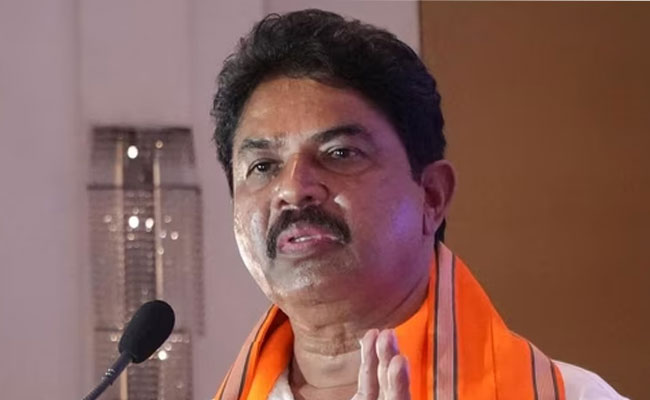
Bengaluru (PTI): BJP leader R Ashoka on Friday claimed that the ongoing power struggle between Chief Minister Siddaramaiah and his deputy D K Shivakumar has created massive confusion in Karnataka.
He remarked that the proverb “when two people fight, the third one benefits” has come true, as AICC President Mallikarjun Kharge is also now making efforts to become Chief Minister.
Speaking to reporters here, Ashoka said the entire government has turned into a house of confusion due to the alleged power tussle.
Kharge’s new statement has only added to the chaos, he said.
Congress chief Mallikarjun Kharge had on Friday said that no date has been fixed yet to discuss possible leadership change in Karnataka.
This came a day after Kharge said there was no change of CM in Karnataka "for now" and that the leadership issue in the state would be resolved soon.
The BJP leader said that Kharge too has aspirations and that he was cheated earlier.
"Perhaps he has received a green signal from the Congress high command to become CM. Everyone is already saying Kharge should become CM. Kharge himself has declared, “I am ready to become CM.” Despite many attempts in the past, he never became CM. Now he is trying to seize the opportunity," the Leader of Opposition in the state assembly said.
According to him, the situation in Congress has perfectly become a case of “two people fighting, third one benefits.”