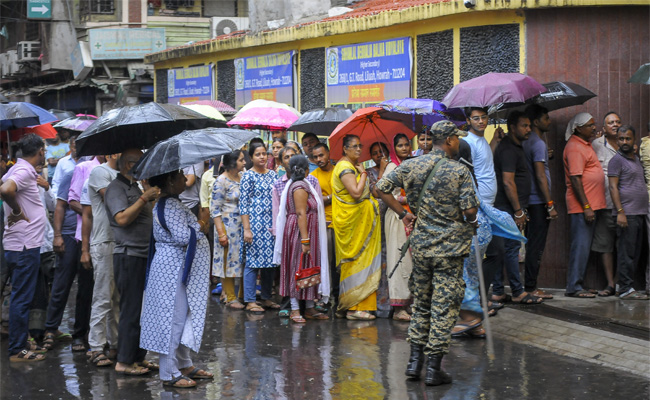
Country has seen emergence of strong regional parties in the past 70 years : Kumaraswamy
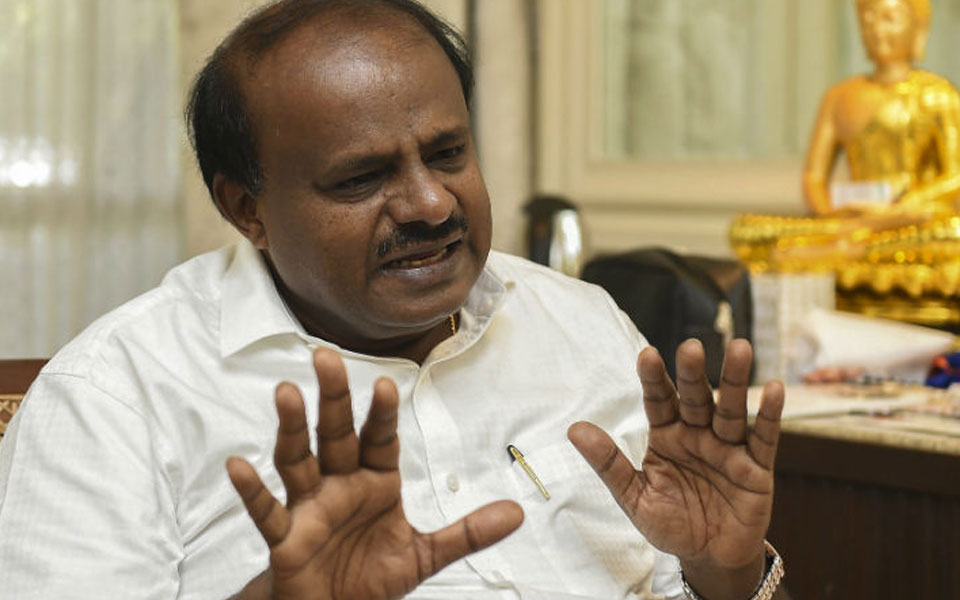
Kolkata, Jan 19 : Karnataka Chief Minister H D Kumaraswamy Saturday said that in 70 years, the country has seen emergence of strong regional parties which have played important roles to protect the interest of their own states and understanding the emotions of their own people.
Stating that India is one of the strongest democracies in the world, the Karnataka chief minister said "But today we are witnessing a day where the democratic government (at the Centre) is headed by some undemocratic persons."
Karunanidhi had done a lot to protect the interest of Tamilnadu, in Uttar Pradesh SP and BSP are doing a "great job", N Chandrababu Naidu has done a lot for Andhra Pradesh, he said.
Describing Mamata Banerjee as a role model for the women of the country, Kumaraswamy said that she has empowered women of the state.
He said that demonetisation has taken the toll of poor people of the country and those in the rural areas are the most affected. "It is unfortunate that the Union government has turned deaf and mute to the needs of the people of the country," Kumaraswamy said.
The present union government gives incentives, tax rebates and subsidies to industries, but farmers are treated differently.
The BJP talked about fight against corruption in its national executive and on the same day it resorted to horse trading in Karnataka, revealing the party's double standards.
Let the Truth be known. If you read VB and like VB, please be a VB Supporter and Help us deliver the Truth to one and all.
Rickelton's ton in vain as SRH beat MI by 6 wickets
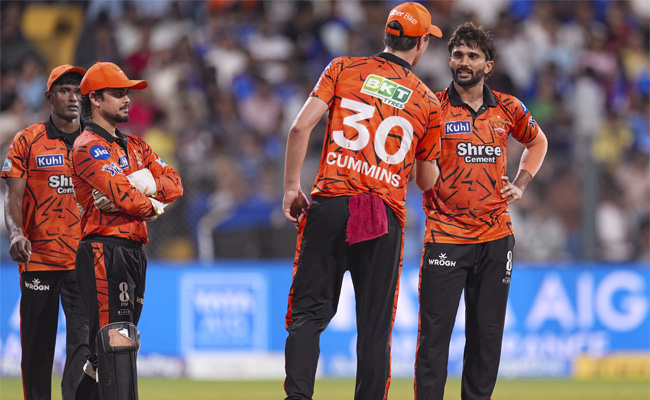
Mumbai (PTI): Ryan Rickelton's whirlwind unbeaten ton was overshadowed by Heinrich Klaasen's unbeaten 65 as Sunrisers Hyderabad defeated Mumbai Indians by six wickets in an IPL match here on Wednesday.
Chasing an imposing 244-run target, Travis Head (76 off 30) and Abhishek Sharma (45 off 24) shared 129 runs for the opening wicket to set the platform for SRH.
Klaasen (65 not out off 30 balls) then displayed his all-round hitting abilities to guide SRH home with the help of Nitish Kumar Reddy (21) and Salil Arora (30 not out off 10) in 18.4 overs.
Earlier, Rickelton's knock powered MI to 243 for five.
MI rode on a 93-run stand between Rickelton (123 not out off 55 balls) and Will Jacks (46 off 22) in 7.1 overs for the opening stand to power the side.
MI skipper Hardik Pandya scored a valuable 31 off 15 balls before being dismissed.
Praful Hinge (2/54), Eshan Malinga (1/29), Sakib Hasan (1/39) and Nitish Kumar Reddy (1/31) were the wicket-takers for SRH.
Brief Scores:
Mumbai Indian: 243 for 5 in 20 overs (Ryan Rickelton 123 not out; Praful Hinge 2/54).
Sunrisers Hyderabad: 249 for 4 in 18.4 overs (Travis Head 76, Heinrich Klaasen 65 not out; AM Ghazanfar 2/51).