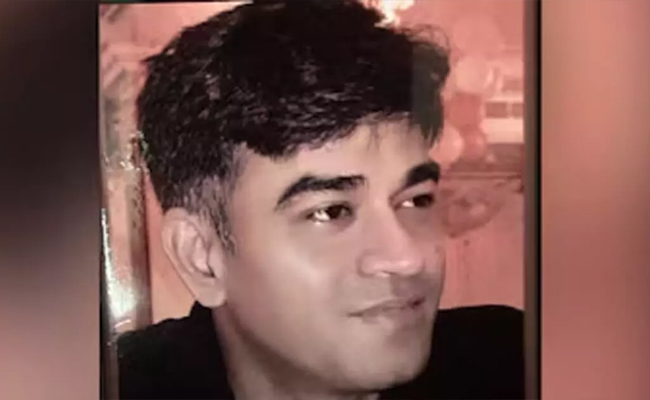
Court schools Azmi over Aurangzeb remarks, cautions him to exercise restraint during interviews
_vb_46.jpeg)
Mumbai (PTI): Samajwadi Party MLA Abu Azmi has been cautioned by a Mumbai court to exercise restraint during interviews as any “irresponsible” statement by a senior politician like him can spark riots.
Additional Sessions Judge V G Raghuwanshi schooled Azmi while granting him anticipatory bail on Tuesday in a case filed against the SP legislator for his remarks praising Mughal ruler Aurangzeb.
The offence concerns some statements made during an interview and it means police do not need custody for seizure of any article or interrogation, the court said in the order, a copy of which was made available on Thursday.
Noting that Azmi is a politician and businessman and it was improbable that he would run away from the course of justice, the judge said it was a “fit case to exercise discretion” in his favour.
“Before parting with the order I would like to caution the applicant (Azmi) to exercise restraint on himself while giving interviews, having regards to prevailing circumstances. Any irresponsible statement can flare riots and create law and order problems,” the court said.
“I hope the applicant, being a senior politician, will understand his responsibility,” it added.
The case was registered last week against the MLA, who represents the Mankhurd-Shivaji Nagar constituency in the metropolis, under the Bharatiya Nyaya Sanhita (BNS) over his remarks eulogising the medieval-era Mughal emperor.
He was booked under BNS sections 299 (deliberate and malicious act insulting the religious beliefs of any group of people), 302 (hurting someone's religious feelings) and 356(2)(defamation).
Azmi, who is also the Samajwadi Party’s Maharashtra unit president, had said while talking to the media that during Aurangzeb’s reign, India’s borders reached Afghanistan and Burma (Myanmar).
“Our GDP (gross domestic product) accounted for 24 per cent (of world GDP) and India was called a golden sparrow,” the opposition legislator had claimed.
Asked about the fight between Aurangzeb and Maratha warrior king Chhatrapati Sambhaji Maharaj, Azmi had termed it a political battle.
The remarks were made in the backdrop of the blockbuster Hindi film ‘Chhaava’, based on the life of Chhatrapati Sambhaji Maharaj, who was captured by Aurangzeb’s commander in 1689. Chhatrapati Sambhaji Maharaj and his father, legendary Maratha king Chhatrapati Shivaji Maharaj, are highly revered figures in Maharashtra.
Seeking anticipatory bail, Azmi, who has been suspended from the Maharashtra legislative assembly till March 26, submitted in the court that his statements were made to the press “spontaneously without any premeditated intention to insult any personality or hurt the religious feelings of any person”.
Azmi’s lawyer Mubin Solkar had submitted before the court that the FIR did not disclose any offence against the SP legislator.
“The allegations didn’t show he had made the statements, deliberately and with malicious intentions of outraging religious sentiments,” Solkar had argued.
The prosecution had opposed his plea, saying that after the release of a movie, religious sentiments of people are volatile and in such circumstances the applicant made controversial statements in his interview.
After hearing both sides, the court said that the investigation was at the primary stage and “therefore it will not be fair to comment upon the interview given by the applicant”.
Further, the judge said that he was surprised to hear that the investigating officer did not have the video recording of the alleged interview till “today” and he registered an offence without watching it.
Let the Truth be known. If you read VB and like VB, please be a VB Supporter and Help us deliver the Truth to one and all.
Sujit Nair raises concerns over speculation of DMK-AIADMK understanding to block TVK
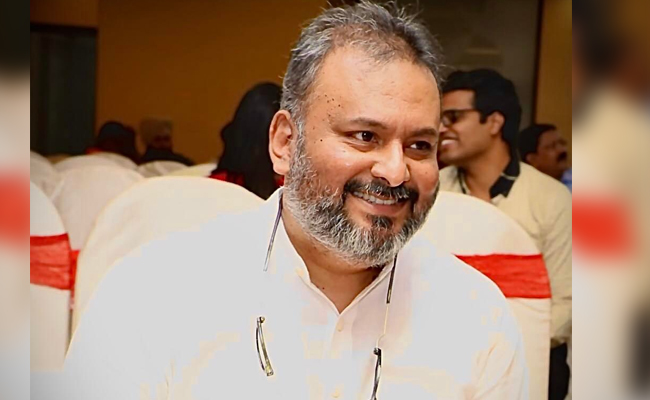
Chennai: Journalist and political commentator Sujit Nair has expressed concern over speculation that the Dravida Munnetra Kazhagam and the All India Anna Dravida Munnetra Kazhagam could explore a post-poll understanding to prevent Vijay-led Tamilaga Vettri Kazhagam from forming the government in Tamil Nadu.
In a social media post, Sujit Nair said the election verdict in Tamil Nadu reflected a clear public demand for political change and argued that the mandate should be respected irrespective of political preferences.
Referring to reports and political discussions surrounding a possible understanding between the DMK and AIADMK, he said he hoped such developments remained only speculative conversations and did not turn into reality.
Nair stated that if such an alliance were to take shape, it would raise serious questions about ideological politics in the country. He said TVK had emerged through a democratic electoral process and that the legitimacy to govern in a parliamentary democracy comes from the people’s verdict.
According to him, attempts to prevent an electoral winner from forming the government through unexpected political arrangements may be constitutionally valid, but many people could view them as politically opportunistic.
He further said that such a move could particularly affect the political image of the DMK, which has historically projected itself around ideology, social justice and opposition politics. Nair said that in ideological terms, the DMK appeared closer to TVK than to the AIADMK, and joining hands with its long-time political rival only to remain in power could weaken its broader political narrative.
He added that the same questions would apply to the AIADMK as well, as the party had spent decades positioning itself against the DMK and such an arrangement could create discomfort among its cadre and supporters.
Drawing a comparison with Maharashtra politics in 2019, Nair said he had expressed similar views when the Shiv Sena formed an alliance with the Indian National Congress and the Nationalist Congress Party after the Assembly elections.
He said post-poll alliances between long-standing political rivals often create a public perception that ideology and electoral mandates become secondary when political power equations come into play.
Nair also said such developments increase public cynicism towards politics and reinforce the belief among voters that ideology is often sidelined after elections.
He maintained that the Tamil Nadu verdict was emphatic and said respecting both the spirit and substance of the mandate was important for the credibility of democratic politics.