Court's decision on hijab issue should be accepted by all: Amit Shah
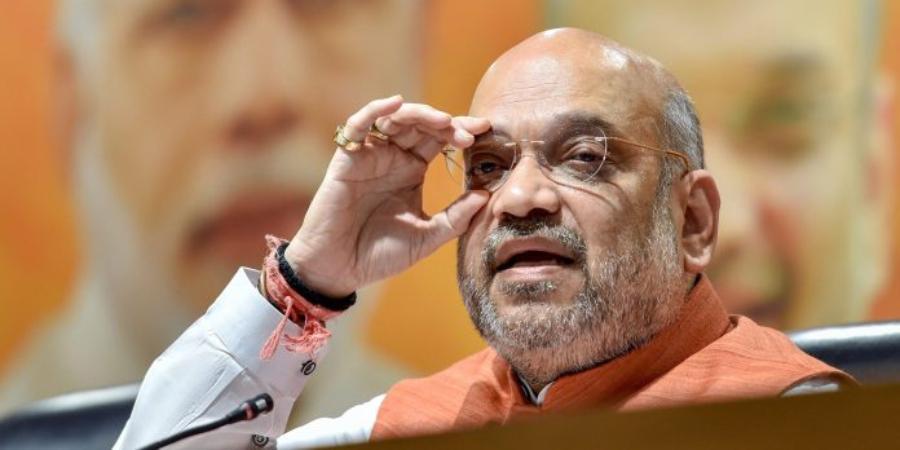
Lucknow, Feb 21: Union Home Minister Amit Shah said on Monday that the matter related to the hijab controversy is in court but he personally feels that a school's dress code should be followed by people of all religions.
He said ultimately it has to be decided whether the country will function on the basis of the Constitution or whims.
Shah said once the court takes a decision on the matter everyone should accept it.
On the issue of implementation of the Citizenship Amendment Act (CAA), Shah said there was no question of going back on it.
He, however, said the decision is linked to the Covid situation.
It is my personal belief that people of all religions should accept the school's dress code. And the issue is now in court, and the court is conducting its hearings on the matter. Whatever it decides should be followed by all, Shah said in an interview with Network18.
Ultimately, it has to be decided whether the country will function on (the basis of) the Constitution or whims. My personal belief only remains until the court makes a decision. And once the court makes a decision, then I should accept it, and everyone should accept it.
"But, I still personally believe that every student should function according to the dress code and uniform mandated by the school, he added.
Asked about the involvement of the Campus Front of India on the issue, the minister said, "These people may have their active involvement, but I'll just say that their intentions will not come to fruition."
"The people of India will accept the court's judgement once it comes."
The hijab issue in Karnataka had triggered a major controversy across the nation. The matter had its echo in the ongoing assembly elections in Uttar Pradesh too.
According to a statement from the news group, Shah said on the CAA implementation: As long as we are not free from COVID-19, this can't be a priority. We have seen three waves. Thankfully, things are getting better, the third wave is receding. The decision is linked to the Covid situation. But there is no question of going back on it. The question does not arise."
He also hit out at the Samajwadi Party and the Bahujan Samaj Party for withdrawing cases registered under the Unlawful Activities Prevention Act (UAPA) and the Prevention of Terrorism Act (POTA) during their respective tenures in Uttar Pradesh.
The law and order issue is important. And now PM Modi has also spoken on terrorism. He spoke in Hardoi on the Ahmedabad blasts case in which 38 accused have been sentenced to death. He said these terrorists were freed from jail during the SP regime, he said,
Eleven such instances took place during the SP and BSP eras when UAPA and POTA cases were withdrawn. What do SP and BSP have to say about security in the country? They will have to answer the public, he added.
Shah expressed confidence of his party's victory in the politically significant state.
Let the Truth be known. If you read VB and like VB, please be a VB Supporter and Help us deliver the Truth to one and all.
Congress using hijab issue to pacify minority anger, alleges Karnataka LoP R Ashoka
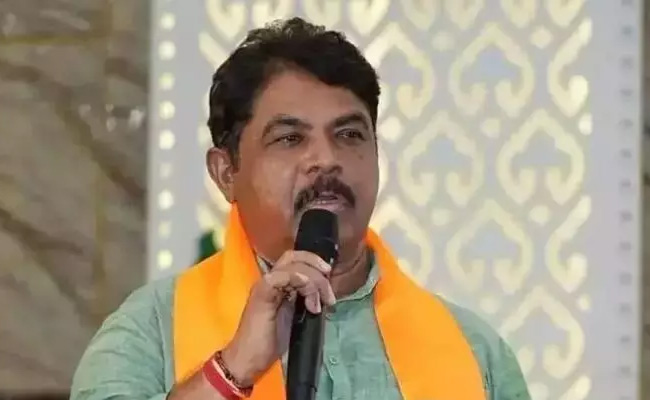
Bengaluru: Leader of Opposition in the Assembly R. Ashoka has accused the Congress government of using the hijab issue to placate what he described as discontent among minority voters after the Davanagere by-election.
In a post on X on Wednesday, Ashoka alleged that the state government, instead of addressing issues such as price rise, corruption, farmers’ distress and law and order, was attempting to retain its minority vote base by reviving the hijab issue.
Referring to the 2022 dress code introduced by the BJP government, which prohibited hijab in schools and colleges, Ashoka said the Karnataka High Court had upheld the policy and emphasised the importance of discipline in educational institutions.
He questioned the Congress government’s move to revisit the issue and asked whether setting aside the court-backed policy to benefit one community could be described as secularism.
Ashoka further alleged that while the government was willing to permit hijab, it continued to prohibit saffron shawls.
He accused the government of dividing students on religious lines rather than treating schools and colleges as spaces of equality.
Drawing a comparison with Mamata Banerjee’s government in West Bengal, Ashoka claimed that excessive appeasement politics had harmed the state and warned that the Congress in Karnataka could face a similar political response.
He said voters in Karnataka would teach the Congress a lesson for what he termed “vote-bank politics” and for compromising constitutional and judicial principles.