Covaxin shows 50% effectiveness against symptomatic COVID-19, says study published in Lancet
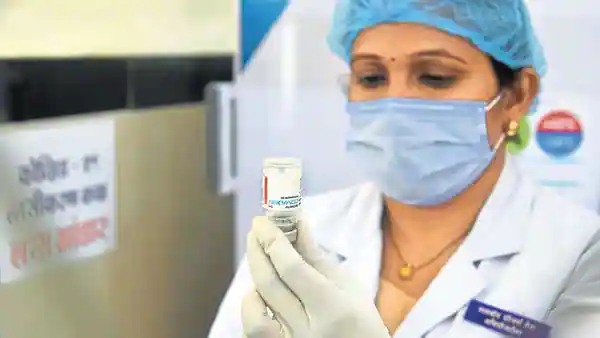
New Delhi, Nov 24: Two doses of Covaxin are 50 per cent effective against symptomatic disease, according to the first real-world assessment of India's indigenous COVID-19 vaccine published in The Lancet Infectious Diseases journal.
Results of an interim study recently published in The Lancet showed that two doses of Covaxin, also known as BBV152, had 77.8 per cent efficacy against symptomatic disease and present no serious safety concerns.
The latest study assessed 2,714 hospital workers at the All India Institute of Medical Sciences (AIIMS) in Delhi, from April 15 May 15, who were symptomatic and underwent RT-PCR test for COVID-19 detection.
Researchers noted that the Delta variant was the dominant strain in India during the study period, accounting for approximately 80 per cent of all confirmed COVID-19 cases.
Covaxin, developed by Hyderabad-based Bharat Biotech in collaboration with the National Institute of Virology, Indian Council of Medical Research (NIV-ICMR), Pune, is an inactivated whole virus vaccine administered in a two-dose regimen, 28 days apart.
In January this year, Covaxin was approved for emergency use in India for people aged 18 and above. The World Health Organization (WHO) added the vaccine to its list of approved emergency use COVID-19 vaccines earlier this month.
The latest study was conducted during India's second COVID-19 surge and in healthcare workers who were primarily offered Covaxin.
"Our study offers a more complete picture of how BBV152 (Covaxin) performs in the field and should be considered in the context of COVID-19 surge conditions in India, combined with the possible immune evasive potential of the Delta variant," said Manish Soneja, Additional Professor of Medicine at AIIMS New Delhi.
"Our findings add to the growing body of evidence that rapid vaccine rollout programmes remain the most promising path to pandemic control while public health policies must continue to include additional protective measures, such as mask-wearing and social distancing," Soneja said in a statement.
The COVID-19 vaccination centre at AIIMS New Delhi exclusively offered Covaxin beginning January 16 this year to all of its 23,000 employees.
Researchers evaluated the effectiveness of the vaccine against symptomatic RT-PCR confirmed SARS-CoV-2 infection.
Of the 2,714 employees in the study population, 1,617 people tested positive for SARS-CoV-2 infection, the virus that causes COVID-19, and 1,097 tested negative.
Positive cases were matched to negative RT-PCR tests (controls).
The odds of vaccination with Covaxin were compared between cases and controls and adjusted for occupational exposure to COVID-19, previous SARS-CoV-2 infection, and infection dates.
The study found that the vaccine effectiveness against symptomatic COVID-19 after two doses of Covaxin with the second dose administered 14 or more days before undergoing RT-PCR testing was 50 per cent.
The effectiveness of two vaccine doses remained stable over the seven-week follow-up period, the researchers said.
The adjusted vaccine effectiveness of the first dose, estimated after seven and 21 days, was low, which is consistent with the performance of other preventives against the Delta variant, they said.
"Findings from the study confirm previous research indicating that two doses of BBV152 are required to achieve maximum protection and that all vaccine roll-out plans must follow the recommended dosing schedule," said Parul Kodan, Assistant Professor of Medicine at AIIMS New Delhi.
"More research is needed to better understand how these findings translate to BBV152's effectiveness against delta and other variants of concern, especially related to severe COVID-19 infection, hospitalisation, and deaths," Kodan said.
The authors acknowledge that the vaccine effectiveness of Covaxin estimated in this study is lower than the efficacy reported by the recently published phase 3 trial. They noted that several factors may be responsible for the lower vaccine effectiveness in the latest study.
The researchers said this study population only included hospital employees who may have a higher risk of exposure to COVID-19 infection than the general population.
The research was conducted during the peak of India's second wave of COVID-19 with high test positivity rates for both hospital employees and residents of Delhi, they said.
Prevalence of circulating variants of concern, especially Delta, may have also contributed to the vaccine's lower effectiveness, according to the researchers.
The authors acknowledge several limitations to their study.
The study does not estimate the vaccine effectiveness against hospitalisation, severe disease, and death, which require further assessment, they noted.
Also, the study was not designed to estimate vaccine effectiveness for different time intervals after vaccination or to determine if vaccine effectiveness changed over time, the researchers added.
Let the Truth be known. If you read VB and like VB, please be a VB Supporter and Help us deliver the Truth to one and all.
Real Madrid fines Valverde and Tchouaméni half a million euros each for altercation
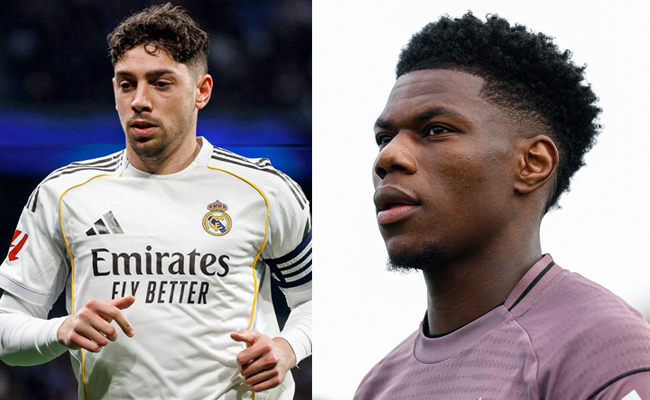
Barcelona (AP): Real Madrid slapped players Federico Valverde and Aurélien Tchouaméni with half-a-million-euro ($588,000) fines on Friday for their altercation during practice.
The massive fines came a day after the midfielders tussled when the team trained. Valverde said in a post on social media on Thursday that no punches were thrown. But Valverde knocked his head on a table and he suffered a small cut that required a brief hospital visit.
On social media, Valverde initially called it a “meaningless fight” with a teammate and said “everything has been blown out of proportion."
His employers, however, considered it a significant enough breach of team discipline to nail both Valverde and Tchouaméni with fines that bite even the bank account of a top soccer player. The half-a-million euro penalties reflect the reputational damage the club was enduring in a chaotic end to a disappointing season.
In a statement, the 15-time European champion said its disciplinary action was concluded after both players expressed to the club “their complete remorse for what happened and apologized to one another.”
Madrid added they also apologized to their teammates, the coaching staff and club supporters, as well as showing their willingness to accept whatever disciplinary action the club deemed “opportune.”
Tchouaméni was back training with Madrid on Friday, two days before they play at Barcelona in a clasico. Madrid has to win otherwise Barcelona will be crowned La Liga champion.
After being notified of the fine, he posted a public apology to the club and its fans on social media.
“What happened this week in training is unacceptable,” Tchouaméni wrote. "I say this while thinking about the example we are expected to set for young people, whether in football or at school.
“Above all, I am sorry for the image we projected of the club.”
Valverde was not at practice due to the head knock.
Both players are set to play in the World Cup next month, with Tchouaméni playing for France and Valverde for Uruguay.
Chaotic end to a poor season
===================
The run-in between the players, who for seasons have played side by side in Madrid's midfield, came after they argued this week in previous training sessions. But tempers boiled over on Thursday. Spanish media was rife with reports that the players previously disagreed over the club's decision to let coach Xabi Alonso go after just months on the job.
It was not the only altercation involving Madrid players during training this week. Álvaro Carreras confirmed he was in a “minor” incident with a teammate. Spanish media said he and fellow defender Antonio Rüdiger got into a scuffle.
Álvaro Arbeloa, the coach who was promoted from Madrid's reserve team when Alonso was fired in January, will face tough questions on what went wrong inside the changing room when he gives a press conference on Saturday ahead of the clasico at Camp Nou.
Madrid is facing a second consecutive campaign without a major trophy amid rumors in the Spanish media that club president Florentino Pérez is considering bringing back Jose Mourinho to straighten out his underperforming team.