COVID-19: Centre lists red, green zone districts for week after May 3
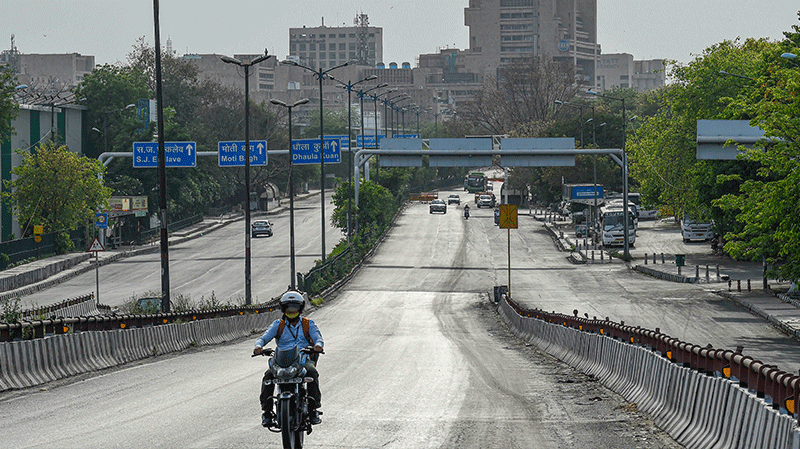
New Delhi: Ahead of the end of the extended lockdown, the Union Health Ministry has listed 130 districts in the country in red zone, 284 in orange zone and 319 in green zone on the basis of incidence of cases of COVID-19, doubling rate, extent of testing and surveillance feedback.
This classification of districts is to be followed by states and UTs till a week post May 3, when the second phase of lockdown will end, for containment operations. The list will be revised on a weekly basis or earlier and communicated to states for further follow-up action.
Metropolitan cities like Mumbai, Delhi, Kolkata, Hyderabad, Pune, Bengaluru and Ahmedabad have been designated as red zones in the new classification.
The new classification of districts was announced following a video conference chaired by the Cabinet Secretary on April 30 with chief secretaries and health secretaries of states.
In a letter to chief secretaries of all states and UTs, Union Health Ministry Secretary Preeti Sudan said, "It is important to ensure that we identify pockets of critical interventions for a focused management of COVID -19 at the field level".
She said the districts were earlier designated as hotspots/red-zones, orange zones and green zones primarily based on cumulative cases reported and the doubling rate.
"Since recovery rates have gone up, the districts are now being designated across various zones duly broad-basing the criteria. This classification is multi-factorial and takes into consideration incidence of cases, doubling rate, extent of testing and surveillance feedback to classify the districts," Sudan said in her letter.
A district will be considered under green zone if there has been no confirmed cases of COVID-19 so far or there is no reported case since last 21 days in the district, according to the letter.
Till now any red or orange zone districts could become a green zone if no fresh case of coronavirus was reported for 28 and 14 consecutive days respectively.
In the list, all the 11 districts in Delhi have been classified under red zone (hotspots).
Maharashtra has 14 districts in the red zone, 16 in orange and six in green zone, while Gujarat has nine districts in the red zone, 19 in orange and five in green zone.
In Madhya Pradesh, there are nine districts in the red zone, 19 in orange and 24 in the green zone, while Rajasthan has eight, 19 and six districts in the red, orange and green zones respectively.
Uttar Pradesh has 19 districts in the red zone, 36 in orange and 20 in green while Tamil Nadu has 12 districts in the red zone, 24 in the orange and one district in the green zone.
Goa, Arunachal Pradesh, Sikkim, Manipur, Nagaland and Mizoram fall under the green zone.
Telengana has six districts in the red zone, 18 in the orange and nine in the green zone. Andhra Pradesh has five districts in red zone, seven in orange and one in green zone while West Bengal has 10, 5 and 8 districts in the red, orange, green zones respectively.
Some states like Assam, Himachal Pradesh, Ladakh, Meghalaya, Puducherry and Tripura have no red zone districts. Noting that some states "have raised issues on inclusion of certain districts in red-zone", the secretary highlighted that this is a dynamic list.
The Secretary said based on field feedback and additional analysis at state level, states may designate additional red or orange zones as appropriate.
"However, states may not relax the zonal classification of districts classified as red/orange as communicated by the ministry," Sudan said.
For districts having one or more municipal corporations, the corporations and other areas of districts may be treated as separate units.
If one or more of these units have reported no cases for last 21 days, they can be considered as one level lower in zonal classification, in case the district is in red/orange zone.
District authorities should, however, exercise caution in such areas so that they remain free from COVID-19 cases, she said.
"It is critical to ensure that necessary action for containment so as to break the chain of transmission of virus is initiated in both red and orange zone districts reporting confirmed cases," she said.
The containment zones in these districts have to be delineated based on mapping of cases and contacts, geographical dispersion of cases and contacts. A buffer zone around containment zone has to be demarcated.
Necessary action should then be initiated in these areas as part of the Containment Action Plans include stringent perimeter control, establishing clear entry and exit points, no movement except for medical emergencies and essential goods and services, no unchecked influx of population, active search for cases through house to house surveillance by special teams, testing of all cases as per sampling guidelines and contact tracing.
Similarly, in buffer zones, extensive surveillance for cases through monitoring of ILI/SARI cases in health facilities has to be taken up.
"All states are accordingly requested to delineate containment zones and buffer zones in the identified red and orange zone districts and notify the same," she said.
The death toll due to COVID-19 rose to 1,147 and the number of cases climbed to 35,043 in the country on Friday, according to the Union Health Ministry.
Let the Truth be known. If you read VB and like VB, please be a VB Supporter and Help us deliver the Truth to one and all.
Court can reject anticipatory bail but cannot direct accused to surrender: SC
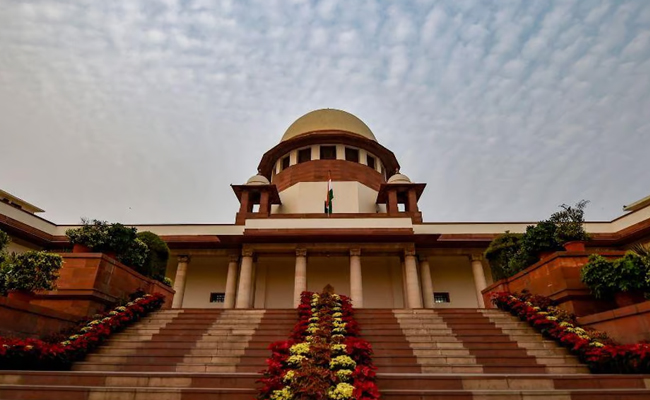
New Delhi (PTI): A court can reject anticipatory bail of an accused but it has no jurisdiction to direct him to surrender before the trial court, the Supreme Court has said.
A bench of Justices J B Pardiwala and Ujjal Bhuyan made the observation while hearing a plea filed by a man accused of cheating and forgery.
"If the court wants to reject the anticipatory bail, it may do so, but the court has no jurisdiction to say that the petitioner should now surrender," the bench said.
The Jharkhand High Court had rejected anticipatory bail plea of the accused and asked him to surrender and seek regular bail.
In this case, a complaint had been filed before a magistrate alleging offences under Sections 323 (voluntarily causing hurt), 420 (cheating), 467 (forgery of valuable security), 468 (forgery for purpose of cheating), 471 (using forged document) and 120B read with 34 of the IPC, in connection with a land dispute.
The high court had dismissed the second anticipatory bail application of the accused on the ground that no new circumstances were shown.
It had relied on its earlier order rejecting his first anticipatory bail plea, in which the court directed the petitioner to surrender before the trial court and seek regular bail in terms of the decision in Satender Kumar Antil v. CBI.
The top court said such a direction was wholly without jurisdiction and said that if a court chooses to reject anticipatory bail, it may do so, but it cannot compel the accused to surrender.