COVID-19: Homemade masks release fibres into air, important to wash them, say scientists
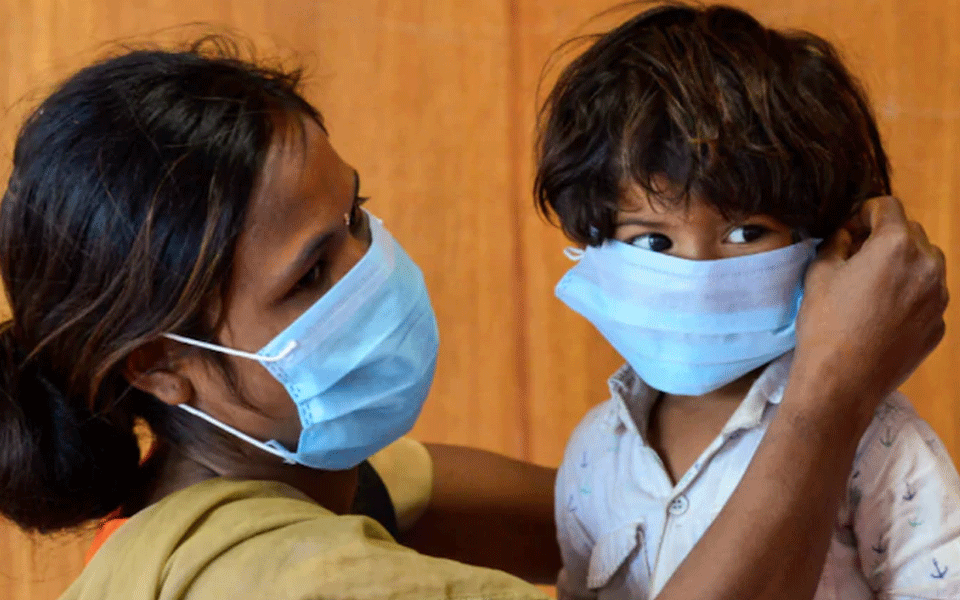
Los Angeles: While surgical and N95 masks cut down the amount of aerosolized particles emitted during breathing, talking and coughing, scientists say in the case of homemade cloth face coverings, the fabric which traps the droplets may release a large amount of fibres into the air, underscoring the importance of washing them.
The research, published in the journal Scientific Reports, noted that the use of masks and other face coverings has emerged as an important tool to reduce the spread of the novel coronavirus SARS-CoV-2.
But while evidence shows that face coverings generally reduce the spread of airborne particles containing the virus, the scientists, including those from the University of California Davis (UC Davis) in the US, noted that there is limited information on how well they compare with each other.
They set up experiments to measure the flow of particles from volunteers wearing masks while they performed "expiratory activities" including breathing, talking, coughing and moving their jaw as if chewing gum.
According to the scientists, these particles are small enough to float through the air over a considerable distance, but large enough to carry viruses such as the novel coronavirus which causes COVID-19.
They also found that a fraction of people are "superemitters" who give off many more particles than average.
In the study, 10 volunteers sat in front of a funnel in a laminar flow cabinet which drew air from in front of their faces into a device that measured the size and number of particles they exhaled.
One of the volunteers in the study was a superemitter who consistently produced nearly 100 times as many particles as the others when coughing, the scientists said.
The volunteers wore either no mask, a medical-grade surgical mask, two types of N95 mask (vented or not), a homemade paper mask or homemade one- or two-layer cloth mask made from a cotton T-shirt.
The study found that talking gave off about 10 times more particles than simple breathing without wearing a mask, and forced coughing produced a variable amount of particles.
In all the test scenarios, surgical and N95 masks blocked as much as 90 percent of particles, compared to not wearing a mask, the researchers said.
Face coverings also reduced airborne particles from the superemitter, the study noted. However, the researchers said, homemade cotton masks actually produced more particles than not wearing a mask.
According to the scientists, these appeared to be tiny fibres released from the fabric.
Since the cotton masks produced particles themselves, they said it's difficult to tell if they also blocked exhaled particles, but added that they seemed to at least reduce the number of larger particles.
While masks are effective in reducing the spread of airborne particles, the scientists said it is also important to regularly wash cloth masks.
Let the Truth be known. If you read VB and like VB, please be a VB Supporter and Help us deliver the Truth to one and all.
Karnataka electoral roll SIR exercise to begin from June 20
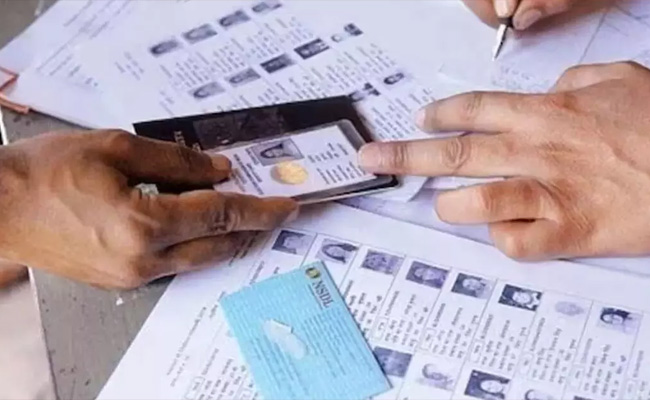
Bengaluru (PTI): Karnataka will begin SIR of electoral rolls from June 20 as part of a nationwide exercise covering 16 states and three Union territories, CEO Anbu Kumar said on Friday.
The drive will cover more than 5.55 crore electors in the state, he said.
As per the schedule notified by the Election Commission (EC), preparation, training and printing activities will be carried out from June 20 to June 29 and Booth Level Officers (BLOs) will conduct house-to-house visits from June 30 to July 29.
The rationalisation of polling stations is scheduled to be completed by July 29. The draft electoral roll will be published on August 5, following which claims and objections can be filed between August 5 and September 4.
The notice phase and disposal of claims and objections will continue from August 5 to October 3, and the final electoral roll will be published on October 7, it said.
ALSO READ: Sindhu out of Thailand Open, loses to Yamaguchi in quarterfinals
Addressing a press conference here, CEO Kumar said that in Karnataka, the Office of the Chief Electoral Officer is fully prepared to proceed with the SIR of electoral rolls.
As part of this exercise, we have successfully mapped 86.46 per cent of our voters, he said.
"The primary objective of this entire exercise is to ensure that every eligible voter is enrolled, while simultaneously ensuring that no ineligible individuals are included in the voter list. Therefore, I seek the support and cooperation of all the voters of Karnataka, all political parties, and our friends from the media," he added.
According to the statement issued by the CEO's office, 59,050 BLOs will be involved in the SIR of the electoral roll in the state. The exercise will cover approximately 5,55,74,064 electors in the state as of May 12.
The SIR is a participative and transparent exercise involving electors, political parties and the election machinery. During the revision process, BLOs will undertake house-to-house visits for the distribution and collection of enumeration forms, the statement said.
Stating that there are currently 25,284 Booth Level Agents (BLAs) appointed by recognised political parties, the CEO urged all recognised political parties to appoint BLAs for every polling station to ensure active participation and transparency in the revision process.
Electors have been requested to cooperate with BLOs during the house-to-house distribution and collection of enumeration forms.
Further details regarding the revision process, forms and schedule will be made available on the official websites of the District Election Officers, the Chief Electoral Officer, Karnataka, and the Election Commission of India, the statement said.