COVID-19: India records 26,382 new infections, 387 more fatalities
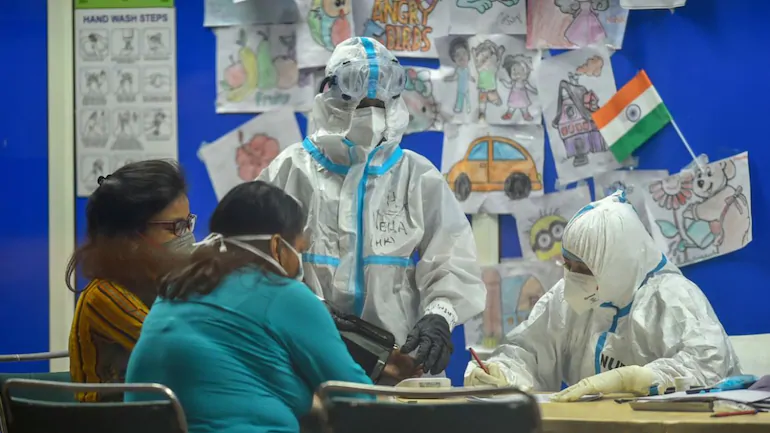
New Delhi, Dec 16: India's COVID-19 caseload rose to 99.32 lakh with 26,382 infections being reported in a day, while the number of people who have recuperated from the disease surged to 94.56 lakh, according to data updated by the Union Health Ministry on Wednesday.
The total coronavirus infection tally mounted to 99,32,547, while the death toll rose to 1,44,096 with 387 new fatalities, the data updated at 8 am showed.
The number of people who have recuperated from the disease surged to 94,56,449, pushing the national recovery rate to 95.21 per cent, while the COVID-19 case fatality rate stands at 1.45 per cent.
The COVID-19 active caseload remained below four lakh for the 10th consecutive day.
There are 3,32,002 active coronavirus infections in the country which constitute 3.34 per cent of the total caseload, the data stated.
India's COVID-19 tally had crossed the 20-lakh mark on August 7, 30 lakh on August 23, and 40 lakh on September 5. It went past 50 lakh on September 16, 60 lakh on September 28, 70 lakh on October 11, 80 lakh on October 29, and 90 lakh on November 20.
According to the Indian Council of Medical Research (ICMR), 15,66,46,280 samples have been tested up to December 15, of which 10,85,625 were conducted on Tuesday.
The 387 new fatalities include 70 from Maharashtra, 45 from West Bengal, 41 from Delhi, 33 from Kerala and 20 from Uttar Pradesh.
Total 1,44,096 deaths reported so far in the country include 48,339 from Maharashtra, followed by 11,965 from Karnataka, 11,919 from Tamil Nadu, 10,115 from Delhi, 9,145 from West Bengal, 8,103 from Uttar Pradesh, 7,064 from Andhra Pradesh and 5,117 from Punjab.
The health ministry stressed that more than 70 per cent of the deaths occurred due to comorbidities.
"Our figures are being reconciled with the Indian Council of Medical Research," the ministry said on its website, adding that state-wise distribution of figures is subject to further verification and reconciliation.
Let the Truth be known. If you read VB and like VB, please be a VB Supporter and Help us deliver the Truth to one and all.
Indian startup's 'Drishti' satellite launched aboard SpaceX rocket
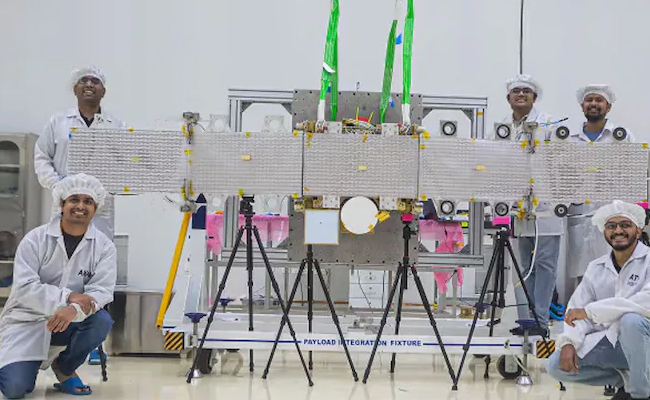
New Delhi (PTI): Bengaluru-based space start-up GalaxEye's Mission Drishti satellite was launched on Sunday aboard SpaceX's Falcon 9 rocket from California.
Mission Drishti is the world's first OptoSAR satellite, integrating electro-optical (EO) and synthetic aperture radar (SAR) sensors into a single operational platform, according to the company.
While EO sensors capture high-resolution images during sunlight and clear skies, SAR sensors provide all-weather and all-time images, using radar pulses.
In a statement, Suyash Singh, founder and CEO of GalaxEye, said, "With the satellite (Mission Drishti) now successfully in orbit, our immediate focus is on completing its commissioning. As we move through this phase, we are already witnessing strong global interest in the differentiated datasets enabled by our OptoSAR payload."
The satellite will help address long-standing limitations of conventional systems and enable more reliable and consistent data acquisition across diverse environmental conditions, the company said.
As a dual-use Earth observation satellite, the mission will support use cases across defence, agriculture, disaster management, maritime monitoring, and infrastructure planning.
The satellite is also expected to complement India's broader initiatives, including the 29 active Earth Observation satellites outlined in ISRO's recent annual report.
The launch came after five years of indigenous research and development, and extensive environmental testing and performance validation of the Mission Drishti.
In a statement, Lt Gen AK Bhatt (Retd), director general of Indian Space Association (ISpA), said, "GalaxEye has achieved what only a few global players have, which is seamlessly combining optical and SAR capabilities on a single platform to enable persistent, all-weather intelligence."
What stands out is not just the technology, but its broader impact on how downstream applications will increasingly define value in the space economy, particularly in Earth observation, where timely, decision-grade insights are critical," he added.
ISpA is the premier industry association of space and satellite companies in the country.
Union Minister Jitendra Singh also took note of the Mission Drishti launch, saying the development marked a significant milestone in India's space journey.
In a post on X, the minister said, "The successful launch of the world's first OptoSAR satellite, and the largest privately-built satellite in the country, reflects the immense potential of our young innovators driving nation-building."
GalaxEye aims to scale up Mission Drishti to a constellation of 10 satellites by 2030, developing a robust and sovereign Earth observation infrastructure for India.