COVID-19 sub-strain JN.1 detected in Kerala woman
New Delhi, Dec 16: A case of COVID-19 sub-variant JN.1 was detected in Kerala on December 8, official sources said on Saturday.
The sample from a 79-year-old woman had returned a positive result in an RT-PCR test on November 18, they said, adding that she had mild symptoms of influenza-like illnesses (ILI) and had recovered from COVID-19.
More than 90 per cent of the COVID-19 cases in India at present are mild and they are in home isolation, the sources said.
Earlier, an Indian traveller was also detected with JN.1 sub-variant in Singapore. The person was a native of Tamil Nadu's Tiruchirapalli district and had travelled to Singapore on October 25.
No increase in cases was observed in Tiruchirapalli district or other places in Tamil Nadu following the strain being detected in them.
"No other case of JN.1 variant has been detected in India," the source said.
The JN.1 sub-variant -- first identified in Luxembourg and since spreading to several countries -- is a descendant of the Pirola variant (BA.2.86).
It contains a significant number of unique mutations, particularly in the spike protein, that may contribute to increased infectivity and immune evasion, a source explained.
However, initial data suggests that updated vaccines and treatments will still offer protection against JN.1 sub-strain, the source stated.
This sub-variant's resemblance to earlier sub-strains with distinct spike proteins is also noteworthy.
Most of the changes in JN.1 sub-variant are found in the spike protein, which likely correlates to increases in infectivity and immune evasion.
Globally, 3,608 cases of BA.2.86 and its sub-variants have been reported mostly from Europe and North America.
The US Centers for Disease Control and Prevention (CDC), however, said initial data suggest that updated COVID-19 vaccines will help protect against JN.1 sub-strain.
It also said an analysis from the federal government's SARS-CoV-2 Interagency Group suggests treatments and testing will remain effective, they said.
Let the Truth be known. If you read VB and like VB, please be a VB Supporter and Help us deliver the Truth to one and all.
Mangaluru cooker bomb case: Main accused gets 10-year jail term
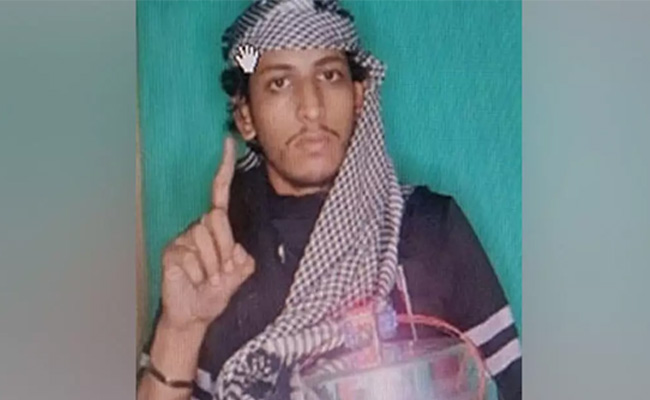
Bengaluru/Mangaluru (PTI): A special NIA court in Bengaluru on Monday sentenced the prime accused in the Mangaluru cooker bomb case to 10 years rigorous imprisonment and slapped a fine of Rs 94,000.
Mohamed Shariq had initially claimed innocence in the case, but later pleaded guilty under Section 229 of CrPC in December 2025, which the special court accepted.
According to prosecution, Shariq was carrying the pressure cooker IED (improvised explosive device) in an autorickshaw, and allegedly planned to plant it at Mangaluru’s Kadri Manjunatha Temple to spread terror among the Hindu community. The low intensity bomb, however, accidentally exploded on the way on November 19, 2022.
As per the operative portion of the order pronounced in open court, the accused Shariq (Accused No.1) was handed 10 years rigorous imprisonment and a fine of Rs 5,000 under Section 120B (criminal conspiracy) of the IPC.
He was also received two years’ rigorous imprisonment each under Sections 465 (forgery) and 471 (using forged documents), with fines of Rs 2,000 each.
The court further awarded 10 years’ rigorous imprisonment and imposed a fine of Rs 10,000 each under Sections 121A (waging war conspiracy), 122 (collecting arms with intent to wage war), 307 (attempt to murder) and 326 (causing grievous hurt).
Under provisions of the Unlawful Activities (Prevention) Act, 1967, the accused was sentenced to 10 years’ rigorous imprisonment and fined Rs 5,000 each under Sections 16(b), 17, 18, 20, 38, 39 and 40.
Additionally, under the Explosive Substances Act, 1908, he was awarded 10 years’ rigorous imprisonment with fines of Rs 5,000 each under Sections 3(a) and 5(a).
The court ordered that all substantive sentences shall run concurrently. In case of default in payment of fines, additional imprisonment ranging from one to six months has been prescribed for different counts.
The court also ordered that the period already undergone in judicial custody be set off against the sentence under Section 428 of the CrPC. The fine amount, once recovered, will be utilised towards defraying prosecution expenses.
Advocates said the court directed that a soft copy of the order be provided to the accused through email and a hard copy be sent by post, as his presence was secured through video conferencing.
A warrant of conviction has been ordered to be issued.
In the same case, the judicial custody of accused no 2 has been extended till May 21, 2026, and jail authorities have been directed to produce the accused through video conferencing on that date.
The Vishwa Hindu Parishad welcomed the court verdict and urged the NIA to file an appeal in the court to increase the sentence.
"His intention was to blow up the Kadri temple and kill hundreds of devotees. Considering this, the sentence should have been increased but the sentence has been reduced. We immediately urge the National Investigation Agency to file an appeal with the court to increase the sentence," the VHP said in a statement.