Covid-19: ‘Wake up from slumber,’ IMA tells Centre on need for lockdown, criticises vaccine strategy
This report was first published in scroll.in and has been posted here without any alterations or editing. To read the original report, CLICK HERE
New Delhi: The Indian Medical Association on Saturday said the Union health ministry was showing “extreme lethargy” and taking “inappropriate actions” in dealing with the second wave of the coronavirus pandemic.
In a press release, the medical body said that it has been insisting the Centre to impose a complete national lockdown for 10 to 15 days to “recoup and replenish” the country’s health infrastructure. Pointing out that the daily rise in new coronavirus cases has gone past 4 lakh and 40% of them were “moderate to severe” infections, the Indian Medical Association said that sporadic night curfews have not been effective in breaking the transmission chain.
The medical body also criticised the Centre’s vaccination strategy and questioned the supply shortage. It termed the differential vaccine pricing system “unhumanistic”, and said that it leaves those in the age group of 18-45 “under the mercy of state governments”.
“It is unfortunate the [health] ministry has failed to make the necessarily required road map and ensure vaccine stock,” the release stated.
As per the Centre’s vaccine policy for the third stage of inoculation, those in the age group of 18-45 will receive the shots through the 50% quota procured by states and private hospitals.
The Indian Medical Association release questioned as to why the Centre was not providing for universal free vaccination, in spite of allocating Rs 35,000 crore in the Union Budget for the pandemic. “In 1997 and 2014, India could declare eradication of small pox and polio only by adopting the universal free vaccination and not by differential pricing system,” the release noted.
The medical body also accused the government of “hiding” the number of patients dying of coronavirus, adding that 756 doctors died in the first wave of the pandemic and 146 in the second one. “Why we are trying to hide actual deaths?” the medical body asked. “If the public comes to know about the actual deaths, their seriousness to adopt Covid-appropriate behaviours will rise.”
#PMOIndia #NITIAayog #LargestVaccineDrive #IMAIndiaOrg IMA demands the health ministry wake up from its slumber and responds to mitigate the growing challenges of the pandemic. pic.twitter.com/7OxKgLhi9Q
— Indian Medical Association (@IMAIndiaOrg) May 8, 2021
Let the Truth be known. If you read VB and like VB, please be a VB Supporter and Help us deliver the Truth to one and all.
Gold, silver soar as US-Iran deal hopes lift bullion demand
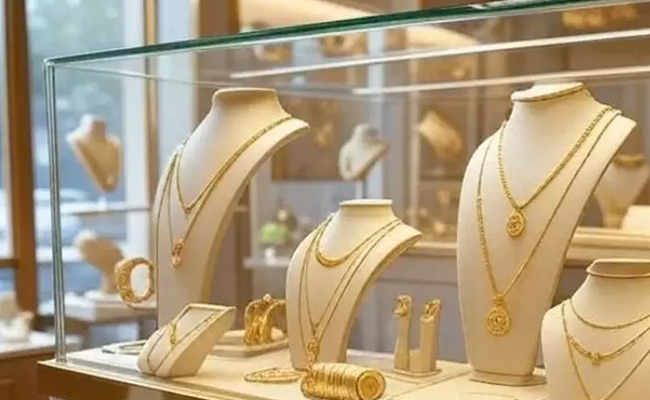
New Delhi (PTI): Gold prices rebounded by Rs 2,900 to Rs 1.55 lakh per 10 grams in the national capital on Wednesday, while silver climbed to Rs 2.54 lakh per kilogram as easing geopolitical tensions triggered a pullback in oil rates, boosting demand for precious metals.
According to the All India Sarafa Association, the yellow metal of 99.9 per cent purity jumped by Rs 2,900, or nearly 2 per cent, to Rs 1,55,400 per 10 grams (inclusive of all taxes) from Tuesday's closing level of Rs 1,52,500 per 10 grams.
Traders attributed the surge in bullion prices to reports that Washington and Tehran are close to finalising a framework agreement to end months of conflict, raising the prospects of smoother flows through the Strait of Hormuz and easing inflation concerns tied to energy markets.
"Gold rallied strongly on Wednesday as easing geopolitical tensions triggered a sharp reversal in key macro drivers that had recently pressured precious metals," Saumil Gandhi, Senior Analyst - Commodities at HDFC Securities, said.
Silver prices also advanced for the third straight session by rising Rs 3,500, or 1.4 per cent, to Rs 2,54,500 per kg (inclusive of all taxes). The metal had settled at Rs 2,51,000 per kg in the previous session, as per the Association.
"The prospect of a diplomatic breakthrough triggered a steep decline in oil prices and the US dollar, easing concerns about inflation while boosting demand for precious metals," Gandhi said.
Globally, spot gold increased by USD 106.15, or 2.33 per cent, to USD 4,663.70 per ounce while silver gained USD 3.40, or 4.68 per cent, to USD 76.24 per ounce.
"Gold witnessed a sharp rally as markets reacted positively to reports that the US and Iran are moving closer to a one-page agreement framework aimed at ending the conflict," Jateen Trivedi, VP Research Analyst - Commodity and Currency, LKP Securities, said.
Despite strong international gains, rupee strength limited the upside in domestic gold prices. The market is now highly focused on final confirmation and execution of the proposed deal, he added.
Any negative surprise or breakdown in negotiations could trigger a sharp sell-off in gold, while a successful agreement and sustained ceasefire could push the bullion prices higher in the near-term, Trivedi said.