Covid in India maybe entering some kind of stage of endemicity: WHO's Soumya Swaminathan
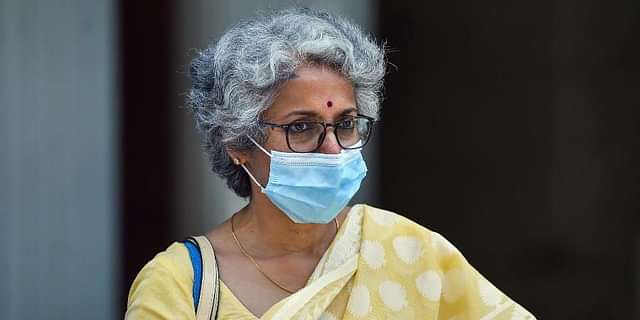
New Delhi, Aug 24: COVID-19 in India may be entering some kind of stage of endemicity where there is low or moderate level of transmission going on, Chief Scientist of the World Health Organisation Dr Soumya Swaminathan said.
The endemic stage is when a population learns to live with a virus. It's very different from the epidemic stage when the virus overwhelms a population.
On clearance to Covaxin, she said she is fairly confident that the WHO's technical group will be satisfied to give Covaxin clearance to be one of its authorised vaccines and that could happen by mid-September.
In an interview to journalist Karan Thapar for news website The Wire, Swaminathan said given the size of India and heterogeneity of population and immunity status in different parts of the country, it is "very very feasible" that the situation may continue like this with ups and downs in various parts of the nation.
"We may be entering some kind of stage of endemicity where there is low level transmission or moderate level transmission going on but we are not seeing the kinds of exponential growth and peaks that we saw a few months ago," Swaminathan said.
"As far as India is concerned that seems to be what is happening and because of size of India and heterogeneity of population and immunity status in different parts of country in different pockets, it is very very feasible that the situation may continue like this with ups and downs in different parts of the country, particularly where there are more susceptible population, so those groups who were perhaps less affected by first and second waves or those areas with low levels of vaccine coverage we could see peaks and troughs for the next several months," she said.
She said she hopes that by the end of 2022 "we would be in that position that we have achieved vaccine coverage, say 70 per cent, and then countries can get back to normal".
On prevalence of Covid among children, Swaminathan said parents need not panic. "We can take from the sero survey and what we learnt from other countries also that while it is possible that children could get infected and transmit, children luckily have very mild illness most of the time and there is a small percentage that gets sick and get inflammatory complications and few will die but much much less than the adult population...But it is good to prepare... preparing hospitals for paediatric admissions, paediatric intensive care is going to serve our health system in many ways for other illnesses children have but we should not panic about thousands of children crowding into ICUs," she said.
On use of drugs like Remdesivir, HCQ or Ivermectin for treatment, she said as of now, there is no evidence that HCQ or Ivermectin have any role to play in reducing mortality or morbidity in people infected with the virus or actually preventing people from getting infection, so therefore there are no grounds on which recommendations can be made in use of either of these drugs for treatment or prevention.
"Solidarity trial showed Remdesivir does not reduce mortality, it may have a marginal benefit in subgroup of patients who are ill enough to need oxygen but not ill enough to be on ventilation so there may be a marginal benefit but certainly Remdesivir does not do much in stage of moderately or severely ill patients. It is also very expensive. Drugs like Dexamethasone and Oxygen are the two essential ones that save lives," she added.
On clearance to Covaxin, she said the decision can be made hopefully by mid-September.
"The Bharat Biotech submitted their data in the third week of July which was the first data set, then there was an updated data set that came in the middle of August. The committee has gone back to the company with some questions which they must be in process of answering now. I think the technical advisory group that ultimately approves will meet in the first 10 days of September and so we are hoping it happens soon after that," she said.
"So by the middle of September I am thinking, and the reason it took longer was because of back and forth and the need for more data requested from the company and this is the usual process. People think it is taking longer for Covaxin than for others but that is not the case... each company that applied for EUL (Emergency Use Listing) had taken this period of 4 to 6 to 8 weeks to get all the data needed," she said.
On the third wave, she said no one has a "crystal ball" and it's impossible to predict a third wave.
"It will be impossible to predict when, where the third wave will be upon us and if at all a third wave will come. However, you can make an educated guess on some of the variables that have an impact on transmission," she said.
On booster doses, she said there are both scientific and moral, and ethical reasons for not rushing into boosters.
"...so it would also be in self interest of countries who have excess doses now to send those doses out through Covax to countries that desperately need them," she said.
On vaccine passport concept, she said, "We do not believe that vaccination has to be a prerequisite at least at the global level to do things like travelling because we haven't given everyone an opportunity to get vaccinated there is so much inequity in access to vaccines, so the first thing is to get rid of the inequality then you can allow people vaccinated to relax certain measures."
Vaccine passports are for allowing international travel to those fully vaccinated against coronavirus.
Let the Truth be known. If you read VB and like VB, please be a VB Supporter and Help us deliver the Truth to one and all.
Karnataka: GBA city corporation polls likely between June 14 and 24
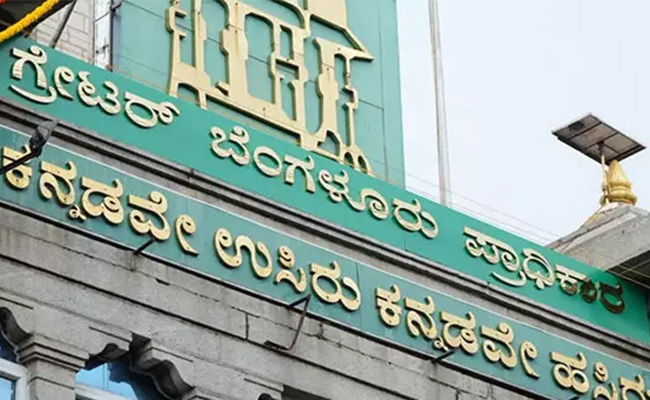
Bengaluru (PTI): Karnataka State Election Commissioner G S Sangreshi on Friday said elections to the five city corporations under the GBA will be held anytime between June 14 and June 24.
He said the exact date for the polls will be announced after a week, asserting that the power to postpone the elections, as requested by GBA authorities, lies with the Supreme Court.
The Supreme Court had directed the Karnataka government and the State Election Commission to conduct Bengaluru local body elections by June 30.
On Friday, the SEC held a consultation meeting with the GBA Chief Commissioner and commissioners of the five city corporations regarding the election schedule, as per the provisions of the GBA Act.
“During the meeting, I informed GBA officials that only the election date has to be fixed, as all other measures and formalities for conducting the polls have already been completed,” Sangreshi said.
“They requested the Commission to consider factors such as rains, exams, census work, SIR, and manpower shortages while fixing the date and sought additional time,” he added.
Speaking to reporters after the meeting, he said, “I told them this meeting was not for seeking time. Elections to the five corporations under the GBA must be held before June 30, as directed by the Supreme Court, and a compliance report must be submitted to the court. I do not have the power to postpone the elections as requested.”
The Supreme Court has already given a “final opportunity,” and both the SEC and the government must comply with its directions, the State Election Commissioner said.
He asked GBA officials to suggest suitable dates between June 14 and June 24.
“While stating that they are ready for elections, the officials highlighted operational challenges, including manpower shortages. However, I have informed them that the elections will have to be held between June 14 and June 24. After a week, I will announce the final date,” he said.
Reiterating that he does not have the power to postpone the elections, Sangreshi said the authority rests with the Supreme Court, and elections must be conducted as scheduled.
“We have consulted the GBA as per the rules. It is up to them to suggest a date within the given window. If they need more time, they must approach the court. Our responsibility is to fix the date and complete the polls before June 30,” he said.
The matter regarding manpower and other concerns raised by GBA officials is already before the Supreme Court, and the State Election Commission has also filed a petition in this regard. The case is yet to be heard.
“Since the matter has not come up for hearing, the earlier order remains binding. Therefore, preparations are underway,” he added.
The tenure of the previous elected body under the erstwhile Bruhat Bengaluru Mahanagara Palike (BBMP) ended on September 10, 2020, and since then, a government-appointed administrator has been managing its day-to-day affairs.
Bengaluru was divided into five municipal corporations—Central, East, West, North, and South—under the Greater Bengaluru Authority in September 2025, replacing the BBMP.
Sangreshi had earlier said that elections to the five corporations would be conducted using ballot papers instead of Electronic Voting Machines.
This follows the Congress government’s decision last September to recommend the use of ballot papers in all future panchayat and urban local body elections, citing concerns over declining public confidence in EVMs.
The state government subsequently enacted the Karnataka Gram Swaraj and Panchayat Raj (Amendment) Act, 2026, paving the way for the use of ballot papers in local body elections.