COVID19: Nizamuddin Markaz case has cross border implications, Centre tells High Court

New Delhi (PTI): The case registered in relation to the alleged violation of COVID-19 protocols at Nizamuddin Markaz -- where the Tablighi Jamaat congregation was held in March last year amid COVID-19 pandemic is serious and has cross borders implications , the Centre told the Delhi High Court which Monday remarked that the premises can't be kept locked forever.
Justice Mukta Gupta, who was hearing the Delhi Waqf Board's plea to re-open the markaz which has remained shut since March 31 last year, questioned the Centre as to how long it intended to keep the Nizamuddin Markaz locked, saying it can't be kept forever .
Counsel for the Centre stated that a legal action to re-open the markaz can only be initiated by the lessee of the property and a resident of the premises has already filed a plea to handover the residential portion of the markaz, which is pending final adjudication before another judge of the high court.
Only on legal view, the petition can be disposed of. The Waqf Board has no power to overstep the lessee, said the counsel for the Centre Rajat Nair.
However, the judge said some persons were in possession of the property. Due to the pandemic, an FIR was registered.. (and) you take possession as case property. It has to be handed over. It can't be that the property is kept forever (subject to court orders). What is your stand on the facts of the case? You tell me from whom you took it. How long will you keep it locked as case property.
The court issued notice on an application filed by a member of the Managing Committee of the markaz in question for his impleadment and allowed the Waqf Board to file its reply to the Centre's affidavit and posted the matter for next hearing on November 16.
Senior counsel Ramesh Gupta, representing the Board, argued that the petition has remained pending for more than a year and a half and clarified that his petition pertained to the release of the entire markaz property comprising the masjid, the madarasa and the residential portion.
Now they should release the property to us. UOI has no role to play, he stated.
Senior counsel Salman Khurshid, representing the intervening member, added that he is on the same page as the Waqf and when allowed to be re-opened, the markaz would adhere to the relevant protocols.
In its affidavit affirmed by the Deputy Commissioner of Police, Crime, the Centre has maintained that it is necessary and incumbent to preserve the Markaz property as the investigation in the case registered for violation of the COVID-19 protocols has cross borders implications and involves nation's diplomatic relationship with other countries.
As such, in view of the seriousness of the case which has trans-border implication and diplomatic consideration, it is just and necessary that the case property in such a case is preserved in letter and spirit so that due process of law in dealing with such cases is followed, the affidavit said.
Since about 1300 foreigners were found to be residing in the said premises and cases against them have cross borders implications and involves nation's diplomatic relationship with other countries, it is necessary and incumbent on the part of the Respondent to preserve the said premises for the purpose of Section 310 of Cr.PC, it added.
It said since the issue of keeping the markaz premises locked is pending adjudication before another bench, it cannot be agitated by the petitioner (Waqf) in guise of its power of superintendence .
It added that the right to administer the markaz is subject to law, public order and health and that the authorities have always relaxed the entry norms upon a proper application made by the person administering the religious affair as and when the organizers apply for a relaxation in view of any ensuing religious festival or for any other reason.
On April 15, the court had allowed 50 people to offer namaz five times a day at Nizamuddin Markaz during Ramzan, saying there is no direction in the Delhi Disaster Management Authority (DDMA) notification to close down places of worship.
The board, in its plea filed through advocate Wajeeh Shafiq, contended that even after unlock-1 guidelines permitted religious places outside containment zones to be opened, the markaz -- comprising the Masjid Bangley Wali, Madarsa Kashif-ul-uloom and attached hostel -- continues to be locked up.
It has further contended that even if the premises was part of any criminal investigation or trial, keeping it "under lock as an out of bound area" was a "primitive method" of enquiry process.
Several FIRs have been registered under the Epidemic Diseases Act, the Disaster Management Act, Foreigners Act and various provisions of the penal code in connection with the Tablighi Jamaat event held at the markaz and the subsequent stay of foreigners there during the COVID-19 lockdown last year.
Let the Truth be known. If you read VB and like VB, please be a VB Supporter and Help us deliver the Truth to one and all.
Bengaluru jail introduces biometric tracking system for prisoners
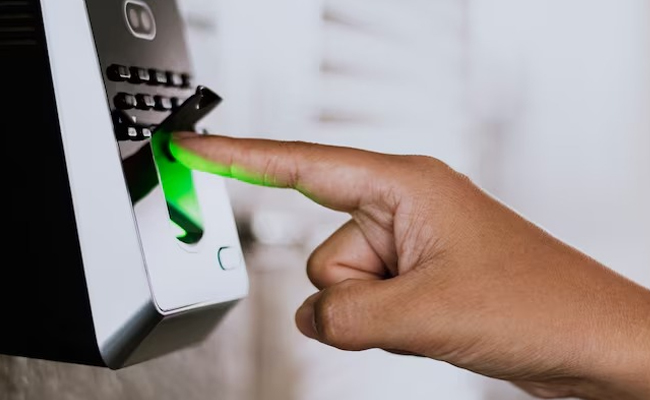
Bengaluru: In a bid to curb misconduct and illegal activities inside Parappana Agrahara Central Prison, prison authorities have introduced a new ‘Prisoners Tracking Movement System’ under which inmates will have to undergo biometric verification while entering every barrack.
According to jail officials, biometric systems have been installed across all major sections of the prison, including barracks, visitor rooms, hospital, canteen, kitchen, library, playground, handicraft units and bakery sections. Staff members have also been deployed at these locations.
Officials said inmates visiting the visitors’ room must now obtain a digital token after biometric verification. Details such as the prisoner’s name, identification number and entry time will be updated in the prison software system. This will help authorities maintain a complete digital record of inmates visiting and returning from meeting rooms.
Similar systems have also been introduced at entry points of the hospital, library and other barracks accessed for work-related purposes. Officials said the system will help identify prisoners involved in suspicious or illegal activities with other inmates and enable authorities to track how much time a prisoner spends at different locations inside the prison.
Authorities stated that AI-powered cameras were already being used inside the prison to monitor inmates as well as prison staff. Along with this, digital tracking of prisoner phone calls and a digital token system for visitor meetings have now been added to strengthen surveillance over inmate movement. Officials said the project has been implemented at a cost of around Rs 2.25 crore.
The prison department has also introduced a canteen usage tracking system to monitor prisoners’ spending patterns. Instead of direct cash payments, inmates can purchase bakery items and snacks using wallets or coupons issued within the prison system.
Officials said the digital system will record details including the buyer’s name, items purchased, quantity, date, time and remaining wallet balance. This will allow prison authorities to maintain complete expenditure records of inmates.