CPI (M) raises Silkyara tunnel incident in Rajya Sabha, demands fair inquiry
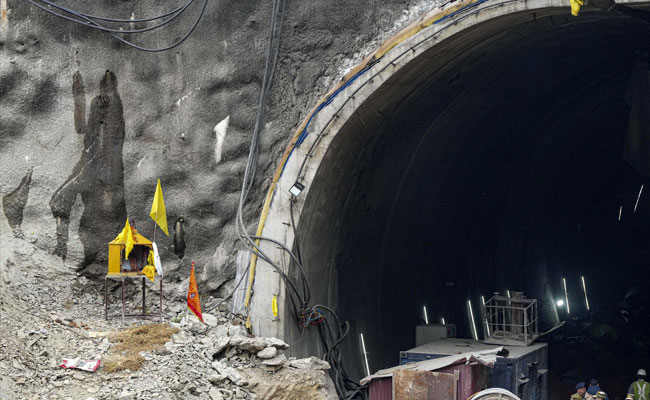
New Delhi (PTI): CPI (M) Member of Parliament P V Sivadasan in Rajya Sabha on Monday raised the issue of collapse of Uttrakhand's Silkyara tunnel and demanded an inquiry into the incident alleging that safety measures were not implemented by the company concerned.
A part of the Uttarkashi tunnel -- around 200 metres from the entrance -- had collapsed on November 12 trapping 41 workers.
A rescue team pulled out all trapped workers on November 28 in a multi-agency operation that hovered between hope and despair for almost 17 days.
Raising the issue during the Zero Hour in the House, Sivadasan termed the incident very painful and accused the tunnelling company of violating all security measures, rules and norms.
"...transparent and fair inquiry is very necessary," said the MP from Communist Party of India - Marxist.
Silkyara was the not the sole incident and such events have happened before in the area, he said.
Ajay Pratap Singh of BJP said Sivadasan may have his own views on the incident, but the government led by Prime Minister Narendra Modi is committed to the wellbeing of the poor.
He expressed his gratitude to the Prime Minister, Uttrakhand Chief Minister Pushkar Dhami, Union Minister V K Singh, and all those involved in the rescue operation, including rat miners, for successfully evacuating the workers.
NHIDCL is constructing the tunnel through Hyderabad-based Navayuga Engineering Company Ltd.
Meanwhile, Sant Balbir Singh of AAP raised the issue of air pollution.
He said about 21 lakh deaths take place every year due to air pollution.
The air was clean for only one day in Delhi, five days in Mumbai, and 15 days in Chennai in a year Singh said.
He further said whenever there are talks about air pollution, it is attributed to stubble burning by farmers of Punjab.
He said no farmer of Punjab wants to burn stubble and urged the Centre to grant financial assistance to farmers so that they don't have to burn their crop to clean the field before fresh sowing.
Let the Truth be known. If you read VB and like VB, please be a VB Supporter and Help us deliver the Truth to one and all.
4 held for sexually assaulting woman, girl on moving bus after social media alert in UP's Agra

Agra (UP) (PTI): Four people were arrested, after a prompt response by police following a social media alert, for allegedly sexually assaulting a woman and a girl inside a moving bus here, officials said on Tuesday.
According to an official police statement, at 12:27 am on April 27, information was received on the social media platform X about an incident of sexual assault on a bus travelling from Kanpur to Ahmedabad, which was approaching Namner crossing in Agra.
Acting under the direction of Police Commissioner Deepak Kumar, the Agra Police social media team immediately alerted the Rakabganj police station within minutes and coordinated with the victims to confirm the incident and obtain the exact location, it stated.
Police teams launched intensive checking at Namner crossing and intercepted the bus as it reached the spot. The four accused involved in the incident were apprehended on the spot, and legal action was initiated against them, the statement said.
The police said the swift response and coordination between the social media team and field units ensured timely action, bringing relief to the victims and other passengers, who expressed gratitude towards the police, it added.