CPI MP Sandosh Kumar demands NIA probe into pattern of crimes, alleged Burials in Dharmasthala
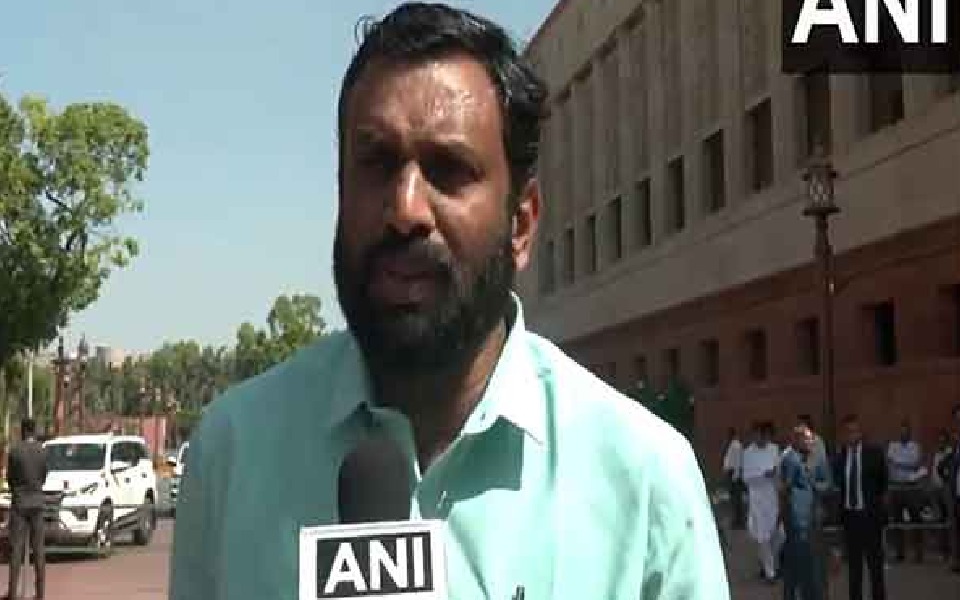
New Delhi, July 19: Communist Party of India (CPI) Rajya Sabha MP P. Sandosh Kumar has written to Union Home Minister Amit Shah seeking a thorough and independent probe by the National Investigation Agency (NIA) into a series of disturbing incidents in and around Dharmasthala, Karnataka. The letter, dated July 19, points to what the MP described as “a disturbing and systematic pattern of crimes—primarily targeting women, often silenced through coercion, and concealed with frightening impunity.”
In his letter, Sandosh Kumar listed a series of cases dating back to the late 1970s, claiming they showed signs of systematic violence, cover-ups, and lack of justice. The MP also cited recent revelations by a former sanitation worker at the Dharmasthala temple who, under witness protection, allegedly confessed to the disposal of hundreds of bodies between 1995 and 2014.
“What appeared over the years as isolated incidents now unmistakably point to a disturbing and systematic pattern of crimes,” the letter read.
The MP referred to several specific incidents, beginning with the 1979 death of schoolteacher Vedavalli, who was allegedly burnt alive after winning a promotion that some “influential forces” opposed. He continued:
“In 1986, Padmalatha, a young PU student and daughter of a local Communist leader, was kidnapped and later found naked and lifeless in the Netravathi River—seemingly punished for her father's political stand.”
Another case mentioned was that of Ananya Bhat, a medical student who went missing in 2004 during a visit to Dharmasthala. Her mother, reportedly a CBI employee, was allegedly assaulted when she tried to investigate the disappearance and later fell into a coma. “No FIR was ever filed,” the letter pointed out.
Sandosh Kumar also raised the case of siblings Narayan and Yamuna, who were killed in 2012 after allegedly refusing to vacate land. He noted that their home, located near the KSRTC bus stand, was demolished and replaced with a commercial building shortly after the incident.
He also cited the 2012 case of Sowjanya, a 17-year-old girl who was abducted, raped, and murdered. “A mentally ill man was quickly framed and jailed, only to be acquitted years later. Multiple witnesses died mysteriously during the course of the case,” he noted.
According to the MP, there have long been whispers among locals about bodies being found in the forests around Dharmasthala. He named several locations Puduvettu, Kalleri, Boliyar, and the hill bases near the Annappa and Gommata hills as sites where remains were allegedly discovered.
“Many of these were women—some naked, some burnt, some with signs of acid assault—most unnamed and unclaimed,” he wrote.
The letter refers to whistleblower accounts and RTI documents that allegedly show an unusually high number of Unnatural Death Reports (UDRs) filed by local police, suggesting a pattern far beyond random incidents.
The most serious allegation comes from a former temple sanitation worker who, on July 3, reportedly made a confession under witness protection. According to the MP:
“He alleges that between 1995 and 2014, he was forced under threat to dispose of over 500 human bodies, many of them women and minors who had been sexually assaulted.”
The individual also spoke of “mass burials, acid disfigurement, and targeted killings,” and reportedly offered to lead investigators to the burial sites.
Citing “administrative silence” and alleged police complicity, the MP said local law enforcement cannot be trusted with an impartial investigation.
“Despite mass protests and years of appeals, the state government has failed to constitute a credible Special Investigation Team (SIT). The so-called ‘Acquittal Review Committee’ was never operationalised meaningfully.”
He added that people who have tried to seek justice — activists, journalists, RTI petitioners, and family members have faced threats, online abuse, and even physical harm.
“Only an agency with full authority and clear mandate can unravel the extent of this alleged criminal network, identify those responsible, and restore faith in the justice system,” the MP wrote.
In concluding his letter, Sandosh Kumar said his appeal was not against the spiritual reputation of Dharmasthala, but an attempt to preserve it through truth and justice.
“Let me emphasise that this appeal is made in the firm belief that the spiritual sanctity of Dharmasthala must be protected—not just in ritual or appearance, but in truth, justice, and transparency.”
He urged the Union Home Minister to act, stating that “a sacred town revered by devotees across India cannot remain clouded by fear, suspicion, and buried truths.”
As of now, there has been no official response from the Ministry of Home Affairs.
Let the Truth be known. If you read VB and like VB, please be a VB Supporter and Help us deliver the Truth to one and all.
Ladakh a living land of dharma for centuries: Amit Shah
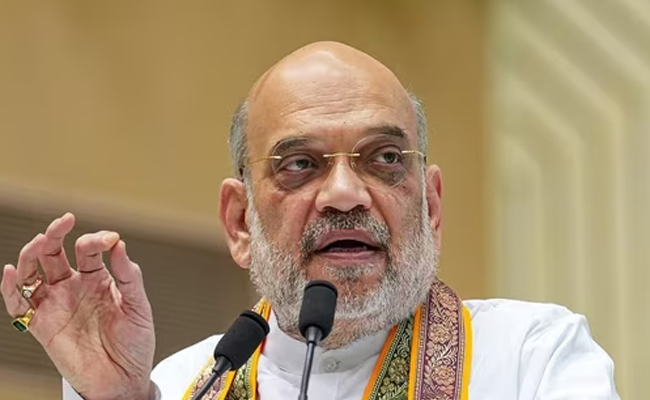
Leh/Jammu (PTI): Union Home Minister Amit Shah on Friday described the return of sacred relics of Lord Buddha to Ladakh after 75 years as a "historic reunion" and said that the Union Territory has remained a "living land of dharma", preserving and nurturing Buddhist knowledge for centuries.
Stressing the relevance of Buddha's teachings in modern times, Shah said the message of peace, compassion and the middle path was even more important today than it was 2,500 years ago.
"Ladakh has been a living land of dharma for centuries. When the Dalai Lama comes here, he says this land is not merely a geographical land but a living laboratory of Buddhist culture and compassion," Shah said, speaking after the inauguration of the sacred holy relics exposition of Tathagata Buddha and the 2569th Buddha Purnima celebrations at Jivetsal in Leh during his two-day visit to Ladakh.
Calling Ladakh a land of compassion, he said this land has preserved and nurtured knowledge. "Whenever Buddhism faced crises, this land worked to protect the teachings of Buddha. And when peace returned, it helped to expand and carry forward that preserved wisdom," he added.
"Unless one internalises knowledge and makes it a part of oneself, liberation is not possible. Knowledge is incomplete without spiritual practice, while spiritual practice without knowledge is blind. Therefore, the union of spiritual practice and knowledge is the right path. Even after all this, if there is no moral discipline, one cannot lead a truly wise life. The basis of a life of wisdom is moral discipline," he said.
Shah said it was through Ladakh and adjoining routes that the teachings of Tathagata Buddha, which originated in India, spread to China and several other countries.
"The message that emerged from the land of Ladakh has become a guiding force for many people around the world to take their lives forward. The presence of these sacred relics in Ladakh reminds us that India's civilisation has, for thousands of years, given the message of peace and coexistence," he said.
He said that in a diverse region like Ladakh and Kargil, this message becomes even more relevant. "This heritage still tells us today that amidst conflict and unrest, only the path of peace and compassion can provide solutions."
He said the return of the relics on Buddha Purnima had enhanced the significance of the festival for the people of Ladakh.
"These sacred relics have come to Ladakh after 75 years. It is as if Buddha himself is present here today," Shah said, adding that followers of Buddhism and people of other faiths in Ladakh and Kargil would draw spiritual energy from the relics.
Highlighting Ladakh's role in the spread of Buddhism, Shah said Kashmir was once an ancient centre of Buddhist studies, Mahayana philosophy and Buddhist art, from where Ladakh first came into close contact with Buddhism.
He said Emperor Ashoka's envoys laid the foundation of Buddhist influence in Ladakh through Kashmir and Gandhara, while Mahayana Buddhism expanded in the region during the Kushan period between the first and third centuries CE.
The Silk Route linking Kashmir, Leh, Yarkand, Khotan and Tibet became a channel not only for trade but also for ideas, monks, manuscripts and artistic traditions, Shah said.
He added that later, Tibetan influence between the seventh and tenth centuries further enriched Ladakh through Mahayana and Vajrayana traditions.
Stressing the relevance of Buddha's teachings in modern times, Shah said the message of peace, compassion and the middle path was even more important today than it was 2,500 years ago.
"Amid conflict and unrest, only the path of peace and compassion can provide solutions," he said.
Shah also appealed to the Ladakh administration to ensure complete arrangements so that followers of all faiths, especially Buddhists, could visit and pay obeisance to the relics.
#WATCH लेह, लद्दाख: केंद्रीय गृह मंत्री अमित शाह ने कहा, "जब दलाई लामा यहां आते हैं तो वे कहते हैं कि यह भूमि केवल भौगोलिक भूमि नहीं है। यह भूमि बौद्ध संस्कृति और करुणा की जीवंत प्रयोगशाला है। इस भूमि पर ज्ञान का संरक्षण हुआ है... भारत की सभ्यता हजारों वर्षों से शांति का संदेश… https://t.co/2nwG0w2CE6 pic.twitter.com/W13itRBqeX
— ANI_HindiNews (@AHindinews) May 1, 2026