Crimes against senior citizens dip to 27,886 in 2023; Maharashtra, MP, TN report high numbers: NCRB
New Delhi (PTI): India registered 27,886 cases of crimes against senior citizens in 2023, a marginal dip from 28,545 in 2022, with Maharashtra, Madhya Pradesh and Tamil Nadu among the states reporting the highest numbers, the National Crime Records Bureau (NCRB) said in its annual report.
Crime head-wise, the highest number of cases (7,608 or 27.3 per cent) was registered under "simple hurt", followed by theft (4,130, 14.8 per cent) and "FCF" (forgery, cheating and fraud) (3,473, 12.5 per cent) in 2023, according to the NCRB's data.
Madhya Pradesh accounted for 5,738 cases, Maharashtra 5,115, Tamil Nadu 2,104 and Karnataka 1,840. Among the Union territories, Delhi topped with 1,361 cases and the highest crime rate of 118.6 per one-lakh elderly population.
The report also logged 1,914 murders, 104 rapes and 721 cases of attempted murder targeting senior citizens in 2023.
Of the 47,630 cases under investigation in 2023, 26,439 were disposed of, but 21,168 remained pending, resulting in a pendency rate of 44.4 per cent.
The overall charge-sheeting rate stood at 76.3 per cent, with high rates for serious offences like murder (94.8 per cent) and culpable homicide (97.4 per cent) but significantly lower for property-related crimes such as theft (33.4 per cent) and fraud (44.3 per cent).
Let the Truth be known. If you read VB and like VB, please be a VB Supporter and Help us deliver the Truth to one and all.
Bengal CM Mamata Banerjee holds roadshow in south Kolkata to end campaign
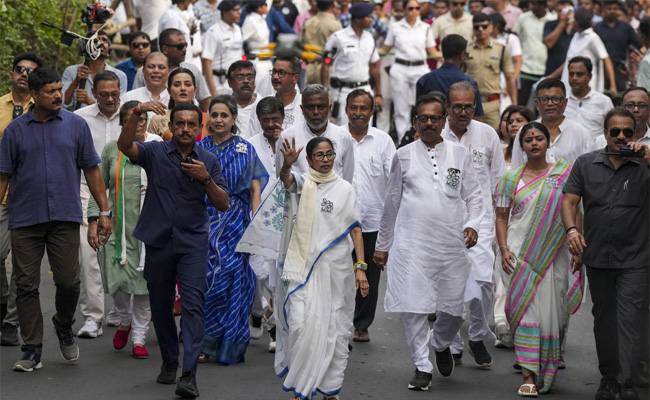
Kolkata (PTI): Chief Minister Mamata Banerjee undertook a roadshow in south Kolkata spanning over six kilometres on Monday afternoon at the fag end of campaigning for the second and final phase of the West Bengal assembly election.
The TMC chief was accompanied by party Rajya Sabha MP Sagarika Ghose and candidates Aroop Biswas and Debasish Kumar from Tollygunge and Rashbehari, respectively.
People waiting on the roadside and on rooftops and balconies waved at Banerjee as she greeted them with folded hands, walking briskly, as her party compatriots had a tough time keeping pace with her.
The chief minister is contesting from the Bhabanipur assembly seat, where she is pitted against her bete noire, Suvendu Adhikari of the BJP, who defeated her in the 2021 elections in Nandigram.
Banerjee was subsequently elected from Bhabanipur in a byelection.
The roadshow started at Sukanta Setu in the Jadavpur area and culminated at Gopalnagar crossing, past her Kalighat residence, with two small stopovers in between.
TMC flags, festoons, cutouts of Banerjee and banners with slogans in favour of the candidates adorned the roadsides through which the road show passed and culminated at around 5.30 pm.
A large number of TMC supporters participated in the roadshow that Banerjee conducted to end her campaign for the 2026 assembly election in West Bengal.