CSK to miss Moeen Ali for IPL opener due to visa issues
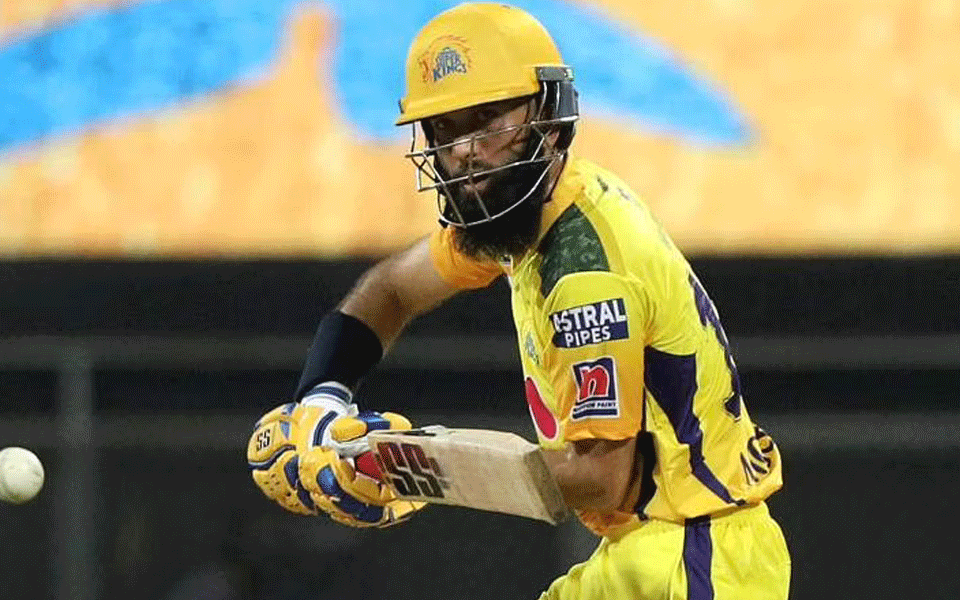
New Delhi(PTI): Defending champions Chennai Super Kings will miss the services of Moeen Ali for their IPL-opener as the star England all-rounder is yet to receive his India visa for competing in the lucrative T20 tournament, beginning in Mumbai on Saturday.
CSK CEO Kasi Viswanathan confirmed the development
"It is almost certain that Moeen Ali wil miss the first game. He has still not got the visa. We are on it as well as BCCI. Hope it is sorted in a day or two," Viswanathan told PTI.
"It is disappointing that he has not bee able to join us. They follow set procedures for players with Pakistan descent. That looks like the reason (for delay)."
His grandfather migrated to England from Pakistan Occupied Kashmir but Moeen is born in England and is a frequent visitor to India.
CSK, four-time IPL champions, will take on last edition's runner-up side Kolkata Knight Riders in the opening match of the this year's IPL at the Wankhede Stadium in Mumbai on Saturday.
Viswanathan said even if he manages to reach India by Thursday, Ali will be unavailable for the opener because of the quarantine protocol laid down by the IPL organisers.
"There is three-day mandatory quarantine which Moeen has to undergo before joining the IPL bio-bubble. So he will be out of the first game even if he gets his visa today or tomorrow."
Because of his fine all-round show which helped the team lift its fourth IPL title, Moeen was retained by CSK along side inspirational captain Mahendra Singh Dhoni, Ravindra Jadeja and Ruturaj Gaikwad.
Moeen scored 357 runs from 15 innings for CSK in the IPL last year, while also taking six wickets from 15 games with his off-spin bowling.
Besides Moeen, CSK will also miss their star pacer Deepak Chahar, who has been ruled out of the first half of the IPL due to a right quadriceps injury which he sustained during the third and final T20 match against the West Indies in Kolkata last month.
Asked about Chahar's progress, Viswanathan said: "He will remain in the NCA until he gets fitness clearance from the BCCI.
Let the Truth be known. If you read VB and like VB, please be a VB Supporter and Help us deliver the Truth to one and all.
Nicobar Tribal Council Alleges FRA Violations in Great Nicobar Wildlife Sanctuaries
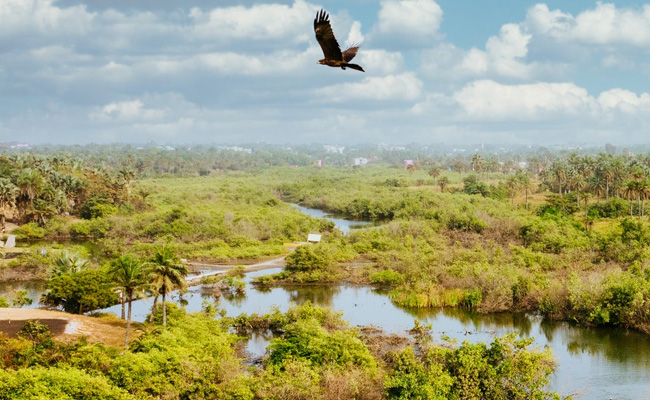
Sri Vijaypuram (Port Blair): The Tribal Council of Little and Great Nicobar has alleged fresh violations of the Forest Rights Act in the notification of three wildlife sanctuaries linked to the Centre’s ₹92,000-crore Great Nicobar Island project, even as the Calcutta High Court is set to hear petitions challenging the mega project over similar concerns next month.
The Union government had, in October 2022, notified three wildlife sanctuaries in parts of Little Nicobar Island, Menchal Island and Meroe Island for the conservation of leatherback turtles, megapodes and coral ecosystems. The move came after the government acknowledged that the proposed infrastructure project on Great Nicobar Island would affect coral colonies and nesting habitats of endangered species.
However, the tribal council has maintained that the sanctuaries were declared without consultation with the Nicobarese communities who traditionally inhabit and manage these islands.
In a letter dated April 23 addressed to the Assistant Conservator of Forests of the Nicobar Forest Division, the council reiterated its opposition to the sanctuaries and objected to the formation of a committee to determine eco-sensitive zones around the protected areas.
The council said its chairman had not been consulted before being included in the committee and was informed of his membership only a month after the committee was constituted.
The three notified sanctuaries include the Leatherback Turtle Sanctuary in parts of Little Nicobar Island, the Megapode Sanctuary covering the entire Menchal Island and the Coral Sanctuary spanning the whole of Meroe Island.
According to the council, Menchal and Meroe islands hold deep cultural and spiritual significance for the Nicobarese community, which believes the islands are inhabited by the spirits of their ancestors.
The council demanded that the sanctuary notifications be revoked and the eco-sensitive zone committee dissolved, alleging that both decisions were taken against the wishes of the indigenous community.
Meanwhile, Jairam Ramesh has written to Tribal Affairs Minister Jual Oram alleging violations of the Forest Rights Act in the process of obtaining consent for diversion of forest land for the Great Nicobar project.
Ramesh argued that consent should have been obtained through the Tribal Council representing the Nicobarese communities instead of through Gram Sabhas representing settler families. He also questioned how the government-controlled Andaman Adim Janjati Vikas Samiti could provide consent on behalf of the Shompen community, classified as a Particularly Vulnerable Tribal Group.
He urged the Tribal Affairs Ministry to intervene and seek withdrawal of clearances granted for the project under the Forest Rights Act.
Earlier, Ramesh had also written to Union Environment Minister Bhupender Yadav alleging that environmental impact studies for the project were conducted in haste and without the detailed seasonal assessments mandated under environmental laws.
The dispute dates back to 2022 when the Andaman and Nicobar administration initiated the process for notifying the three sanctuaries before holding Special Gram Sabhas for diversion of forest land linked to the Great Nicobar project.
In May that year, the administration invited objections and claims regarding the proposed sanctuaries. Subsequently, on July 19, the Nicobar Deputy Commissioner certified that no objections or claims had been received.
The tribal council later wrote to the district administration stating that the notification process was carried out without ensuring that residents of Little Nicobar Island were informed as required by law. It alleged that no public announcements seeking objections were made in villages such as Bahua, Muhincoihn and Kiyang, whose residents traditionally use and manage parts of the notified areas.
The council said the Nicobarese community had protected the islands and wildlife for generations through customary practices and traditional belief systems.
It further argued that the sanctuaries would interfere with long-standing rights over forests and coastal areas. They noted that these areas are used for rituals, plantations, collection of forest produce, construction of huts and canoes, harvesting medicinal plants and worship.
In November 2024, the council objected to draft Island Coastal Regulation Zone plans, demanding basic infrastructure, instead of proposed eco-tourism activities in the sanctuaries. The council demanded better public restrooms, jetties, water facilities, pathways, and mobile connectivity.
The Nicobar administration issued a clarification in May 2025, stating that the sanctuaries would not affect hunting rights available to Scheduled Tribes in the Nicobar Islands. The council, however, rejected the clarification, stating that their dependence on forests and coasts extended far beyond hunting activities.
Earlier this month, a Bench led by the Chief Justice of the Calcutta High Court dismissed preliminary objections raised by the Union government against petitions challenging the diversion of forest land for the Great Nicobar project. The matter has now been listed for final hearing in June.