Current UP govt not cleaning rivers but budget: Akhilesh Yadav

Lucknow (PTI): Samajwadi Party president Akhilesh Yadav on Wednesday accused the Uttar Pradesh government of prioritising corporate interests while paying lip service when it comes to projects to clean rivers.
Questioning the ruling BJP's "swadeshi" slogan, he claimed it was meant to mislead people. If the BJP is "swadeshi" at heart, why doesn't its government impose tariffs on China, which has captured a large share of the Indian market, Yadav posed.
"The government is selling us the swadeshi sentiment. Learn from America how they have imposed tariffs. You (India) should impose tariffs on China."
"The BJP speaks about 'Swadeshi' but is 'Videshi' at heart," the Samajwadi Party chief added.
Speaking to reporters at the party headquarters, Yadav said the BJP-led administration remembered river cleaning only when "it was time for them to go."
The government is not actually cleaning rivers but "cleaning the budget," the former chief minister said. "They plan how to spoil every good thing and how to loot."
Accusing the BJP dispensation of turning public initiatives into avenues for private gain, Yadav added the government was looting the lands and crops of farmers, while large business houses were given a free hand to build vast real-estate and land banks.
"The truth is that this government has never been honest with farmers, nor are its decisions fair to them," Yadav added.
Responding to a question about the possibility of continuing the alliance with the Congress in the Legislative Council teacher elections, the SP chief said, "This is a very personal election. Our alliance exists and will remain."
"We will strengthen this alliance further and work continuously on that path, Yadav said.
Asked about his plans for the Bihar Assembly elections, Yadav said, "Whoever invites us in Bihar, we will go. We have said that we, the socialists, and the people here, defeated the BJP in Awadh. Now it is the responsibility of the people of Bihar to help."
Taking aim at incidents of police encounters, he referred to Akhilesh Dubey, a lawyer accused in corruption cases in Kanpur, and said, "If encounters alone could improve law and order, why aren't they carrying out an encounter against Akhilesh Dubey?"
"The day the authorities realise their secrets are about to be exposed, Dubey will also be encountered. This government wants to scare people with encounters.
It doesn't want to improve law and order through these incidents, but rather wants to scare people into thinking that they are improving law and order," Yadav said.
The SP chief accused the state government of "politically exploiting" the police, saying, "If the police are used politically, who will look after law and order? This is the result of the state's law and order situation."
Let the Truth be known. If you read VB and like VB, please be a VB Supporter and Help us deliver the Truth to one and all.
Siddaramaiah, I will abide by Cong high command decision on leadership issue, says Shivakumar
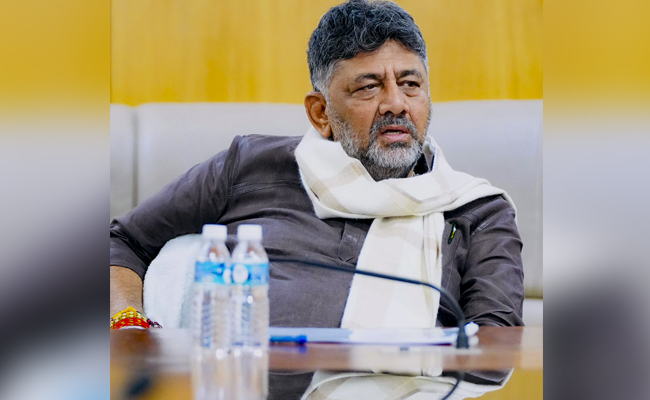
Bengaluru (PTI): Karnataka Deputy Chief Minister D K Shivakumar on Sunday said both he and Chief Minister Siddaramaiah will abide by any decision takeb by the Congress high command on the leadership issue in the state.
Speaking to reporters after returning from Delhi, the Congress state president said, he has full faith in the party leadership and that it would take an approapriate decision at the appropriate time.
The remarks comes amid speculations within the party and political circles about a possible leadership change and cabinet reshuffle after May 4, when the results for assembly elections in four states and one union territory, along with bypolls to two assembly segments in the Karnataka are announced.
"I will not speak about political issues before the media. I have already said that when the time comes you will get to know. So I will not tell you," Shivakumar said in response to a question on discussions with the Congress high command during his Delhi visit over the last couple of days.
He asserted that there are no issues within the party, and whatever has been already decided will take place accordingly.
Responding to a question on senior Minister Satish Jarkiholi's reported statement about internal differences, the Deputy CM said, "nothing like that, they (high command) will do what they have to do at the appropriate time."
"There are no issues, we have faith in our party, they will do what they have to," he added.
Asked about the issue of leadership change as the government is about to complete three years in office, Shivakumar said, "... I have never discussed this issue. The CM and I have both said that we will accept whatever and whenever the high command decides, and we will abide by it."
He declined to comment when asked whether any "good news" can be expected by his birthday on May 15.
The leadership tussle within the ruling party has intensified amid speculation about a possible change of chief minister after the Congress government completed the halfway mark of its five-year term on November 20, 2025. The speculation has been fuelled by the reported "power-sharing" arrangement between Siddaramaiah and Shivakumar at the time of government formation in 2023.
Responding to a question on the BJP's criticism against the Congress government over its decision on internal reservation for Scheduled Castes, alleging injustice to several communities and questioning its intent behind the revised quota formula, Shivakumar said the BJP could not do anything on internal reservation while in power, but the Congress has kept its promise.
"We have found a solution and tried to do justice to all sections among SCs. We have fulfilled the promise made and every one should go together," he said.
Shivakumar warned his party workers against erecting flex banners for his birthday on May 15.
"For May 15, I want to tell everyone that no one should put up flex banners or advertisements for my birthday. If flex are installed I will ensure that cases are registered by authorities against those responsible, whether they are party workers or followers....no one should put such things on roads, this is my personal request," he said, adding that he has asked commissioners of the city corporations to register cases and impose heavy fines.