CWC meeting: Cong begins deliberations on 2025 roadmap, vows to protect Gandhi's legacy
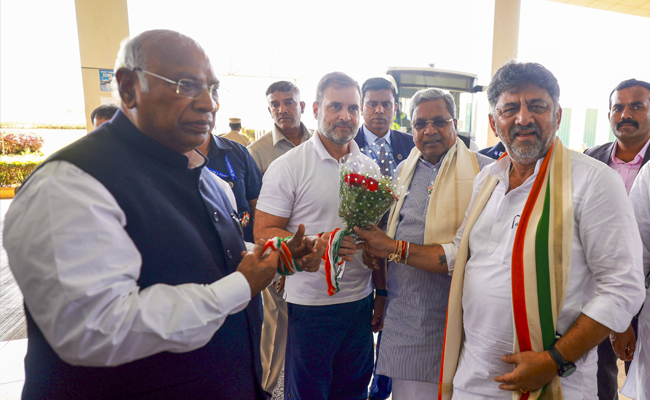
Belagavi (PTI): The Congress Working Committee (CWC) meeting named "Nav Satyagraha Baithak" began here on Thursday as the party marks the 100th anniversary of its Belgaum session that was presided over by Mahatma Gandhi and chalks out a plan for the political and electoral challenges in 2025.
Top Congress leaders, including party chief Mallikarjjun Kharge and former party chief Rahul Gandhi, marched to the venue of the extended CWC meeting here.
The meeting, steeped in historical contexts, began at the same venue where Mahatma Gandhi had assumed the presidency of the party 100 years ago.
Karnataka Chief Minister Siddaramaiah, Deputy Chief Minister D K Shivakumar, Congress general secretaries Jairam Ramesh and K C Venugopal, among others, are attending the "historic" meeting.
A controversy has erupted over the alleged misrepresentation of India's map on the posters displayed by the party to commemorate the centenary of the 1924 Congress session, with the Bharatiya Janata Party (BJP) dubbing it as "vote bank" politics.
The Congress has said the BJP is severely unnerved and peeved by events to celebrate 100 years of Mahatma Gandhi taking the reins of the grand old party and asked the ruling party at the Centre to stop making petty excuses.
Earlier, the Congress said it will re-dedicate itself to protect, preserve and promote Mahatma Gandhi's legacy, which is facing a "systematic assault by the ideological brotherhood that fought him bitterly".
In a bid to get battle-ready for the challenges ahead, the Congress will decide on an action plan for the next year at the CWC meeting.
The opposition party has asserted that the "insult" to B R Ambedkar by Home Minister Amit Shah will be taken up for deliberations at Belagavi and that there will be a "strong follow-up" on the issue.
In a post on X, party general secretary in-charge communications Ramesh said, "Mahatma Gandhi took over as President of @INCIndia on Dec 26th, 1924 -- 100 years ago at what was then called Belgaum, now Belgavi. It was a historic session."
"Today the Extended Working Committee is holding its Nava Satyagraha Baithak at that very same place. It will rededicate itself to protect, preserve, and promote Mahatma Gandhi's legacy -- which is under systematic assault by the ideological brotherhood that fought him bitterly, and that attacked the Constitution when it was adopted," he said.
In another post later, Ramesh said the 39th session of the Indian National Congress began 100 years ago on this day at Belagavi with the singing of Vande Mataram by a group of girls from the National School at Dharwad.
"An 11-year-old girl then sang the song Udayavagali Namma Cheluva Kannada Nadu (Rise, our lovely Kannada land). This song was specially prepared for the Congress and this occasion marked the first time it was used as the state anthem. This 11-year-old girl went on to become a legend of Hindustani classical music -- the melodiously incomparable Gangubai Hangal," Ramesh informed.
Earlier, All India Congress Committee (AICC) general secretary organisation Venugopal said the extended CWC meeting will discuss current political developments in the country and the BJP's alleged attack on the Constitution and its architect, Ambedkar.
After deliberating on several issues being faced by the country, the Congress will come out with "clear-cut" ideas to address those and counter the BJP's alleged attack on the Constitution, Venugopal said.
"Today marks the 100th anniversary of Mahatma Gandhi's presidency of the Indian National Congress. It is a proud moment for all Congressmen across the country to commemorate this occasion," he told reporters.
Addressing a press conference on Tuesday along with Venugopal and AICC media and publicity department head Pawan Khera, Ramesh said the extended CWC meeting has been named "Nav Satyagraha Baithak", which would see two resolutions being passed.
On December 27, a "Jai Bapu, Jai Bhim, Jai Samvidhan" rally will be held in Belagavi, Ramesh said.
About 200 leaders, including CWC members, permanent invitees, special invitees, the party's central election committee members, Pradesh Congress Committee members, CLP leaders of the state, parliamentary party office-bearers and former party chief ministers are attending the "historic session".
Let the Truth be known. If you read VB and like VB, please be a VB Supporter and Help us deliver the Truth to one and all.
Dakshina Kannada: Two girls drown while bathing near Kolyadakatta dam in Kadaba
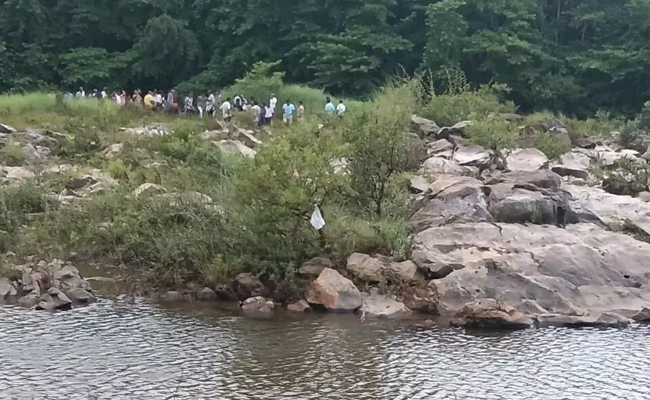
Mangaluru: Two girl students drowned while bathing near the Kolyadakatta dam area of the Gundya river on Friday evening here in the Kadaba Taluk of the district.
The deceased have been identified as Arpita (15) and Sunita (21), both residents of Vimalagiri in Kutrupadi village.
According to reports, five girl students had visited the river along with their friends as it was a holiday. While bathing in the river, the two students reportedly entered a deeper portion of the water without realising the depth and began drowning.
Those accompanying them tried to rescue the duo, but were unsuccessful, leading to the tragedy.
After receiving information about the incident, Kadaba Police Station personnel visited the spot and conducted an inspection. The bodies were later recovered with the help of local residents.