Cyclone Tej will not affect Gujarat, weather to remain dry for one week: official
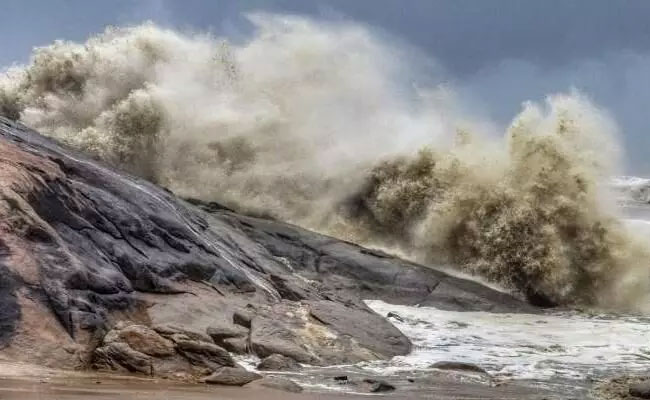
Ahmedabad (PTI): A cyclonic storm taking form in the southwest Arabian Sea will not have any impact on Gujarat, an official of the India Meteorological Department (IMD) said here on Friday.
A low-pressure area over the southeast and southwest Arabian Sea has developed into a depression and is expected to intensify into a cyclonic storm by October 21 morning, the IMD had said in a statement earlier.
According to the formula followed for naming cyclones in the Indian Ocean Region, it will be called 'Tej'.
It is predicted to intensify into a severe cyclonic storm on Sunday and move towards the south coasts of Oman and adjoining Yemen, according to the IMD.
Cyclones, however, change their course sometimes.
"It is expected to turn into a severe cyclonic storm by the evening of October 22 and move towards the south Oman and Yemen coast," said Manorama Mohanty, director of the Meteorological Centre in Ahmedabad.
"Since the cyclone would move towards west-northwest, it may not have any impact on Gujarat (which lies to the east). Weather in Gujarat will remain dry for the next seven days," she added.
The state's relief commissioner Alok Kumar Pandey said as of now there was no threat as the storm was heading towards Gujarat.
In June, cyclone Biparjoy which originated in the Arabian Sea ripped through Kutch and parts of Saurashtra in Gujarat, leaving a trail of destruction. It was initially heading westward but later changed direction and made landfall in Kutch.
Let the Truth be known. If you read VB and like VB, please be a VB Supporter and Help us deliver the Truth to one and all.
Vijayanagara: One dead, 12 injured as trucks hits their vehicle from behind on NH 50
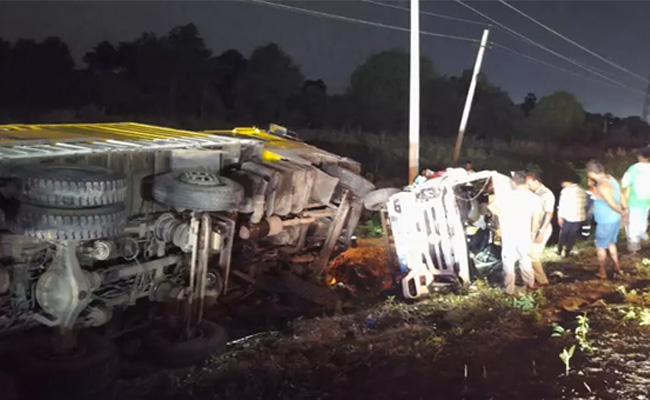
Vijayanagara: One man was killed and 12 others were injured after a truck hit vehicle they were traveling in on the National Highway 50 stretch on the outskirts of Koodligi in the district.
The accident victim, Madhu (27), is learned to have been an employee of Reliance Digital from Andhra Pradesh.
The vehicle was reportedly traveling from Bengaluru to Koodligi and the passengers are learned to have been seriously injured following the collision with the truck, which was found to have a Maharashtra registration.
Koodligi Deputy Superintendent of Police (DySP) Mallesh Dodmani and Circle Inspector Prahlad Channagiri arrived at the accident spot on being informed of the accident.
The police officers and locals rescued the injured passengers and got them shifted to the Koodligi Government Hospital. Some of the passengers were reportedly taken to the Ballari Trauma Care Centre for further treatment.
A case has been registered at the Koodligi Police Station and the officers are investigating the incident.