Data recovered from crashed Lion Air data recorder: official
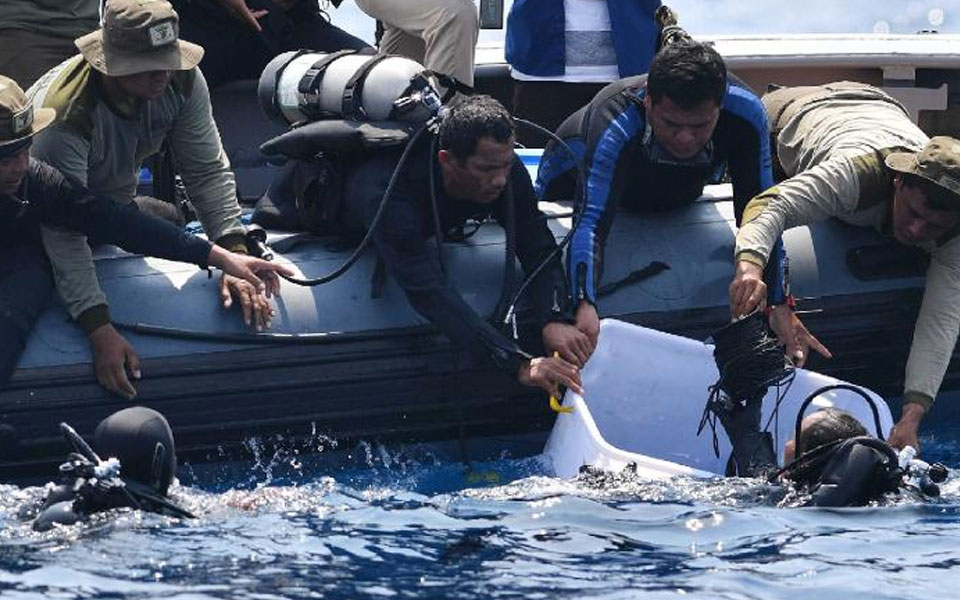
Jakarta (Indonesia), Nov 4 : Investigators succeeded in retrieving hours of data from a crashed Lion Air jet's flight recorder as Indonesian authorities on Sunday extended the search at sea for victims and debris.
National Transportation Safety Committee deputy chairman Haryo Satmiko told a news conference that 69 hours of flight data was downloaded from the recorder including its fatal flight.
The Boeing 737 MAX 8 jet crashed just minutes after takeoff from Jakarta on October 29, killing all 189 people on board in the country's worst airline disaster since 1997.
The flight data recorder was recovered by divers on Thursday in damaged condition and investigators said it required special handling to retrieve its information.
The cockpit voice recorder has not been recovered but searchers are focusing on a particular area based on a weak locator signal.
National Search and Rescue Agency chief Muhammad Syaugi said Sunday the search operation, now in its 7th day and involving hundreds of personnel and dozens of ships, would continue for another three days.
Syaugi paid tribute to a volunteer diver, Syahrul Anto, who died during the search effort on Friday. The family of the 48-year-old refused an autopsy and he was buried Saturday in Surabaya.
More than 100 body bags of human remains had been recovered. Syaugi said the number would continue to increase and remains were also now washing up on land.
He said weak signals, potentially from the cockpit voice recorder, were traced to a location but an object hadn't been found yet due to deep seabed mud.
Flight tracking websites show the plane had erratic speed and altitude during its 13 minute flight and a previous flight the day before from Bali to Jakarta.
Passengers on the Bali flight reported terrifying descents and in both cases the different cockpit crews requested to return to their departure airport shortly after takeoff.
Lion has claimed a technical problem was fixed after the Bali fight.
Syaugi said a considerable amount of aircraft "skin" was found on the seafloor but not a large intact part of its fuselage as he'd indicated was possible Saturday.
He and other top officials including the military chief plan to meet with families on Monday to explain the search operation.
The Lion Air crash is the worst airline disaster in Indonesia since 1997, when 234 people died on a Garuda flight near Medan. In December 2014, an AirAsia flight from Surabaya to Singapore plunged into the sea, killing all 162 on board.
Indonesian airlines were barred in 2007 from flying to Europe because of safety concerns, though several were allowed to resume services in the following decade.
The ban was completely lifted in June. The US lifted a decadelong ban in 2016. Lion Air is one of Indonesia's youngest airlines but has grown rapidly, flying to dozens of domestic and international destinations.
It has been expanding aggressively in Southeast Asia, a fast-growing region of more than 600 million people.
Let the Truth be known. If you read VB and like VB, please be a VB Supporter and Help us deliver the Truth to one and all.
CM Siddaramaiah alleges ‘criminal conspiracy’ in Sringeri recount, vows legal action
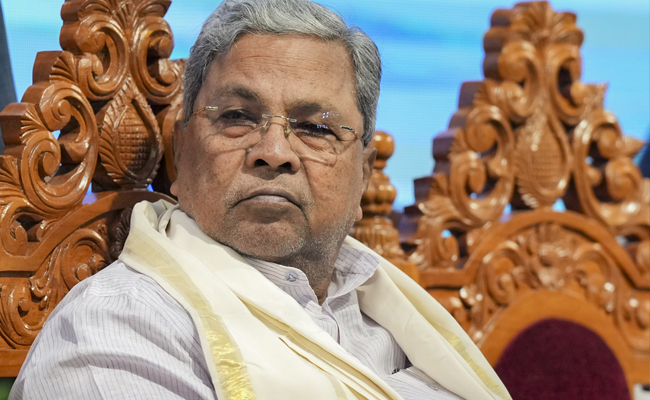
Bengaluru (PTI): Alleging a “criminal conspiracy” by BJP candidate D N Jeevaraj in the Sringeri Assembly poll recounting, Karnataka CM Siddaramaiah on Tuesday said the outcome was manipulated after valid postal ballot votes in favour of Congress leader T D Raje Gowda were tampered with during the recounting process.
Following a Karnataka High Court order on an election petition filed by Jeevaraj, challenging Raje Gowda’s election, the reverification and recounting were conducted on Saturday.
After the reverification and recount of postal ballots for the Sringeri Assembly constituency, votes polled in favour of Raje Gowda were reduced by 255, the returning officer said.
A report on the matter has been submitted to the Election Commission of India for further action, the officer added.
Congress leader Raje Gowda had won the 2023 Assembly polls from Sringeri by 201 votes, defeating his nearest rival Jeevaraj.
Addressing a press conference in Bengaluru, Siddaramaiah said the High Court had directed the recounting of postal ballots and that irregularities were noticed during the exercise conducted on May 2.
“This is a clear case of criminal conspiracy,” Siddaramaiah said, alleging that valid votes cast in favour of Raje Gowda were altered after being accepted by counting agents of all parties, including Congress, BJP, and JD(S).
He claimed that during the recounting of postal ballots, 255 votes were initially accepted as valid by all agents but were later tampered with by subordinate officials.
“There is a second mark on the votes polled in favour of Raje Gowda. They had accepted these as valid votes. Subsequently, another mark was made by officials. This is a clear case of criminal conspiracy,” he said.
When asked who was behind the alleged conspiracy, the CM replied, “It was hatched by Jeevaraj and others. It is planned.”
Siddaramaiah further alleged that the returning officer acted improperly by declaring the result despite the presence of an Election Commission observer during the recounting.
“Immediately after the counting, the returning officer announced the result. He should not have done so; this is against the law,” he said.
He pointed out that Raje Gowda had originally won by 201 votes, but after the recounting, the BJP candidate was declared the winner by 52 votes.
“The BJP has committed a criminal act of conspiracy. This is not vote chori but vote dacoity,” he alleged.
The CM said a police complaint had already been filed by Raje Gowda’s election agent, Sudhir Kumar, and emphasised the need for electoral integrity.
“We want transparency and free and fair elections. That is what our Constitution mandates,” he added.
Stating that the government would pursue legal remedies, Siddaramaiah said, “We are preparing an appeal challenging the returning officer’s announcement in a court of law.”
Responding to a separate query on elections in other states, the CM said there appeared to be an anti-incumbency factor in West Bengal, while results in Tamil Nadu were “surprising,” adding that Vijay’s party was emerging as the largest there.
Following the victory of party candidates in Bagalkote and Davanagere South, Siddaramaiah expressed confidence about future electoral prospects in Karnataka.
“Even in 2028, we will win the Assembly elections. We will come back,” the CM said.
Siddaramaiah added that he would order a forensic examination into the alleged tampering of postal ballots.