DCGI grants EUA to Corbevax for those aged 5-12, Covaxin for 6-12 age group

New Delhi(PTI): India's drug regulator has granted emergency use authorisation for Biological E's COVID-19 vaccine Corbevax for those aged five to 12 years and Bharat Biotech's Covaxin for children in the age group of six to 12 years, Union Health Minister Mansukh Mandaviya said on Tuesday.
The Drugs Controller General of India (DCGI) has also granted emergency use authorisation (EUA) to Cadila for its ZyCoV-D for an additional dose of 3mg with a two-jab inoculation schedule 28 days apart for those aged above 12 years.
ZyCoV-D is, currently, approved for a 2mg three-dose vaccination schedule.
The approval by the Drugs Controller General of India (DCGI) comes following recommendations by the Subject Expert Committee (SEC) on COVID-19 of the Central Drugs Standard Control Organisation(CDSCO).
The SEC had last week reviewed the application of Biological E and Bharat Biotech seeking emergency use authorisation for Corbevax and Covaxin for use in children of five to 12 years and six to 12 years age group, respectively. It also reviewed Cadila's application.
Biological E's Corbevax is being used to inoculate children against COVID-19 in the age group of 12 to 14 years. Covaxin has been granted Emergency Use Listing (EUL) by the DCGI for the age group of 12 to 18 years on December 24, 2021.
India began inoculating children aged 12-14 on March 16.
The countrywide vaccination drive was rolled out on January 16 last year with healthcare workers getting inoculated in the first phase. Vaccination of frontline workers started from February 2 last year.
The next phase of COVID-19 vaccination commenced on March 1 last year for people over 60 years of age and those aged 45 and above with specified co-morbid conditions.
India launched vaccination for all people aged more than 45 years from April 1 last year. The government then decided to expand its vaccination drive by allowing everyone above 18 years of age to be inoculated against the viral disease from May 1 last year.
The next phase of vaccination commenced on January 3 for adolescents in the age group of 15-18 years.
India began administering precaution doses of vaccines to healthcare and frontline workers and those aged 60 and above with comorbidities from January 10.
Precaution doses of COVID-19 vaccines to all aged above 18 years were allowed at private vaccination centres from April 10.
Let the Truth be known. If you read VB and like VB, please be a VB Supporter and Help us deliver the Truth to one and all.
Congress using hijab issue to pacify minority anger, alleges Karnataka LoP R Ashoka
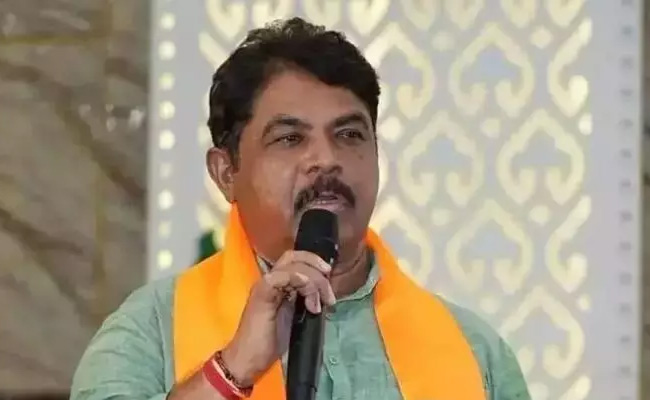
Bengaluru: Leader of Opposition in the Assembly R. Ashoka has accused the Congress government of using the hijab issue to placate what he described as discontent among minority voters after the Davanagere by-election.
In a post on X on Wednesday, Ashoka alleged that the state government, instead of addressing issues such as price rise, corruption, farmers’ distress and law and order, was attempting to retain its minority vote base by reviving the hijab issue.
Referring to the 2022 dress code introduced by the BJP government, which prohibited hijab in schools and colleges, Ashoka said the Karnataka High Court had upheld the policy and emphasised the importance of discipline in educational institutions.
He questioned the Congress government’s move to revisit the issue and asked whether setting aside the court-backed policy to benefit one community could be described as secularism.
Ashoka further alleged that while the government was willing to permit hijab, it continued to prohibit saffron shawls.
He accused the government of dividing students on religious lines rather than treating schools and colleges as spaces of equality.
Drawing a comparison with Mamata Banerjee’s government in West Bengal, Ashoka claimed that excessive appeasement politics had harmed the state and warned that the Congress in Karnataka could face a similar political response.
He said voters in Karnataka would teach the Congress a lesson for what he termed “vote-bank politics” and for compromising constitutional and judicial principles.