DCGI grants restricted EUA for Covid jab Corbevax for 12-18 yrs age group

New Delhi, Feb 21: The Drugs Controller General of India has granted restricted emergency use authorisation (EUA) to Biological E's COVID-19 vaccine Corbevax for the 12 to 18 years age group, subject to certain conditions, official sources said on Monday.
However, the government has not taken a decision yet on vaccinating those aged below 15 years.
This is the third vaccine to have received EUA from the Drugs Controller General of India (DCGI) for the age group of 12-18 years after Zydus Cadila's ZyCoV-D and Bharat Biotech's Covaxin.
At present, India is using Covaxin to vaccinate adolescents in the 15 to 18 years age group
The health ministry recently had said additional need for vaccination and inclusion of population for vaccination is examined constantly.
The DCGI's approval comes after the Subject Expert Committee on COVID-19 of the CDSCO on February 14 recommended granting restricted EUA to Corbevax for the 12 to 18 years age group after deliberating on Biological E's application.
The DCGI had approved Corbevax, which is India's first indigenously developed RBD protein sub-unit vaccine against COVID-19, for restricted use in emergency situations in adults on December 28. It has not been included in the country's vaccination drive.
"The DCGI on Monday granted restricted EUA to Corbevax for the 12 to less than 18 years age group subject to certain conditions," an official source said.
Health Minister Mansukh Mandaviya tweeted, "The @CDSCO_INDIA_INF has granted emergency use authorisation to COVID-19 vaccine #CORBEVAX for 12-18 year age group.
It is India's 1st indigenously developed Receptor Binding Domain Protein sub-unit vaccine against COVID-19.This will further strengthen our fight against COVID19."
In an application sent to the DCGI on February 9, Srinivas Kosaraju, the head of quality and regulatory affairs at Biological E Limited, had said the firm had received approval for conducting phase 2/3 clinical study of Corbevax among children and adolescents aged 5-18 years in September.
"Based on the no-objection certificate, Biological E has initiated the clinical study in October 2021 and has evaluated the available safety and immunogenicity results of the ongoing phase 2/3 study, which indicated that the vaccine is safe and immunogenic.
"The proposed application is for obtaining permission for restricted use in an emergency situation in adolescents aged 12 to less than 18 years based on interim results (of the ongoing phase 2/3 clinical study) considering the current pandemic and widespread of COVID-19 vaccine in India," Kosaraju had said in the application.
The Corbevax vaccine is administered through the intramuscular route with two doses scheduled 28 days apart and is stored at two to eight degrees Celsius temperatures and presented as 0.5 ml (single dose) and 5 ml (10 doses) vial pack.
According to the health ministry, the company has conducted phase 1/2 and 2/3 clinical trials of its COVID-19 vaccine in the country.
Further, it has conducted a phase 3 active comparator clinical trial to evaluate superiority against Covishield vaccine, it said.
The @CDSCO_INDIA_INF has granted emergency use authorisation to COVID-19 vaccine #CORBEVAX for 12-18 year age group.
— Dr Mansukh Mandaviya (@mansukhmandviya) February 21, 2022
It is 🇮🇳's 1st indigenously developed Receptor Binding Domain Protein sub-unit vaccine against COVID-19.
This will further strengthen our fight against #COVID19.
Let the Truth be known. If you read VB and like VB, please be a VB Supporter and Help us deliver the Truth to one and all.
Congress using hijab issue to pacify minority anger, alleges Karnataka LoP R Ashoka
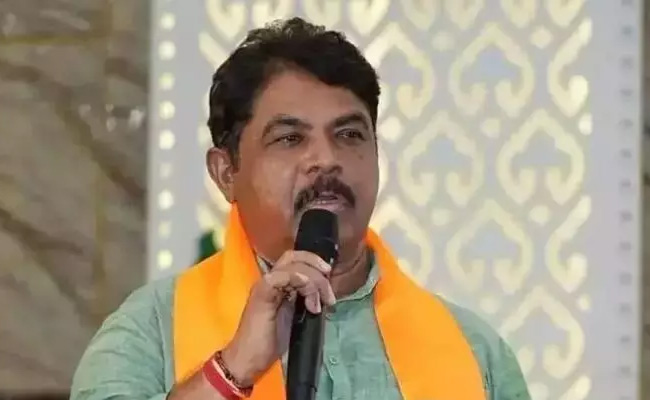
Bengaluru: Leader of Opposition in the Assembly R. Ashoka has accused the Congress government of using the hijab issue to placate what he described as discontent among minority voters after the Davanagere by-election.
In a post on X on Wednesday, Ashoka alleged that the state government, instead of addressing issues such as price rise, corruption, farmers’ distress and law and order, was attempting to retain its minority vote base by reviving the hijab issue.
Referring to the 2022 dress code introduced by the BJP government, which prohibited hijab in schools and colleges, Ashoka said the Karnataka High Court had upheld the policy and emphasised the importance of discipline in educational institutions.
He questioned the Congress government’s move to revisit the issue and asked whether setting aside the court-backed policy to benefit one community could be described as secularism.
Ashoka further alleged that while the government was willing to permit hijab, it continued to prohibit saffron shawls.
He accused the government of dividing students on religious lines rather than treating schools and colleges as spaces of equality.
Drawing a comparison with Mamata Banerjee’s government in West Bengal, Ashoka claimed that excessive appeasement politics had harmed the state and warned that the Congress in Karnataka could face a similar political response.
He said voters in Karnataka would teach the Congress a lesson for what he termed “vote-bank politics” and for compromising constitutional and judicial principles.