De-escalation of Russia-Ukraine tensions immediate priority: India at UN
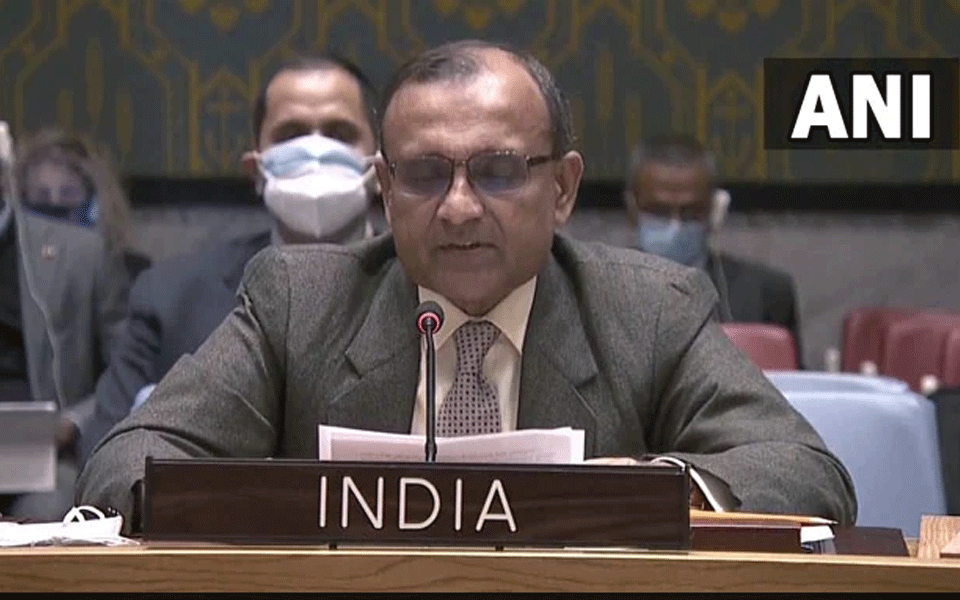
United Nations(PTI): Voicing "deep concern" over the escalation of tension along the Russia-Ukraine border, India has told the UN Security Council that the immediate priority is de-escalation of tensions, taking into account the "legitimate" security interests of all countries.
Russian President Vladimir Putin on Monday signed decrees to recognise Ukraine's regions of Donetsk and Luhansk People's Republics as independent , escalating the tension in the region and increasing fears of Moscow's invasion of Ukraine. Putin has also ordered troops into eastern Ukraine in what the Kremlin called a "peacekeeping" mission.
Addressing an emergency meeting of the UN Security Council on Monday night, India's Permanent Representative to the UN Ambassador T S Tirumurti said, We have been closely following the evolving developments relating to Ukraine, including developments along the eastern border of Ukraine and the related announcement by the Russian Federation.
"The escalation of tension along the border of Ukraine with the Russian Federation is a matter of deep concern. These developments have the potential to undermine peace and security of the region, he said at an emergency UNSC meeting held at the request of Ukraine.
"The immediate priority is de-escalation of tensions taking into account the legitimate security interests of all countries and aimed towards securing long term peace and stability in the region and beyond, Tirumurti said, urging for restraint on all sides.
UN Secretary-General Antonio Guterres on Monday voiced great concern over Russia's decision, saying it is a violation" of the territorial integrity and sovereignty of Ukraine and inconsistent with the principles of the Charter of the United Nations.
He urged all relevant actors to focus their efforts on ensuring an immediate cessation of hostilities, protection of civilians and civilian infrastructure, preventing any actions and statements that may further escalate the dangerous situation in and around Ukraine and prioritising diplomacy to address all issues peacefully, a statement issued by the spokesperson of the UN chief said.
Russia's move was strongly condemned by the US, which said that the decision represents a complete rejection" of Moscow's commitments under the Minsk agreements, directly contradicts Russia's claimed commitment to diplomacy, and is a clear attack on Ukraine's sovereignty and territorial integrity.
US President Joe Biden on Monday signed an executive order blocking trade and investment in parts of Ukraine that have been recognised as independent by his Russian counterpart Vladimir Putin.
The White House, which described the Russian actions as blatant violation of Moscow's international commitments, said that economic sanctions are in the pipeline.
The European Union too said it would slap sanctions on Russia for recognising Ukraine's breakaway regions.
Russia's move comes a day after President Biden accepted "in principle" a meeting with President Vladimir Putin provided Russia does not invade Ukraine.
However, the Kremlin on Monday said it would be premature to talk about the organisation of any such meeting at the moment.
Let the Truth be known. If you read VB and like VB, please be a VB Supporter and Help us deliver the Truth to one and all.
Congress using hijab issue to pacify minority anger, alleges Karnataka LoP R Ashoka
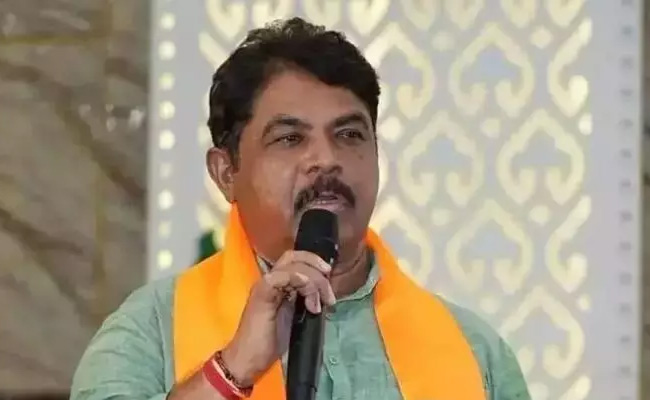
Bengaluru: Leader of Opposition in the Assembly R. Ashoka has accused the Congress government of using the hijab issue to placate what he described as discontent among minority voters after the Davanagere by-election.
In a post on X on Wednesday, Ashoka alleged that the state government, instead of addressing issues such as price rise, corruption, farmers’ distress and law and order, was attempting to retain its minority vote base by reviving the hijab issue.
Referring to the 2022 dress code introduced by the BJP government, which prohibited hijab in schools and colleges, Ashoka said the Karnataka High Court had upheld the policy and emphasised the importance of discipline in educational institutions.
He questioned the Congress government’s move to revisit the issue and asked whether setting aside the court-backed policy to benefit one community could be described as secularism.
Ashoka further alleged that while the government was willing to permit hijab, it continued to prohibit saffron shawls.
He accused the government of dividing students on religious lines rather than treating schools and colleges as spaces of equality.
Drawing a comparison with Mamata Banerjee’s government in West Bengal, Ashoka claimed that excessive appeasement politics had harmed the state and warned that the Congress in Karnataka could face a similar political response.
He said voters in Karnataka would teach the Congress a lesson for what he termed “vote-bank politics” and for compromising constitutional and judicial principles.