Dead heat in Jharkhand, BJP facing massive resentment: CVoter Poll
Vartha Bharati | 27-11-2019 | 22:09:00 IST
After the setback in Maharashtra, the BJP appears to be heading for another sub-par electoral performance in the upcoming Assembly elections in Jharkhand. According to CVoter tracker, the ruling BJP may fall well short of a majority in the state.
The survey predicts an extremely close contest between the BJP and the alliance forged by the Jharkhand Mukti Morcha, Congress, and Rashtriya Janata Dal.
According to CVoter’s tracker in November, the BJP can win around 33 seats out of 81 in Jharkhand, not far behind is the JMM-Congress alliance at a projected tally of 30 seats.
The CVoter survey predicts that Babulal Marandi’s Jharkhand Vikas Morcha (Prajatantrik) and All Jharkhand Students’ Union can play kingmakers, with a projected tally of six seats each.
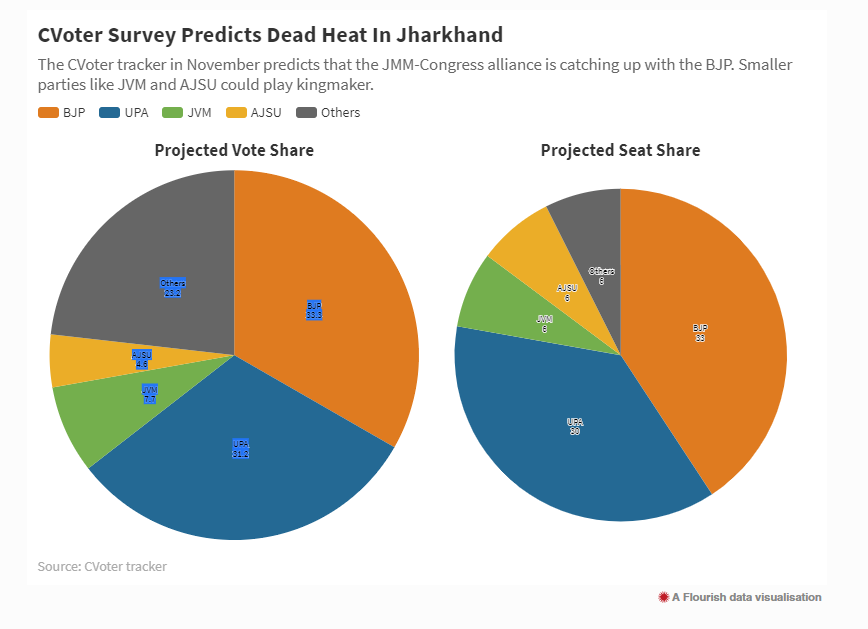
In terms of vote share, the survey projects 33.3 percent for BJP and 31.2 percent for the UPA. The JVM appears to be emerging as a major spoiler, with a projected vote share of 7.7 percent. The AJSU is expected to get 4.6 percent of the votes.
In the Lok Sabha elections, JVM was an ally of the UPA and AJSU was with the BJP.
Another key takeaway from the survey is that there appears to be a massive anti-incumbency sentiment against the ruling BJP government led by Chief Minsiter Raghubar Das.
According to the tracker’s data from November, a little over 60 percent respondents said that they want to change the chief minister immediately.
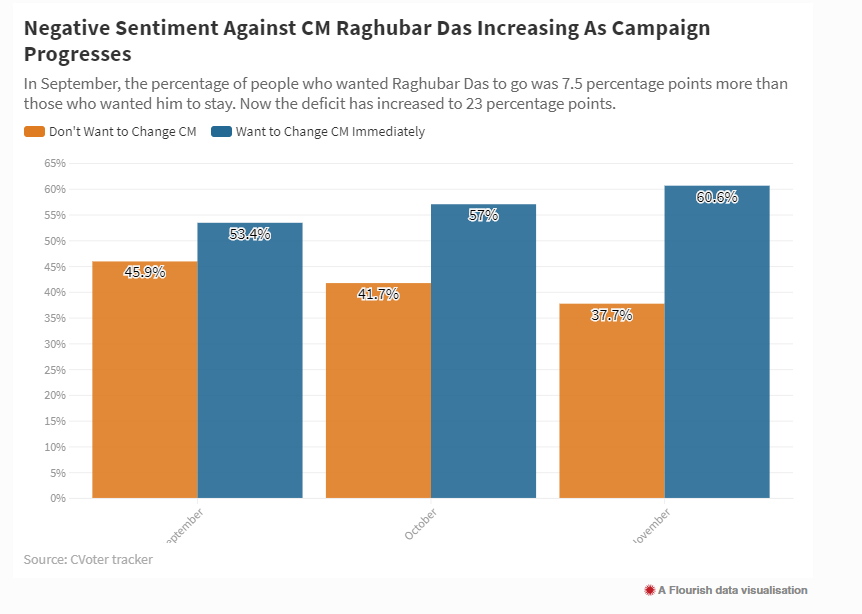
What is interesting is that the resentment against the CM has increased as the campaign has progressed.
In September, 45.9 percent respondents said that they wanted Das to continue against 53.4 percent who wanted him replaced, a difference of 7.5 percentage points.
This gap increased to nearly 23 percentage points by November.
Then, 26 percent of the respondents directly blamed the state government for their problems. 11.2 percent blamed the chief minister, 6.5 percent blamed the Centre and 4.5 percent blamed the prime minister for their woes. All these would directly go against the BJP.
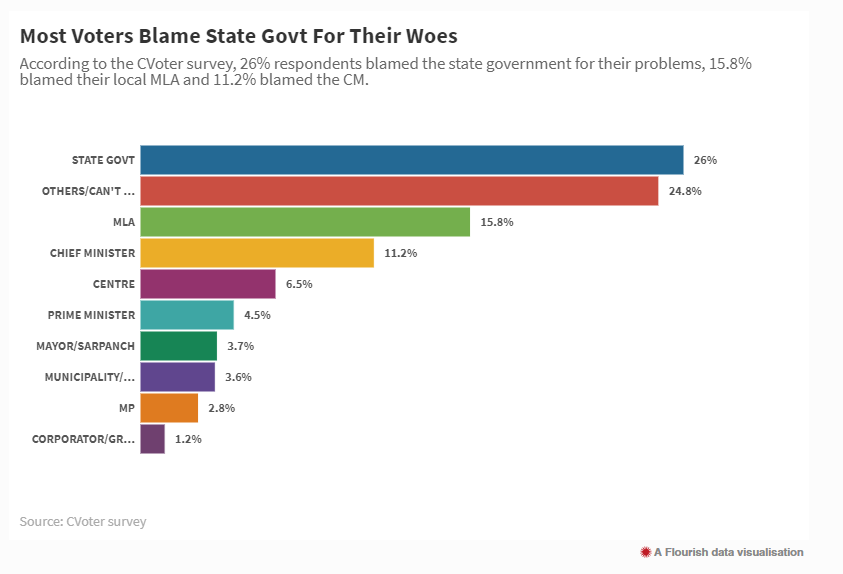
15.8 percent blamed their local MLA, which would harm BJP more than other parties given its strength in the Assembly.
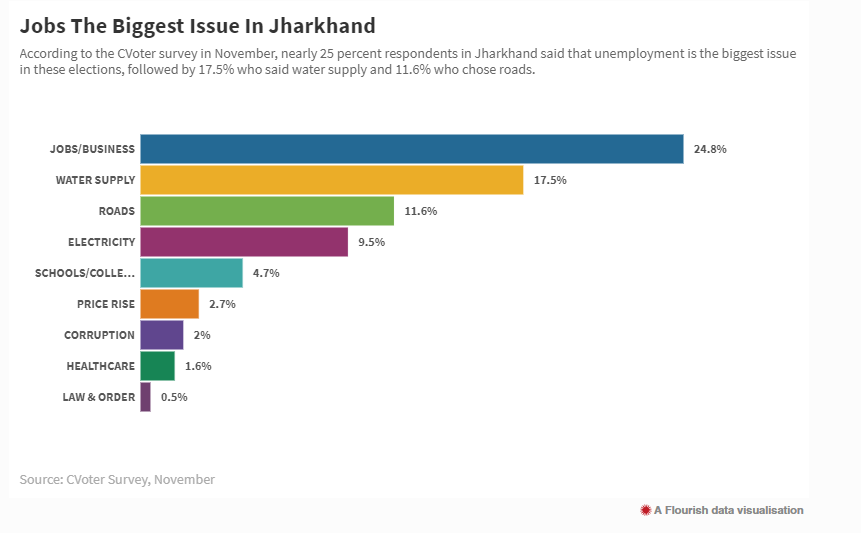
Nearly 25 percent respondents said that unemployment and the state of businesses are the main issues for them these elections, followed by 17.5 percent who picked water supply. Roads and electricity have also emerged as key issues, indicating a negative perception of governance in the state.
Let the Truth be known. If you read VB and like VB, please be a VB Supporter and Help us deliver the Truth to one and all.
AIITA welcomes Karnataka’s ban on obscene songs in school events
30-04-2026 ¦
30-04-2026 IST
Bhatkal: The Karnataka unit of the All India Ideal Teachers Association (AIITA) has welcomed the Karnataka government’s decision to strictly ban school children from dancing to obscene songs during educational and cultural programmes in government, aided, and private schools across the state.
AIITA Karnataka State President M. R. Manvi congratulated the government for taking what he termed an important step to preserve the sanctity of education.
“Such decisions to safeguard the dignity of school children and uphold the values of education are the need of the hour. This rule should not be limited to government schools alone but must be strictly implemented in all private educational institutions as well,” he said.
He further urged the government to address other concerns within school programmes.
“The government should not only prohibit obscene dances in the name of school anniversaries, but also ensure that plays and dialogues that incite religious hatred are avoided. Schools should be centres of harmony, not platforms for spreading hatred,” he added.
According to a recent circular issued by the Department of School Education and Literacy, obscene dances are adversely affecting the mental health and moral values of students.
In this regard, schools have been advised to use songs that promote nationalism, positive thinking, the greatness of Kannada culture, and value-based traditions instead of inappropriate content during programmes.
The circular also emphasises that students should be dressed in decent attire.
AIITA also backed the department’s warning that disciplinary action would be taken against head teachers if such guidelines are violated. The association has further demanded that district Deputy Directors of Public Instruction strictly monitor the implementation of these rules.