Death toll in Uttarakhand-UP hooch tragedy rises to 70
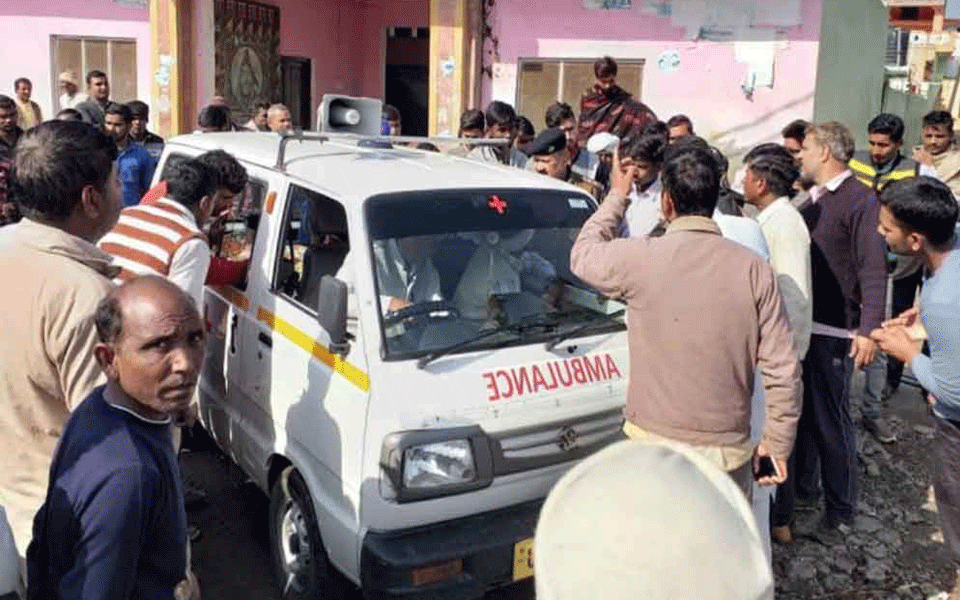
Haridwar/Saharanpur: The death toll in the hooch tragedy that hit two adjoining districts in Uttarakhand and Uttar Pradesh has risen to 70 with more people dying of the spurious liquor they drank at a Haridwar village, officials said Saturday.
The viscera examination on 11 more bodies is yet to be conducted to find out if these too were alcohol-related deaths.
Twenty-four of the victims died in Balupur and its neighbouring villages in Uttarakhand's Haridwar district, state's Additional Director General (Law and Order) Ashok Kumar said.
At least 46 others, who had come home to the adjoining Saharanpur district in Uttar Pradesh after drinking the spurious liquor in Balupur on Thursday night, are also dead.
Uttar Pradesh officials said 35 of the Saharanpur deaths took place in the district itself. Eleven other victims, who were referred from Saharanpur for medical treatment in Meerut, died at a hospital there.
In Uttarakhand, about 20 more people are still under treatment.
Most of the victims had consumed the liquor Thursday evening after the `tehravin', the 13th day of mourning ritual, following a relative's death in Balupur, officials said.
Uttar Pradesh police, however, added that a Saharanpur district resident may have brought 30 pouches of the same liquor from Uttarakhand for sale back home.
This may have led to more casualties, official said, but the investigation into this is still on.
Both states have suspended administrative and police officials for alleged negligence and ordered probes.
They have also announced ex-gratia compensation of Rs 2 lakh each for the families of those killed.
Earlier, Saharanpur district magistrate Alok Pandey said people from Nangal and adjoining villages in his district had started falling ill when they returned home from Balupur on Thursday night.
Many of the Saharanpur victims were not immediately admitted to hospital as the area was hit by rain and a hailstorm, he said.
Up to late Friday night, 16 people had died in Haridwar and 18 more in Saharanpur. By Saturday afternoon, the combined death too had risen to 70.
In an unrelated incident, nine people have died over the week in eastern Uttar Pradesh's Kushinagar district, allegedly after drinking spurious liquor.
Chief Minister Yogi Adityanath has ordered departmental action against district excise officers of Kushinagar and Saharanpur, the state government said.
In Uttarakhand, 13 excise department personnel and four policemen have been placed under suspension. Ten policemen were suspended Friday in Uttar Pradesh.
Both states announced drives to curb the sale spurious liquor.
Let the Truth be known. If you read VB and like VB, please be a VB Supporter and Help us deliver the Truth to one and all.
Man arrested with Rs 2.54-crore heroin in Mumbai

Mumbai (PTI): Police have arrested a man and seized over 500 grams of heroin worth Rs 2.54 crore in the illicit market from him in Mumbai, officials said on Friday.
The police's Anti-Narcotics Cell (ANC) made the drug seizure in Santacruz in the western suburbs. The operation was conducted by the Kandivali unit of the ANC on Thursday as part of a special crackdown against drug trafficking in the area, they said.
Acting on specific inputs, an ANC team conducted a raid in Santacruz (East) and intercepted a man. During a search, the team recovered 508 grams of high-grade heroin from his possession, an official said.
The seized contraband, a highly addictive, opioid drug derived from morphine, is estimated to be worth Rs 2.54 crore in the international market, he informed.
Following the seizure, a case was registered against the man under relevant sections of the Narcotic Drugs and Psychotropic Substances (NDPS) Act, 1985, and he was formally placed under arrest in the early hours of Friday.
The police are currently investigating the source of the drug and trying to identify the intended recipients of the consignment, he said.