Declare cow as Gujarat's 'Rajya Mata': Congress leader in assembly
Gandhinagar, Mar 28 (PTI): The Congress on Friday asked the BJP government in Gujarat to bring a bill to recognise the cow as "Rajya Mata" or state mother to ensure that the "holy" animal is protected.
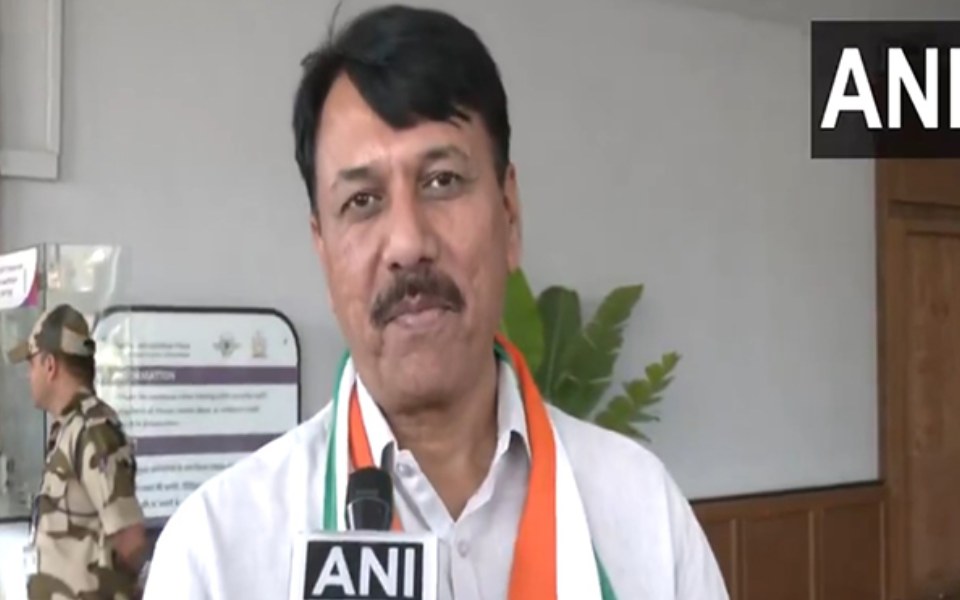
Congress Legislative Party leader Amit Chavda made the demand during a discussion in the state assembly on a bill introduced by the government for the regulation of bovine breeding.
Before Chavda, BJP MLA D K Swami said the cow is considered a mother in Hindu culture.
He went on to say that Speaker Shankar Chaudhary and deputy Speaker Jethabhai Bharwad do not need reading glasses because they drink cow milk regularly.
"Our Speaker and deputy Speaker do not have glasses because they consume cow milk. We believe in cows, not buffalos. Though we also need buffalos, that is a separate issue. The holy cow is our mother. It is a symbol of Earth," said Swami, supporting the Gujarat Bovine Breeding (Regulation) Bill.
Agriculture minister Raghavji Patel, who introduced the bill, recovered from health problems recently due to the "blessings of cow", said the BJP MLA.
Congress's Amit Chavda claimed that cows were suffering in Gujarat because large tracts of `gauchar' or grazing land were given away to industrialist.
"In Hindu culture, the cow is considered a mother. That is why we pray to the cow on auspicious occasions. But cows are now suffering because the government gave away nearly 103 crore square meters of land used as gauchar (grazing land) to industrial houses through sale or lease," the opposition leader alleged.
As per the figures shared by the state government in the assembly, nearly 2,800 villages do not have designated grazing land, Chavda said.
"We all should be worried about the situation of cows in these villages. After the loss of gauchar land, our cows have no other option than to eat plastic and other waste on the city roads," he added.
Though the state government has framed laws against cow slaughter, it is also earning revenue from the export of meat otherwise, the Congress leader further said.
The government should also give more grants to cow shelters, he added.
"I urge the state government to bring a bill to declare cow our 'Rajya Mata' (state mother). We have already submitted a private member's Bill to the Speaker regarding the same. But I demand that the government bring a bill....That will ensure that cows get proper food, shelter and treatment," he said.
The bill was passed unanimously.
On the last day of the Budget session, two other Bills -- The Gujarat Land Revenue (Amendment) Bill and The Gujarat Fisheries (Amendment) Bill -- were also passed unanimously.
Let the Truth be known. If you read VB and like VB, please be a VB Supporter and Help us deliver the Truth to one and all.
SC refuses to adjourn hearing on pleas against EC law, says this matter is more important
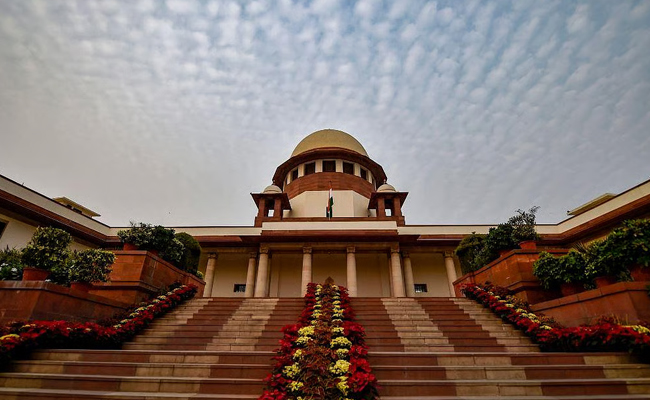
New Delhi (PTI): The Supreme Court on Wednesday refused to accede to the Centre's request to adjourn the hearing on pleas challenging the constitutional validity of a 2023 law that removed the CJI from a committee responsible for appointing the chief election commissioner and the deputies, saying the matter is "more important" than the Sabarimala case.
A nine-judge constitution bench headed by Chief Justice Surya Kant is currently hearing petitions regarding discrimination against women at religious sites, including the Sabarimala temple in Kerala, as well as the scope of religious freedom across various faiths.
A bench comprising justices Dipankar Datta and Satish Chandra Sharma turned down the request by Solicitor General Tushar Mehta, appearing for the Centre, to adjourn the hearing on the ground that he was currently occupied before a nine-judge bench in the Sabarimala reference case.
Referring to the gravity of the current challenge to the Chief Election Commissioner and Other Election Commissioners (Appointment, Conditions of Service and Term of Office) Act, 2023, Justice Datta said, "This matter is more important than any other matter."
"Let your (solicitor general's) associates take notes today. Let the petitioners start. All matters are important. We read in the newspapers that there is an observation that the PIL in Sabarimala should not have been entertained by the court. So, with due respect to the judges, nine judges are occupied in a matter where there is an observation that it should not have been entertained in the first place," Justice Datta said.
ALSO READ: Girl mauled to death by stray dogs in Punjab's Hoshiarpur
The bench then directed the petitioners to conclude their arguments by Thursday, allowing the Centre to present its submissions on a subsequent date. The bench then proceeded with the hearing which is underway.
Earlier on March 20, CJI Surya Kant recused himself from hearing the petitions. "I will be accused of conflict of interest. There is a conflict of interest," the CJI had said. The law, enacted by Parliament in December 2023, came months after a landmark verdict by which the apex court directed that election commissioners be appointed by a committee comprising the prime minister, the leader of the Opposition, and the chief justice of India.
The bench had said that the system will remain in force till a law is enacted.
Under the 2023 Act, the selection committee consists of the prime minister, a Union minister nominated by the prime minister and the leader of Opposition (or leader of the largest opposition party in the Lok Sabha).
The PILs said the exclusion of the CJI from the panel undermines the independence of the appointment process.
The law has been challenged by multiple petitioners, including Congress leader Jaya Thakur and the Association for Democratic Reforms.
Earlier, the Centre defended in the Supreme Court the appointment of two new election commissioners under the 2023 law that excludes the chief justice of India from the selection committee, saying the independence of the Election Commission does not arise from the presence of a judicial member on the committee.
In an affidavit filed in the apex court, the Union law ministry rejected the petitioner's claim that the two election commissioners were hastily appointed on March 14, 2024, to "pre-empt" the orders of the top court the next day, when the matters challenging the 2023 law were listed for hearing on interim relief.
The apex court also refused to stay the appointment of new election commissioners under the 2023 law.
A five-judge constitution bench had in March 2023 ruled that the chief election commissioner and election commissioners shall be appointed on the advice of a committee comprising the prime minister, the leader of the Opposition in the Lok Sabha and the chief justice of India.