Deep depression develops into Cyclone Yaas
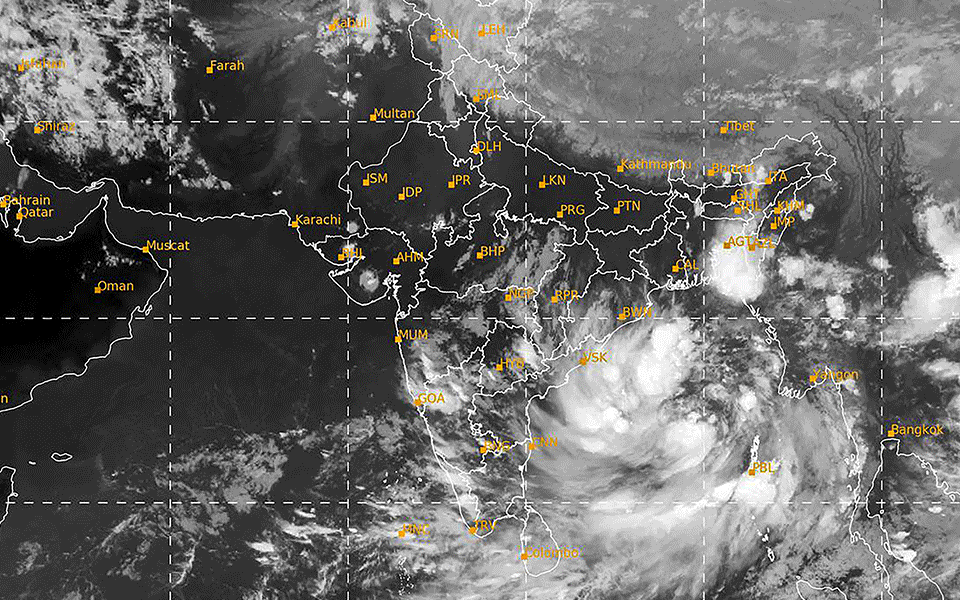
New Delhi: The deep depression over the Bay of Bengal intensified into Cyclone Yaas in the early hours of Monday and it is likely to intensify into a severe cyclonic storm in the next 24 hours, the India Meteorological Department said.
The cyclone is very likely to cross north Odisha-West Bengal coasts between Paradip and Sagar Island around May 26 noon as a 'very severe cyclonic storm'. It is expected to bring in winds of 155 to 165 kilometres per hour, gusting up to 180 kmph.
"It (Cyclone Yaas) is very likely to move slowly north-northwestwards, intensify further into a Severe Cyclonic Storm during next 24 hours and into a Very Severe Cyclonic Storm during subsequent 24 hours," the Cyclone Warning Division of the IMD said.
The West Bengal and Odisha governments have been bracing to deal with the impact of the cyclone.
On Sunday, Prime Minister Narendra Modi chaired a high-level meeting to review the preparedness of the state and central agencies to deal with the situation, and called for a timely evacuation of those involved in offshore activities.
The armed forces are also on alert, with the Navy putting four warships and a number of aircraft on standby.
The Air Force has kept 11 transport aircraft and 25 helicopters ready to carry out humanitarian assistance and disaster relief operations, officials said.
National Disaster Response Force chief S N Pradhan has urged authorities in the two states to adopt an "over-preparing" approach for the impending natural disaster, and carry out evacuation even in the least vulnerable places. PTI
Let the Truth be known. If you read VB and like VB, please be a VB Supporter and Help us deliver the Truth to one and all.
Sujit Nair raises concerns over speculation of DMK-AIADMK understanding to block TVK
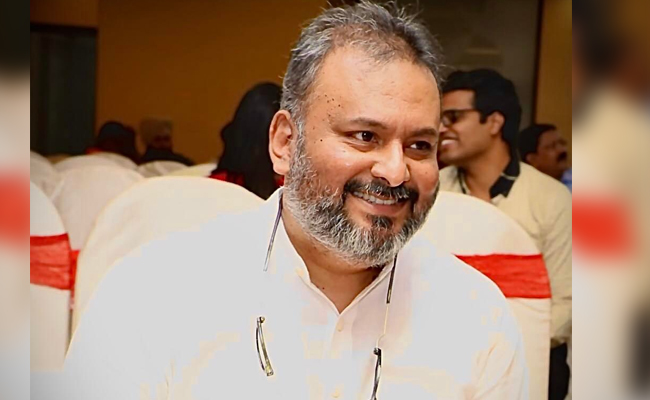
Chennai: Journalist and political commentator Sujit Nair has expressed concern over speculation that the Dravida Munnetra Kazhagam and the All India Anna Dravida Munnetra Kazhagam could explore a post-poll understanding to prevent Vijay-led Tamilaga Vettri Kazhagam from forming the government in Tamil Nadu.
In a social media post, Sujit Nair said the election verdict in Tamil Nadu reflected a clear public demand for political change and argued that the mandate should be respected irrespective of political preferences.
Referring to reports and political discussions surrounding a possible understanding between the DMK and AIADMK, he said he hoped such developments remained only speculative conversations and did not turn into reality.
Nair stated that if such an alliance were to take shape, it would raise serious questions about ideological politics in the country. He said TVK had emerged through a democratic electoral process and that the legitimacy to govern in a parliamentary democracy comes from the people’s verdict.
According to him, attempts to prevent an electoral winner from forming the government through unexpected political arrangements may be constitutionally valid, but many people could view them as politically opportunistic.
He further said that such a move could particularly affect the political image of the DMK, which has historically projected itself around ideology, social justice and opposition politics. Nair said that in ideological terms, the DMK appeared closer to TVK than to the AIADMK, and joining hands with its long-time political rival only to remain in power could weaken its broader political narrative.
He added that the same questions would apply to the AIADMK as well, as the party had spent decades positioning itself against the DMK and such an arrangement could create discomfort among its cadre and supporters.
Drawing a comparison with Maharashtra politics in 2019, Nair said he had expressed similar views when the Shiv Sena formed an alliance with the Indian National Congress and the Nationalist Congress Party after the Assembly elections.
He said post-poll alliances between long-standing political rivals often create a public perception that ideology and electoral mandates become secondary when political power equations come into play.
Nair also said such developments increase public cynicism towards politics and reinforce the belief among voters that ideology is often sidelined after elections.
He maintained that the Tamil Nadu verdict was emphatic and said respecting both the spirit and substance of the mandate was important for the credibility of democratic politics.