Defence minister approves setting up of 23 new Sainik Schools in partnership mode
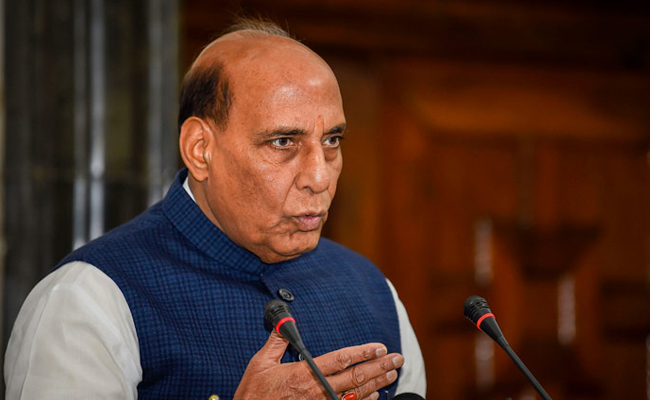
New Delhi (PTI): Defence Minister Rajnath Singh has approved the setting up of 23 new Sainik Schools in partnership mode, officials said on Saturday.
The new schools, besides their affiliation to respective education boards, will function under the aegis of the Sainik Schools Society and will follow the Rules and Regulations for new Sainik Schools in partnership mode prescribed by the Society, the Defence Ministry said in a statement.
The government has approved the initiative of setting up of 100 new Sainik schools in partnership with NGOs, private schools, and state governments in a graded manner class-wise, starting from Class VI onwards, it said.
Under this initiative, a Memorandum of Agreement has been signed by the Sainik Schools Society with 19 new Sainik Schools located all over the country, the statement added.
"Following further evaluation of applications for opening new Sainik Schools under partnership mode, Raksha Mantri Rajnath Singh has approved setting up of 23 new Sainik Schools in partnership mode," it said.
This initiative has increased the tally of new Sainik Schools under partnership mode functioning under the aegis of the Sainik Schools Society to 42, apart from the existing 33 Sainik Schools already functioning under the erstwhile pattern, the ministry said.
"The objectives behind Prime Minister Narendra Modi's vision of setting up of 100 new Sainik Schools is to provide quality education to the students in tune with National Education Policy and give them better career opportunities, including joining the armed forces," the statement said.
"It also gives an opportunity to the private sector to work hand-in-hand with the government towards nation-building by refining today's youth to become responsible citizens of tomorrow," it added.
In addition to their regular affiliated board curriculum, they will "also impart education of Academic PLUS curriculum to the students of Sainik School pattern," the statement said.
"Details pertaining to the modalities of operation of these schools are available at sainikschool.ncog.gov.in. Willing students and parents are invited to visit the web portal and take advantage of this novel opportunity," it added.
Let the Truth be known. If you read VB and like VB, please be a VB Supporter and Help us deliver the Truth to one and all.
AIITA welcomes Karnataka’s ban on obscene songs in school events
Bhatkal: The Karnataka unit of the All India Ideal Teachers Association (AIITA) has welcomed the Karnataka government’s decision to strictly ban school children from dancing to obscene songs during educational and cultural programmes in government, aided, and private schools across the state.
AIITA Karnataka State President M. R. Manvi congratulated the government for taking what he termed an important step to preserve the sanctity of education.
“Such decisions to safeguard the dignity of school children and uphold the values of education are the need of the hour. This rule should not be limited to government schools alone but must be strictly implemented in all private educational institutions as well,” he said.
He further urged the government to address other concerns within school programmes.
“The government should not only prohibit obscene dances in the name of school anniversaries, but also ensure that plays and dialogues that incite religious hatred are avoided. Schools should be centres of harmony, not platforms for spreading hatred,” he added.
According to a recent circular issued by the Department of School Education and Literacy, obscene dances are adversely affecting the mental health and moral values of students.
In this regard, schools have been advised to use songs that promote nationalism, positive thinking, the greatness of Kannada culture, and value-based traditions instead of inappropriate content during programmes.
The circular also emphasises that students should be dressed in decent attire.
AIITA also backed the department’s warning that disciplinary action would be taken against head teachers if such guidelines are violated. The association has further demanded that district Deputy Directors of Public Instruction strictly monitor the implementation of these rules.