Defence Minister Rajnath Singh hails former PM Indira Gandhi
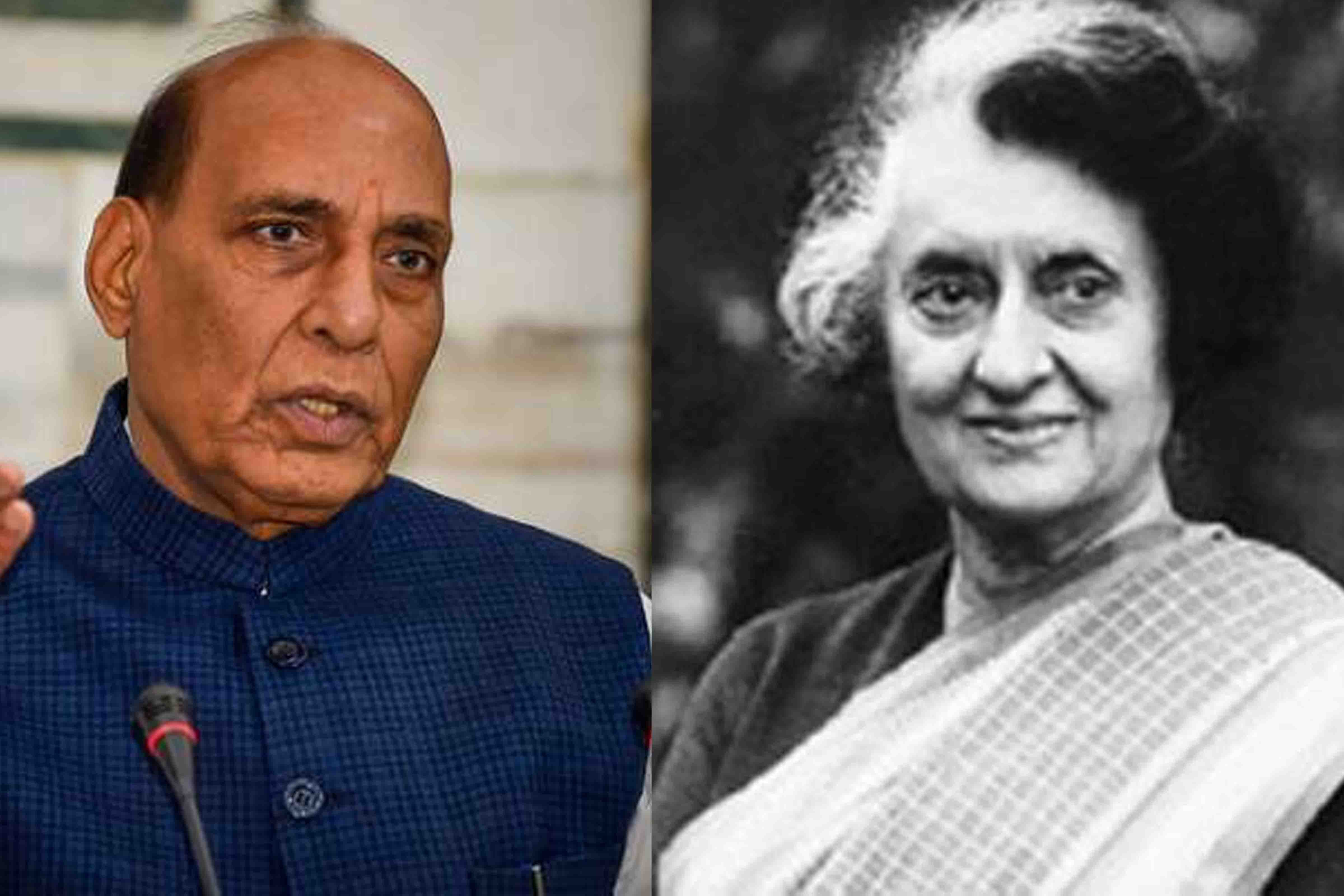
New Delhi, Oct 14: Former prime minister Indira Gandhi not only led the country for a number of years, but she also did so during the times of war, Defence Minister Rajnath Singh said on Thursday, in an apparent reference to her role in the 1971 war with Pakistan.
In an address at a Shanghai Cooperation Organisation (SCO) seminar on the role of women in the armed forces, the defence minister also talked about Rani Laxmi Bai and former president Pratibha Patil, and said India has a positive experience in harnessing women's power in national development.
Singh said though it is justifiable to discuss the role of women in the armed forces, their wider contribution in all spheres of security and nation-building must also be recognised and reinforced.
"There are a number of examples of women taking up arms to protect their country and the rights of the people through history. Rani Laxmi Bai is amongst the most revered and respected amongst them," he said.
"India's former prime minister Indira Gandhi not only led the country for a number of years, she also did so during the times of war. And more recently, Pratibha Patil was the president of India and the supreme commander of the Indian armed forces," the defence minister added.
Under Indira Gandhi's prime ministership, India won the 1971 war against Pakistan that resulted in the birth of Bangladesh.
Singh said the tradition of women as both caregivers and protectors has continued over the centuries and remains deeply embedded in the customs and traditions of the region.
"If Saraswati is our goddess of knowledge, wisdom and learning, mother Durga remains associated with protection, strength, destruction and war," he said.
Singh said India is amongst a very few countries that took an early initiative in terms of women's participation in the armed forces and that women are now being accepted for permanent commissioning and shall be commanding Army units and battalions in the near future.
"Women have been serving with pride in the Indian Military Nursing Service for over 100 years now. The Indian Army had commenced commissioning women officers in 1992. It has now moved to inducting women officers in most of the branches of the Army," he said.
"Women are now being accepted for permanent commission and shall be commanding Army units and battalions in the near future," he added.
Singh said women will be able to join the premier tri-service pre-commissioning training institute, the National Defence Academy, from next year.
Describing the induction of women in the military police in the Army as a major milestone, he said India's approach to their induction in the police, central police, paramilitary and armed forces has been progressive.
"We have taken the evolutionary path of moving from support to combat support and thereafter, to combat arms within the armed forces," he said.
"We have found that the process of induction, given its broad-based and progressive path, has also simultaneously prepared the society and the armed forces for this change. This is an important aspect to ensure a smooth and successful transition," the defence minister added.
Referring to women's role in the Navy, he said from humble beginnings in the Air Traffic Control in 1993, the women officers graduated to being pilots of maritime reconnaissance aircraft in 2016 and are now being appointed onboard warships since last year.
"The Indian Coast Guard has been employing women officers in combat roles, which include pilots, observers and aviation support services. In the Indian Air Force, women are inducted in all roles, including combat and support roles," Singh said.
Speaking at the SCO-International Webinar on ‘Role of Women in the Armed Forces’. https://t.co/hz6kAxM5wQ
— Rajnath Singh (@rajnathsingh) October 14, 2021
Let the Truth be known. If you read VB and like VB, please be a VB Supporter and Help us deliver the Truth to one and all.
DMK seeks separate seating in Lok Sabha after split with Congress alliance
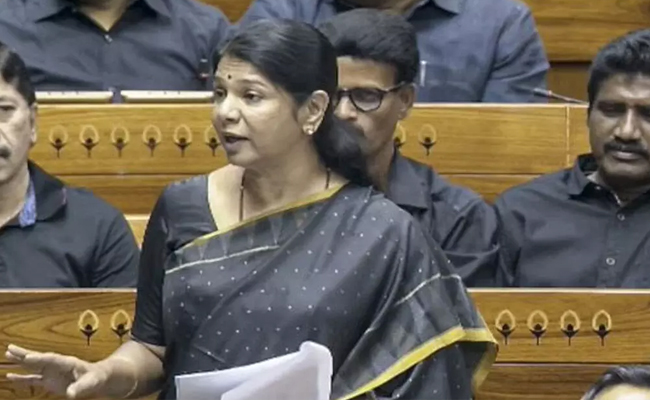
New Delhi: Kanimozhi Karunanidhi has written to the Lok Sabha Speaker seeking a separate seating arrangement for Members of Parliament belonging to the Dravida Munnetra Kazhagam (DMK) following the end of the party’s alliance with the Indian National Congress.
In a letter dated May 7 addressed to the Speaker of the Lok Sabha, Kanimozhi said the changed political situation made it inappropriate for DMK MPs to continue sitting alongside Congress members in the House.
She requested the Speaker to make “suitable changes” in the seating arrangement of the DMK Parliamentary Party and allot separate seating for its MPs.
“In view of the changed political circumstances and as our alliance with the Indian National Congress has come to an end, it may not be appropriate for our Members to continue occupying the present seating arrangement alongside them in the House,” the letter stated.
Kanimozhi further said separate seating would help DMK members effectively discharge their responsibilities in the Lok Sabha.