Deletions impossible without due process: CEC refutes claims of electoral roll manipulation

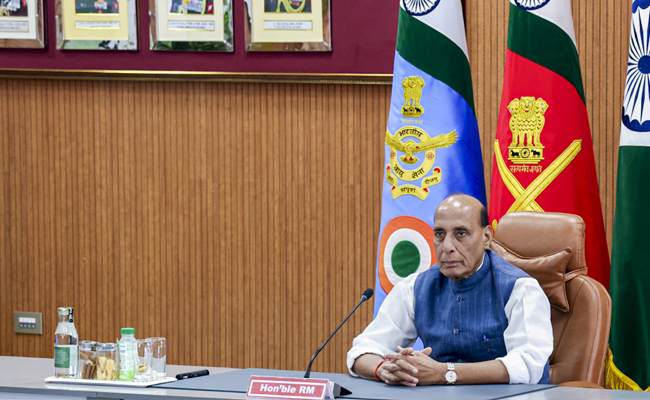
New Delhi, Jan 7: Chief Election Commissioner Rajiv Kumar on Tuesday dismissed allegations of manipulation in electoral roll, saying no deletion can occur without thorough documentation, field verification, and giving the concerned individual an opportunity to be heard.
He emphasised that the process for additions and deletions is transparent, rigorous, and immune to arbitrary changes.
Speaking at a press conference to announce the schedule for Delhi assembly polls, the chief election commissioner (CEC) said, "Every step of the electoral roll process is rooted in transparency and accountability. Deletion of names is not possible without adhering to strict protocols, and every party has the right to raise objections at various stages."
Kumar also detailed the comprehensive process governing the maintenance of electoral roll.
For additions, names are included only after thorough foot-and-field verification by booth-level officers (BLOs), he said.
"Regular meetings are held with the representatives of political parties, who have the right to appoint booth-level agents (BLAs). Weekly lists of claims and objections are shared, and both draft and final rolls are published on the Election Commission's website. Polling station rationalisation is also carried out with the consultation of all the stakeholders," the CEC said.
"There are 70 processes related to the election process whether it is electoral roll, counting, polling agents, or political parties - any process whatsoever - are entirely detailed on our website. Complete guidelines have been circulated to political parties," he said.
On deletions, Kumar clarified that they are processed only through Form 7 or Form B, following strict guidelines.
"Mandatory field verification is conducted by the BLOs, and in cases where deletions exceed 2 per cent of a polling station's voter list, cross-verification is done. Deletions due to death require a certified death certificate, and a seven-day window is provided for objections after notices are published online. Also, the affected voters are given the opportunity for a personal hearing before their names are removed," he said.
"No deletion can occur without thorough documentation, field verification, and giving the concerned individual an opportunity to be heard," Kumar reiterated.
The CEC also pointed out that claims and objections are not only reviewed, but also shared with all the political parties and made accessible online to ensure transparency.
Criticising the tendency to question the integrity of the electoral process only during elections, the CEC argued that allegations of mass deletions are misleading without evidence and undermine public trust in the system.
"Where every vote matters, raising doubts about deletion of thousands of names without evidence is misleading. The processes we follow leave no room for manipulation," he stated.
The CEC's comments came in the backdrop of recent allegations made by Delhi Chief Minister Atishi, who claimed the voter list in the New Delhi assembly constituency had been tampered with to influence the upcoming elections.
Atishi also called for an immediate inquiry into the matter, alleging large-scale deletions to manipulate the electoral outcome.
Let the Truth be known. If you read VB and like VB, please be a VB Supporter and Help us deliver the Truth to one and all.
Bengaluru jail introduces biometric tracking system for prisoners
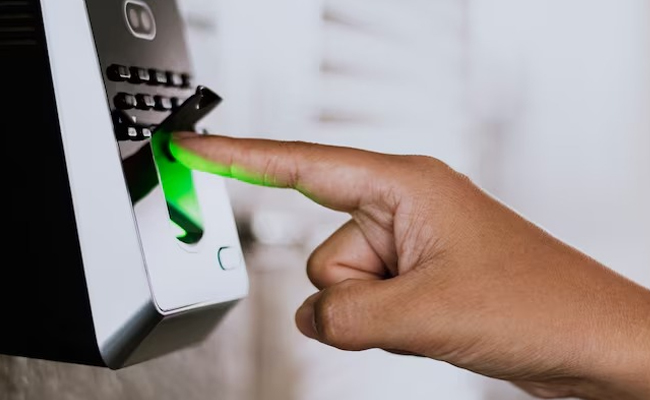
Bengaluru: In a bid to curb misconduct and illegal activities inside Parappana Agrahara Central Prison, prison authorities have introduced a new ‘Prisoners Tracking Movement System’ under which inmates will have to undergo biometric verification while entering every barrack.
According to jail officials, biometric systems have been installed across all major sections of the prison, including barracks, visitor rooms, hospital, canteen, kitchen, library, playground, handicraft units and bakery sections. Staff members have also been deployed at these locations.
Officials said inmates visiting the visitors’ room must now obtain a digital token after biometric verification. Details such as the prisoner’s name, identification number and entry time will be updated in the prison software system. This will help authorities maintain a complete digital record of inmates visiting and returning from meeting rooms.
Similar systems have also been introduced at entry points of the hospital, library and other barracks accessed for work-related purposes. Officials said the system will help identify prisoners involved in suspicious or illegal activities with other inmates and enable authorities to track how much time a prisoner spends at different locations inside the prison.
Authorities stated that AI-powered cameras were already being used inside the prison to monitor inmates as well as prison staff. Along with this, digital tracking of prisoner phone calls and a digital token system for visitor meetings have now been added to strengthen surveillance over inmate movement. Officials said the project has been implemented at a cost of around Rs 2.25 crore.
The prison department has also introduced a canteen usage tracking system to monitor prisoners’ spending patterns. Instead of direct cash payments, inmates can purchase bakery items and snacks using wallets or coupons issued within the prison system.
Officials said the digital system will record details including the buyer’s name, items purchased, quantity, date, time and remaining wallet balance. This will allow prison authorities to maintain complete expenditure records of inmates.