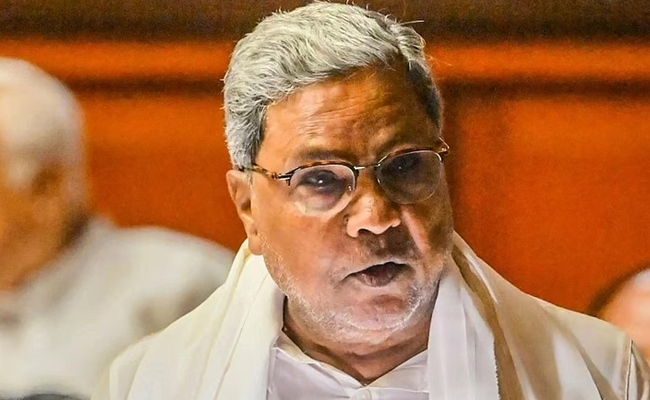
Delhi court orders framing of charges against Cong MP Karti Chidambaram in Chinese visa scam case
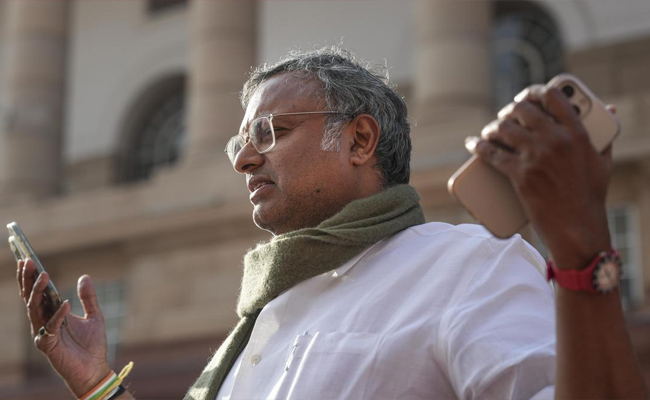
New Delhi (PTI): A Delhi court on Tuesday ordered the framing of charges against Congress MP Karti P Chidambaram and six others in connection with the Chinese visa scam case.
Special Judge (CBI) Dig Vinay Singh, who was hearing the case against Karti Chidambaram and seven others, ordered the framing of charges against seven accused and discharged one named Chetan Shrivastava in the case.
In an order dated December 23, the court ordered the framing of charges against the seven accused for the alleged offence of criminal conspiracy. The detailed order is awaited.
Earlier in October 2024, the CBI had filed a charge sheet against Karti Chidambaram and others in connection with alleged bribery in facilitating visas of Chinese nationals for a power company in 2011 when his father P Chidambaram was the Union home minister.
In its charge sheet submitted before a special court, the CBI had named Karti Chidambaram, the Lok Sabha MP from Sivaganga, his alleged close associate S Bhaskararaman, Talawandi Sabo Power Ltd (TSPL), a subsidiary of Vedanta, and Mumbai-based Bell Tools, through which bribes were allegedly routed.
ALSO READ: Chhattisgarh CM announces Rs 5 lakh aid for Kerala lynching victim’s family
The agency has invoked charges of criminal conspiracy, cheating, and forgery under the Indian Penal Code and provisions of the Prevention of Corruption Act.
Other charge-sheeted accused include Viral Mehta, Anup Agarwal, Mansoor Siddiqui and Chetan Shrivastava, they said.
The CBI had filed the charge sheet after two years of probe into its FIR registered in 2022, where it had alleged that the Punjab-based TSPL was setting up a 1980 MW thermal power plant and the work was outsourced to Chinese company Shandong Electric Power Construction Corp (SEPCO).
The project was running behind its schedule, and the company was allegedly facing the prospect of a penalty.
The CBI FIR, which contained findings of the investigating officer who undertook the preliminary inquiry, alleged that an executive of TSPL approached Karti Chidambaram through his "close associate/front man" Bhaskararaman.
"They devised a back-door way to defeat the purpose of the ceiling (maximum of project visas permissible to the company's plant) by granting permission to re-use 263 project visas allotted to the said Chinese company's officials," the agency had said after the registration of FIR and searches.
Project visas were a special type of visa introduced in 2010 for the power and steel sector, for which detailed guidelines were issued during P Chidambaram's tenure as home minister, but there was no provision for the re-issue of project visas, the FIR had alleged.
A TSPL executive allegedly submitted a letter to the home ministry on July 30, 2011, seeking approval to reuse the project visas allotted to his company, which was approved within a month and the permission was issued, the FIR had alleged.
"On August 17, 2011, the executive, on being directed by Bhaskararaman, sent a copy of the above letter dated July 30, 2011 to him through e-mail which was forwarded to Karti... Bhakaskararaman after discussion with P Chidambaram, the then home minister, demanded an illegal gratification of Rs 50 lakh for ensuring the approval," the FIR had alleged.
The FIR also alleged that the payment of the said bribe was routed from TSP to Karti Chidambaram and Bhaskararaman through Mumbai-based Bell Tools Ltd with payments camouflaged under two invoices raised for consultancy and out-of-pocket expenses for Chinese visas-related work, the CBI FIR said, adding that the TSPL executive had later thanked Karti Chidambaram and Bhaskararaman on email.
Payment against the invoices was made by TSPL to Bell Tools Limited through cheque and then the said amount was paid in cash to Bhaskararaman, it had alleged.
Let the Truth be known. If you read VB and like VB, please be a VB Supporter and Help us deliver the Truth to one and all.
Hormuz Strait disruptions have caused huge economic impact, energy instability in region: Navy chief

Mumbai (PTI): The Strait of Hormuz disruptions have caused severe economic impact and energy instability in the region, Indian Navy chief Admiral D K Tripathi said on Thursday amid the war in West Asia.
Speaking at an event where INS Sunayna, an offshore patrol vessel, set sail from Mumbai as Indian Ocean Ship (IOS) Sagar, the admiral said competition at sea has no longer remained confined to oil and energy.
It is now expanding towards resources that will shape future growth - such as rare earth elements, critical minerals, new fishing grounds and even data, he said.
The West Asia crisis began on February 28 after a joint attack by the US and Israel on Iran.
Iran's strikes on its neighbours along with its chokehold on the Strait of Hormuz have disrupted the world's energy supplies with effects far beyond West Asia.
"With the conflict in West Asia well into its fifth week, the disruptions in the Strait of Hormuz have caused severe economic impact and energy instability in the region," Tripathi said.
There is significant increase in the marine survey, deep-sea research activity, and Illegal Unreported and Unregulated Fishing (IUU), often encroaching upon the sovereign rights of littoral nations and exploiting gaps in monitoring and enforcement, he said.
Alongside these, threats such as piracy, armed robbery and narco-trafficking backed by unimpeded access of advanced technology to non-state actors, have also become more complex and challenging to counter, the Navy chief pointed out.
Last year alone, the Indian Ocean Region witnessed a staggering 3,700 maritime incidents of varying nature, the admiral said.
Additionally, narcotics seizures in the region exceeded USD 1 billion USD in 2025, highlighting the persistence and spread of such challenges in the region, he said.