Delhi court rejects Sharjeel Imam's bail plea

New Delhi, Feb 17: A court here on Saturday dismissed the plea of student activist Sharjeel Imam seeking bail on the grounds that he had been in custody for the last four years, which was more than half of the maximum sentence prescribed for the offence.
The court directed to continue Imam's custody, saying the present case was "different" from other cases because of the nature of allegations against Imam and his "disruptive activities."
Additional Sessions Judge Sameer Bajpai was hearing Imam's plea seeking bail under 436A of the Code of Criminal Procedure (CrPC), saying he was in custody since January 28, 2020, while the maximum sentence for the offence under Section 13 (punishment for unlawful activities) of the Unlawful Activities (Prevention) Act is seven years, if convicted.
According to CrPC Section 436-A, a person can be released from custody if he has spent more than half of the maximum sentence prescribed for the offence.
The court, however, underlined that according to the provision, an accused's custody could be extended for a further period in "exceptional circumstances" after hearing the prosecution's case.
"Keeping in view the alleged acts of the applicant (Imam), the court is of the view that the facts in the case in hand are not normal and different than the facts which in any other case could be," the court said.
"Considering the allegations against the applicant and his disruptive activities, the court deems it appropriate not to consider the relief as prayed for and to continue his custody," it added.
Noting the allegations against Imam in the chargesheet, the court said he delivered various speeches in Delhi, Aligarh, Asansol and Chakband, which incited people and ultimately triggered the communal riots in different parts of Delhi.
It said, "The contents of the speeches clearly show that the applicant incited the public to do chakka jams and block the cities. Particularly, in the speech dated January 16, 2020, as delivered at Aligarh Muslim University (AMU), the applicant said that if a particular number of people are organised, the North-East part of the country can be permanently or temporarily cut,"
Imam also created a WhatsApp group, 'Muslim students of JNU', to raise voice against Citizenship Amendment Act and National Register of Citizens, besides drafting and distributing pamphlets to instigate the members of a particular community against CAA/NRC, the court said.
The court said although Imam did not ask anybody to pick the weapons and kill the people, his speeches and activities mobilised the public which disrupted the city and might have been the main reason for the outbreak of riots.
"Further, through inflammatory speeches and social media, the applicant skillfully manipulated the real facts and incited the public to create havoc in the city. Further, the words used by the applicant in his different speeches were so powerful that they captured the minds of the people of a particular community and incited them to take part in disruptive activities which finally resulted in the riots," it said.
In 2022, the trial court had framed charges against Imam under Sections 124A (sedition), 153A (promoting enmity), 153B (imputations prejudicial to national integration), 505 (statements conducing to public mischief) of IPC and Section 13 (Punishment for Unlawful Activities) of Unlawful Activities (Prevention) Act.
Noting the facts of the case, the court observed, "Although the court cannot take into consideration section 124A IPC but if the acts and actions of the applicant are considered, they can be termed as seditious in a normal dictionary meaning ."
Let the Truth be known. If you read VB and like VB, please be a VB Supporter and Help us deliver the Truth to one and all.
Bird flu: Karnataka completes 10-day H5N1 surveillance, containment operation
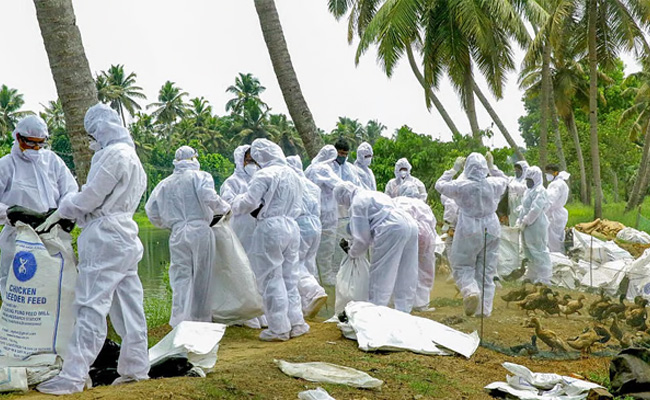
Bengaluru (PTI): The Karnataka government has successfully completed a 10-day intensive surveillance and containment operation following the detection of the H5N1 Avian Influenza outbreak here, officials said on Saturday.
The outbreak was reported in the State Poultry Rearing Training Centre in Mathkuru village, Hesaraghatta, on April 14, they said.
The surveillance was conducted by the Department of Health and Family Welfare of the state government in coordination with the Animal Husbandry and Veterinary Services Department, officials said.
According to an official statement, once the outbreak was confirmed, following laboratory reports from the National Institute of High Security Animal Diseases (NIHSAD-Bhopal), State and District Rapid Response Teams along with Hesaraghatta and Sonnenahalli PHC (Primary Health Centres) teams were immediately deployed.
An infected zone of 0-3 km and a surveillance zone of 3-10 km radius was established. The Department of Animal Husbandry and Veterinary Services, culled all the birds and safely disposed of eggs and of contaminated feed, adhering to national and international biosecurity protocols, it said.
The health department said the surveillance zone from the infective focus in the 10 km radius, a total population of 28,172 across 22 villages was surveyed from day 1 to day 10. Multiple rounds of surveillance were conducted and sanitation activities were completed as per protocol.
During the surveillance period, nasopharyngeal samples collected from all quarantined staff on Day 5, sent to NIV-Bengaluru, were found to be negative for H5N1, it said.
On day 10, nasopharyngeal samples were collected and the results are awaited. No human case of H5N1 infection has been detected in the infected or surveillance zones, the health officials said.
"All healthcare facilities in Bengaluru have been instructed to continue ILI/SARI (Influenza-Like Illness/Severe Acute Respiratory Infection) case surveillance, and ensure adequate stocks of PPE, triple-layer medical masks, oseltamivir, viral transport medium, and throat swab kits," it said.
The Department of Animal Husbandry and Veterinary Services issued a Sanitization Certificate on April 21, officials said.
"No poultry activity will be undertaken for a period of 90 days as a precautionary measure. During the three months of surveillance, the entire area of the farm will be repeatedly disinfected by fumigation (indoors) or sprays (open place) every 15 days," it further stated.
The public has been advised to avoid handling or consuming meat or eggs from sick or dead poultry and report sightings of sick or dead birds promptly to local veterinary or health authorities.
Ensure poultry meat and eggs are thoroughly cooked before consumption, as proper cooking effectively inactivates the virus, they said.
"The public is advised to follow official health advisories and avoid spreading unverified information," the department added.