New Delhi, June 20: A day after IAS officers ended their rift with the Delhi government, work began in full swing on a Happiness Curriculum for students of government-run schools in the national capital.
The curriculum will be launched on July 2 by Tibetan spiritual leader the Dalai Lama. The plan for the curriculum, for students from nursery to Class 8, was announced in February.
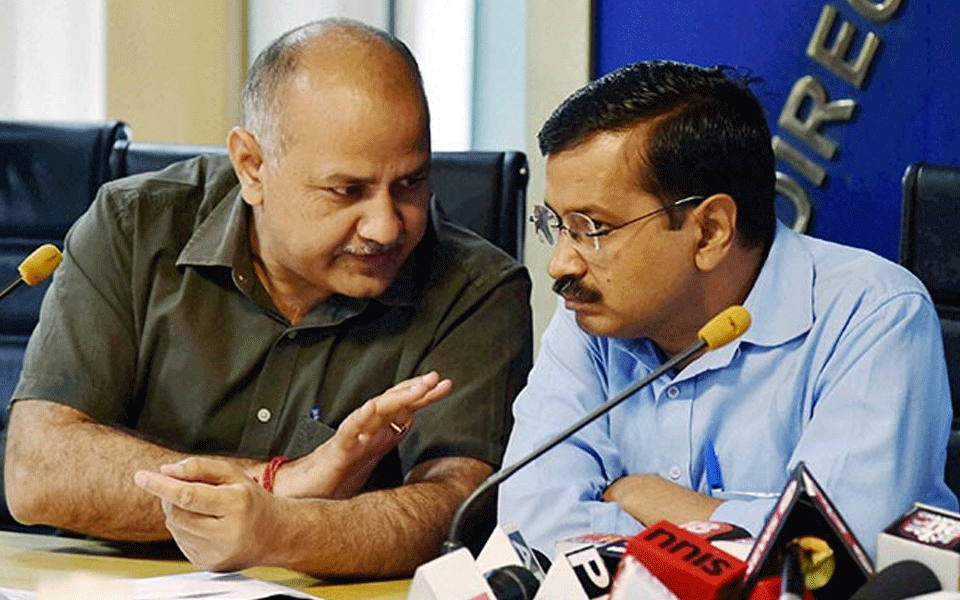
"For the past four months a group of about 40 people was working hard to finalise the curriculum," Deputy Chief Minister Manish Sisodia, who also holds the Education portfolio, told the media.
The benefit of including such a programme will be that the "students who will pass out of the school will be happier persons compared to others. They will be less likely to get involved in violence and corruption," Sisodia said.
The curriculum will be introduced in government schools by mid or end of July. Around eight lakh students will benefit from the curriculum, Sisodia said.
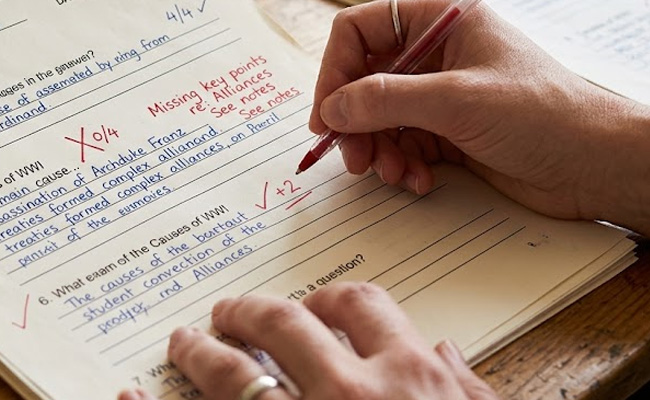
The curriculum will involve meditation and mental training.
In signs that things were back to normal in the AAP-controlled Delhi administration, IAS officers also attended on Wednesday meetings called by Ministers in charge of the PWD, Health, Industries, Urban Development, Power and Electricity departments.
Meetings were also held on air pollution in the capital.
However, the officers continued their silent protest during their lunch hours against the alleged assault on the Chief Secretary. They have been doing this since the attack was alleged in February.
The rift between the Delhi government and the officers started after this alleged assault. On Wednesday, Chief Minister Arvind Kejriwal ended a nine-day-long sit-in protest at Raj Niwas demanding that the IAS officers resume cooperation with his government.
Let the Truth be known. If you read VB and like VB, please be a VB Supporter and Help us deliver the Truth to one and all.
On Wednesday, 4th March, something happened in the waters near Sri Lanka that should have made every Indian stop and think. A United States submarine fired a torpedo — an underwater missile that travels silently through the sea and explodes on impact — and sank an Iranian warship called IRIS Dena. At least 80 sailors lost their lives. This was not happening somewhere far away in the Middle East. This happened just off the coast of a country that shares the Indian Ocean with us.
The IRIS Dena was not doing anything suspicious at the time. It was simply returning home after attending the MILAN-2026 naval exercise near Visakhapatnam, an international event proudly organised by the Indian Navy last month. The ship was on what is called a peaceful passage — quietly sailing back through international waters, not threatening anyone, not engaged in any battle. And then it was gone.
This is what makes this incident so deeply unsettling.
The war between the US-Israel alliance and Iran was supposed to be confined to West Asia and the Gulf region. With this single torpedo strike, that war has now moved into the Indian Ocean — right into India's neighbourhood. The question every Indian should now be asking is simple: what does this mean for us, and are our seas safe?
To understand the full picture, you need to know what international maritime law says — because this is where things get complicated. The main rulebook for the world's oceans is called UNCLOS, the United Nations Convention on the Law of the Sea. Think of it as the constitution of the seas. However, the United States has never signed this agreement. That alone tells you something important.
UNCLOS mostly covers peacetime rules — who owns which sea area, fishing rights, trade routes, and so on. But during a war, a separate set of naval warfare laws kicks in alongside it. Under these laws, since IRIS Dena was an Iranian Navy warship, it was technically considered a valid military target — regardless of where it was sailing or what it was doing at that moment. The Indian Express reported that several Indian Navy officers noted this uncomfortable legal reality clearly.
The UN Charter says in Article 2(4) that countries must not use military force against other countries. That sounds clear. But then Article 51 creates an exception — a country can attack in self-defence if it faces an armed threat. Additionally, the UN Security Council can give special permission for military strikes, as it did during the 1990 Gulf War. But getting that permission requires a majority vote, and none of the five permanent members — the US, Russia, China, the UK, and France — should veto it. Veto power means any one of these five countries can simply say no, and the entire decision is blocked.
It is also worth noting that the US Treasury Department placed official sanctions on the IRIS Dena back in February 2023. Sanctions are basically financial penalties and restrictions placed on a vessel or country — they don't prevent a ship from sailing, but they signal deep suspicion. At the time of the attack, the ship carried close-in weapon systems — rapid-fire guns used to shoot down incoming missiles or drones — and wider area defence systems. Despite this, it was caught completely off guard.
Vice Admiral G Ashok Kumar (Retd), former Vice Chief of the Indian Navy and India's first National Maritime Security Coordinator, told The Indian Express that in the maritime domain, there are simply no fixed boundaries for war zones. Once a conflict begins, it has no clear walls on the sea. The fighting had already started after the ship left Indian shores, he explained. He also noted that since the attack happened inside Sri Lanka's Exclusive Economic Zone — the sea belt where Sri Lanka holds special rights over resources — rescue teams could begin operations relatively quickly.
However, Rear Admiral Sudhir Pillai NM (Retd) raised a harder question. He pointed out that attacking a foreign warship on the high seas — international waters that belong to no single country — is generally considered illegal unless clearly justified as self-defence.
A senior Navy official, as reported by The Indian Express, called this strike a major escalation. The Iranian ship was not in a conflict zone. It was on a peaceful morning passage. Nobody on board would have imagined a torpedo was silently tracking them beneath the waves.
That is the terrifying reality of modern warfare at sea. There are no safe lanes, no guaranteed boundaries, no sacred stretches of water. The ocean is open — and today, it is deeply unpredictable.
India is watching. And India must think very carefully about what comes next.
(Girish Linganna is an award-winning science communicator and a Defence, Aerospace & Geopolitical Analyst. He is the Managing Director of ADD Engineering Components India Pvt. Ltd., a subsidiary of ADD Engineering GmbH, Germany.)
Disclaimer: The views and opinions expressed in this article are solely those of the author. They do not necessarily reflect the views, policies, or position of the publication, its editors, or its management. The publication is not responsible for the accuracy of any information, statements, or opinions presented in this piece.